kimchi & kraut

Passive House + Net Zero Energy + Permaculture Yard

Framing (Air Sealing #2)

2

Mudsills

In a conventionally built home, mudsills are typically an area of significant air leakage (if you’ve ever seen sill sealer — a thin layer of foam normally used to address this lumber-concrete connection — under an actual mudsill, you can visibly see just how poorly it performs).

In contrast, after reading about various strategies employed to reach the Passive House standard of 0.6 ACH@50 for air tightness, I decided to use the approach developed by architect Steve Baczek specifically for mudsills. There is an excellent article in Fine Homebuilding magazine that describes the details, and there is a companion series of videos available on Green Building Advisor (after the first video, membership is required, but it’s well worth it for this series of videos, as well as all the other information available on GBA).

We didn’t use the layer of poly, or the termite shield, but the remaining details we followed fairly closely. And we did make one product substitution — instead of using the Tremco acoustical sealant, we decided to go with the Contega HF sealant (less messy, lower VOC’s, and skins over and firms up enough to apply the Pro Clima tapes, all while remaining permanently flexible like the Tremco product —  these products are available at foursevenfive.com).

bill-and-phil-setting-up-chalk-lines-for-mudsill
Billy and Phil setting up chalk lines for the mudsills.
nils-running-bead-of-sealant-before-mudsill-goes-down
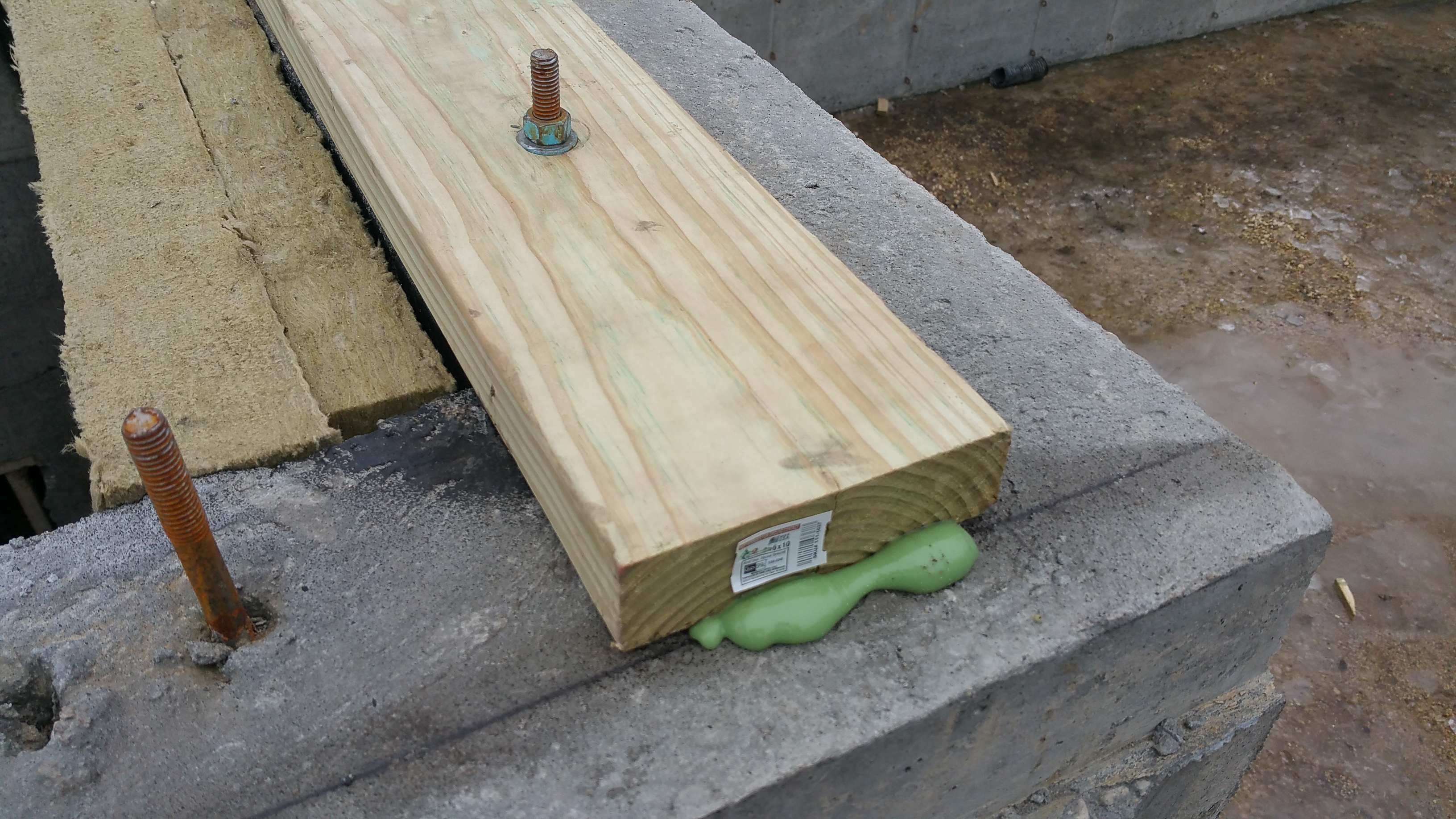
Nils applying a thick, continuous bead of Contega HF sealant, including around the bolts, before the 2×6 pressure treated sill plate gets installed with a BG65 gasket underneath.
ct-gasket-close-up-on-srap-board
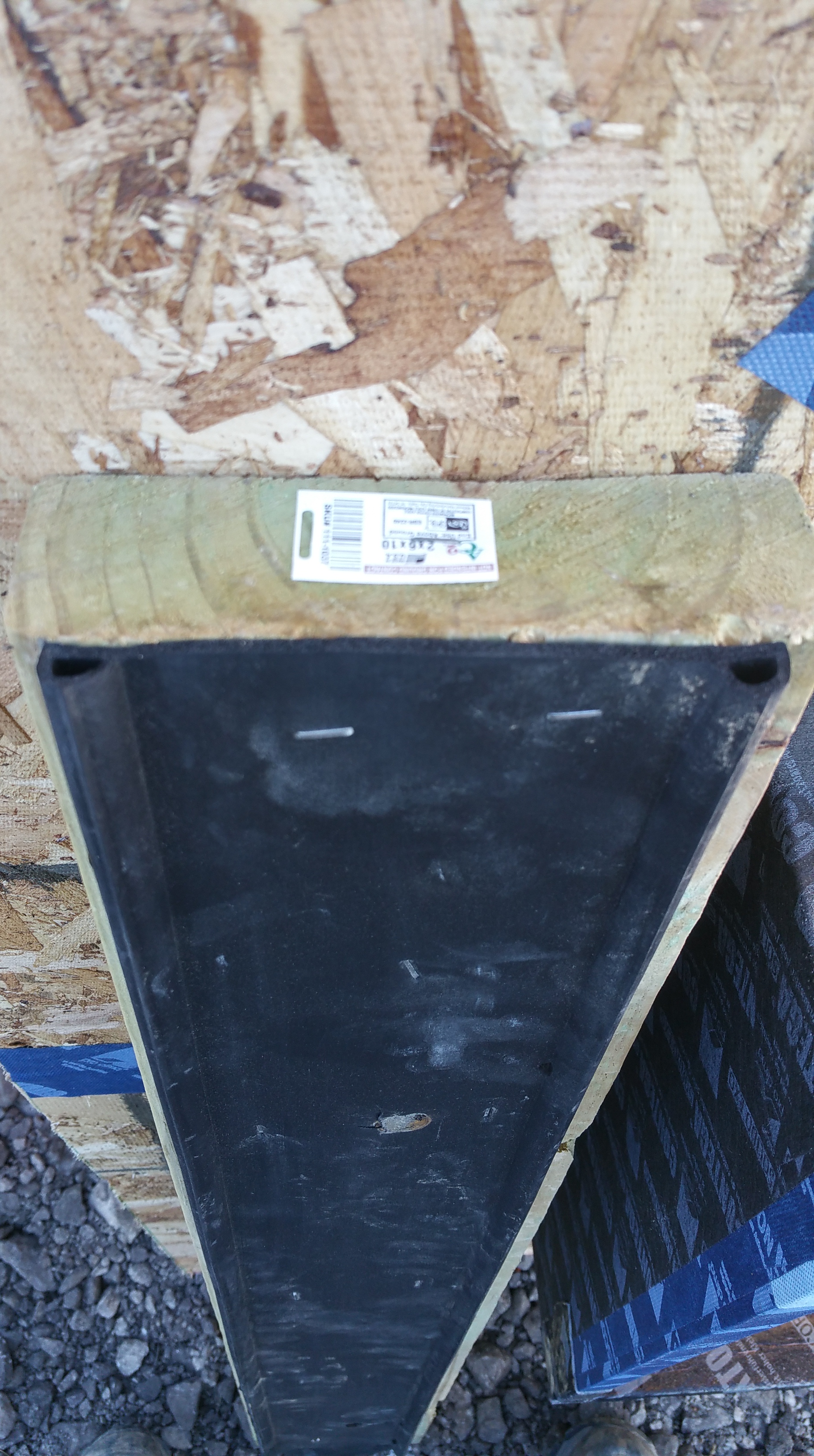
BG65 gasket from Conservation Technology stapled to the bottom of a scrap piece of sill plate.
ct-gasket
BG65 gasket rolled up in the box it shipped in.
Sammy and Billy stapling the BG65 gasket to the sill plates before installation.
mudsill-squeeze-out
Mudsill installed with some squeeze out of the sealant.

Installing the sealant on the mudsill (interior/exterior edges, seams, and bolts/nuts/washers) required some gymnastics:

selfie-by-window-buck
In theory, she’s helping me.
mudsill-with-gasket-and-sealant-garage-from-inside-basement
Mudsill after installation: sealant covering sill plate – BG65 gasket – concrete connection, with seams filled.

Once again, based on Steve Baczek’s design — going from exterior to interior — here is our Mudsill Air Sealing Approach:

  • Bead of sealant on the exterior side of the 2×6/foundation connection
  • BG65 gasket under the sill plate — along with a thick bead of sealant under the gasket and sill plate (including around bolts)
  • Bead of sealant on the interior side of the 2×6/foundation connection
  • And then, finally, a taped connection on the interior side of the 2×6/foundation connection as a last line of defense against air infiltration (which I’ll complete once all the trades go through the interior of the house).

The approach assumes I will make mistakes at certain points with each layer of air sealing, so I’m counting on these layers of redundancy to protect me from myself. Again, this is the first time I’ve ever done this, so the theory is that even if I make a mistake in one area, it’s unlikely that I will make a mistake in exactly the same spot with successive layers of air sealing.

Obviously I’m trying to do my best with each layer, but I like the idea of added layers of protection (a Passive House obsession), especially when accounting for the long-term life of the structure. Even if each layer could be installed perfectly, presumably each layer will fail eventually at different times and in different places (hopefully 50-100 years from now if the accelerated aging studies are accurate), so hopefully these layers of redundancy will help maintain significant air tightness far longer than if I chose to use fewer layers. Plus, I’m enjoying sealing everything up, so I don’t mind the process, which always helps.

For larger gaps (not just for mudsills, but anywhere in the building envelope), roughly 3/8″ inch or larger, I am utilizing backer rod to help fill the gap before applying sealant.

This is what it looks like:

The backer rod (readily available at any hardware store) makes life easier for caulks and sealants — less stress on the connection between materials as the inevitable expansion and contraction occurs in the gap.

Hammer and Hand’s Best Practices Manual has the best explanation for their use that I’ve come across:

“While the humble sealant joint may be uncelebrated, it is vital to building durability and longevity. Proper installation is key to sealant joint integrity and function throughout a life of expansion and compression, wetting and drying, exposure, and temperature fluctuation.

Note: Because sealants are just as good at keeping moisture in as they are in keeping it out, placing a bead of caulk in the wrong location can result in moisture accumulation, mold and rot, envelope failure, and hundreds of thousands of dollars in repair and remediation. If we know anything, we know that building envelopes will get wet – the question is, “where will the water go?” Make sure you know the answer throughout construction, especially as you seal joints…

2-1a-500x3892x
Diagram courtesy of Hammer and Hand’s Best Practices Manual.

… Joint Rule of Thumb: Sealant should be hourglass-shaped and width should be twice depth (shown in diagram).
Backer rod diameter should be 25% larger than the joint to be filled.
Joint size should be 4x the expected amount of movement (usually about 1/2” of space on all sides of the window casement).
Ideal joints are within a range of 1/4” at minimum and 1/2” at maximum. Joints outside this range require special design and installation.
Always use the right tool: sealant is not caulk and should never be tooled with a finger (saliva interferes with bond).
Substrates need to be clean, dry, and properly prepared (primer if necessary).
When dealing with thermally sensitive materials, apply sealant under average temperature conditions because joints expand and contract with changes in temperature…”

backer-rod-by-header
Example: Piece of backer rod being inserted into gap between header and 2×6.
garage-mudsill-w-gasket-and-sealant-corner
It’s not visible, but the wood-concrete connection at the side wall has a piece of backer rod embedded between the two materials, making it easier for the sealant to bridge the gap over the long term.

Air Sealing: Rim Joist – Floor Joist – Mudsill Connections

Since there was time between completion of the rim joist/floor joist installation and the installation of the sub flooring (a weekend), I took the opportunity to seal up all the visible connections.

installing-floor-joists-w-bill-johnny
Billy and Johnny installing the floor joists.

Once the subfloor goes in, these connections are still accessible from inside the basement, but the space to work in would be really cramped and uncomfortable (at least I thought so).

rim-joists-box-before-caulk
Rim joist – floor joist – mudsill connections prior to sealant being applied.

The same areas after applying the sealant:

I found the silver Newborn sausage gun (photo below) worked great for thick beads under the mudsills, but the blue gun worked even better for all other seams. Because the blue gun utilizes disposable tips, it was easy to cut the tip to exactly the size I needed, thus using (wasting?) less material (and hopefully saving a little bit of money).

An added benefit of the disposable tips is less time required for clean up at the end of the day (always a good thing). Both guns work great, and appear to be really well-made, although I would probably only buy the silver one again if I consistently needed a fat bead of sealant.

newborn-sausage-guns
Newborn sausage guns I found on Amazon. The blue one works great for thin beads, the silver for thicker beads (e.g., under mudsills).

In the photo below, I filled larger gaps with either backer rod, or in the case of the largest gap, bits of pulled apart Roxul Comfortboard 80, before applying the sealant. Since this is the first time I’ve done this, these are the kind of connections that I failed to anticipate beforehand. They are definitely worth planning for.

The temptation is to just fill these kinds of voids with sealant, but for the long-term durability of the connection backer rod or some kind of insulation stuffed into the gap is a better solution. Filling the voids before sealing doesn’t take much additional effort, so it’s definitely worth taking the time to do it right.

Knee Walls Installed

Because our lot is sloped, the plans called for a series of knee walls:

knee-wall-going-up
The guys installing the knee walls (left to right: Johnny, Nils, Sammy, and Billy).

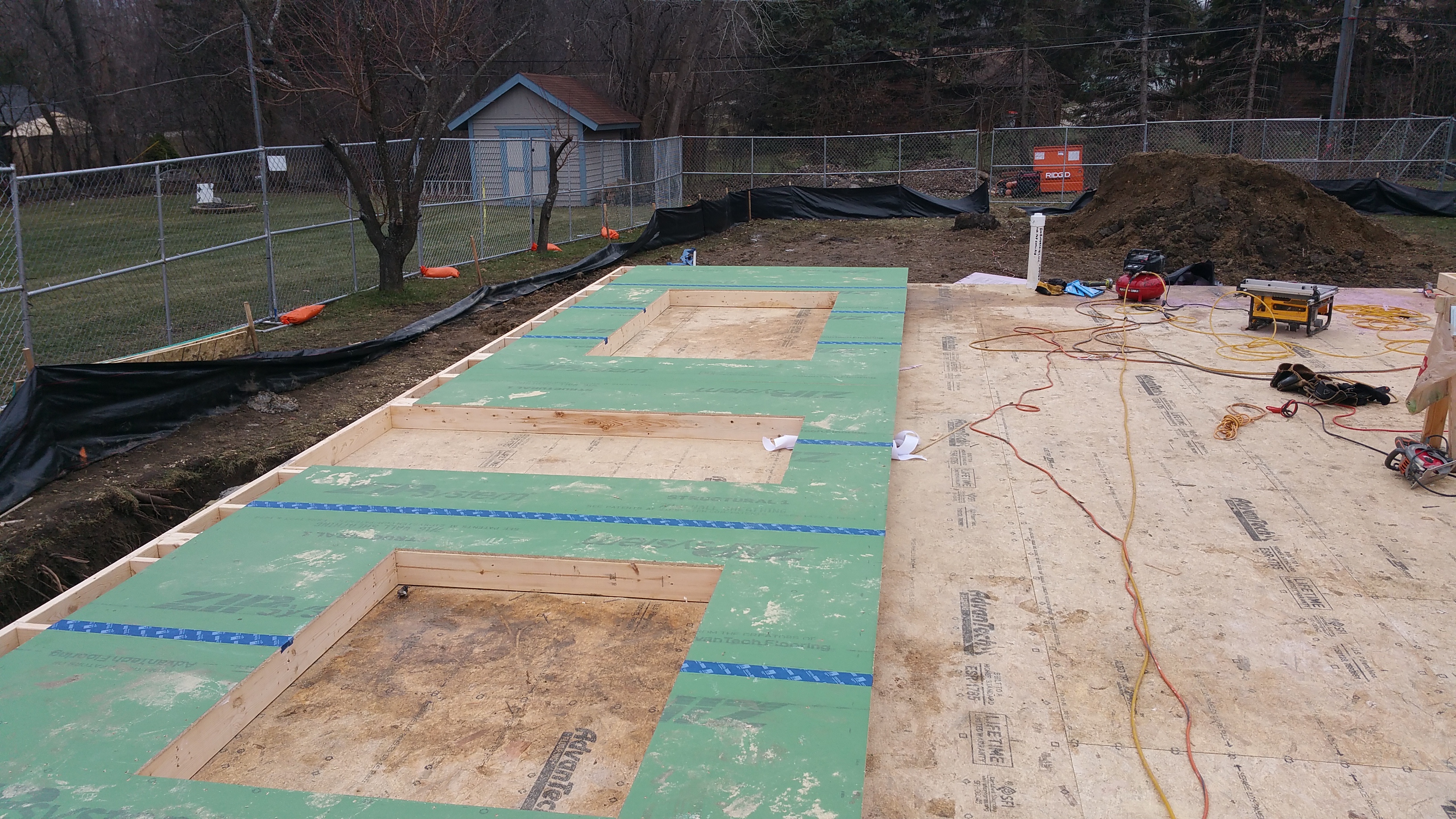
When I saw the first piece of Zip about to be installed, I realized the bottom edge, which is exposed OSB, would be sitting directly on top of the Roxul on the foundation. While it’s unlikely that water will find its way to this edge (the flashing for the wall assembly will be installed over the exterior face of the Zip at the bottom of the wall), it seemed like a good idea to tape this edge with the Tescon Vana for added protection and peace of mind (even if it only protects this exposed edge until the rest of the wall assembly is installed).

zip-first-piece-attached
First piece of 7/16″ Zip wall sheathing installed.

Knee wall pictured below had all exposed seams in the framing lumber filled with the Contega HF sealant before also applying the Tescon Vana tape, all of which was done prior to the Zip sheathing being installed. The sealant takes about 48 hours to cure enough before you can effectively cover it with the Pro Clima tapes (something to consider when setting up scheduling goals).

20170105_121618
Knee wall being covered in Zip sheathing.
zip-on-framing-covering-tescon-vana-w-roxul-below
Close-up of knee wall with Zip sheathing and sealed seams.

For the bottom, exposed edge of the Zip sheathing, I cut the Tescon Vana tape like I was wrapping a present…

Once the Zip sheathing was installed on the knee walls, I could move into the basement and seal up the connections between the Zip and the framing members, in addition to hitting any seams in the framing itself.

Once the house gets closed in, I will go back and tape the connection between the top of the foundation and the mudsill for one last layer of protection against air infiltration.

sealing-up-the-inside-of-the-knee-wall-stud-bays
Knee wall with Zip sheathing after sealing up all the connections.

Subflooring

We decided to use Huber’s Advantech Subflooring after years of reading about it in Fine Homebuilding magazine, and based on the online comments from installers who see the added benefits that come with what is an admittedly higher price point. For instance, it’s more resistant to moisture, so it should produce more stable, flatter flooring (e.g. hardwood or tile) when the house is complete, in addition to preventing annoying floor squeaks.

Billy Phil Nils first pieces of subflooring
First sheets of subflooring being installed by Billy, Phil, and Nils.

In order to maintain a high level of indoor air quality (IAQ), we’ve been seeking out low or no VOC products. So, in addition to the Advantech subflooring, which is formaldehyde-free, we chose the Liquid Nails brand of subfloor adhesive (LN-902/LNP-902) because it is Greenguard certified. Another great resource for anyone trying to build or maintain a “clean” structure is available at the International Living Future Institute website: The Red List

liquid-nails
The product takes much longer to dry when it’s cold and wet outside — at least 2-3 days in our experience (sometimes even longer). It’s nice to see more “green” products showing up in the big box stores, rather than having to always special order them.
view-of-water-tower-from-kitchen-doorway
Standing by what will be the kitchen door. The subflooring was installed with nails and Liquid Nails subfloor adhesive.
rim-joists-at-outside-corner-sealed-up
Corner of our slowly growing wall assembly. The connection between the subflooring and the top of the rim joists was eventually sealed with the Contega HF sealant. 

Basement slowly being covered by subflooring:

Walls Go Up

Our wall assembly is almost entirely based on Hammer and Hand’s Madrona House project, which I discuss here: Wall Assembly

subfloor-done-blank-canvas
Our blank canvas.

In preparation for construction, I built a mock wall assembly in order to easily explain to anyone on site how the various components should go together. It also gave me a chance to practice using the Contega HF sealant, along with the various Pro Clima tapes from 475 High Performance Building Supply.

It’s been exciting to see the walls go up, incorporating the many details in the mock wall assembly.

men-at-work
Men at work: Zach, Phil, and Sammy laying out the walls.
zip-going-on-the-walls-w-bead-of-adhesive
Zach and Phil installing the Zip sheathing over the framing.
zip-sheathing-w-phil-putting-on-continuous-bead-of-adhesive
Phil laying down a consistent and continuous bead of construction adhesive (trying to avoid a bead that runs back and forth between fat and thin), before the Zip sheathing is installed.
wall-being-prepped-w-tescon-vana-on-seams
We were fighting the rain, ice, and mud, but I was able to get the Tescon Vana tape over some of the seams in the Zip sheathing before the walls went up.
sealant-on-nail-holes-in-zip
Sammy and Billy help me apply the Contega HF sealant to each nail hole, and then make it lie flat with a swipe of the spatula, so the Tescon Vana tape that will be applied later will also lie flat.
zip-sheathing-prepped-w-tescon-vana-and-sealant-on-nail-holes
Section of wall nailed, taped, and nail holes caulked — ready to be raised up.

The final step before the walls were raised was to staple the B75 gasket to the bottom of each sill plate.

billy-zach-sammy-south-wall
First section of wall going up: Billy, Zach, and Sammy doing the heavy lifting.
phil-zach-plumb-sammy
Zach establishes plumb, while Phil readies to make the wall secure.
all-together-south-wall
The guys continue with the south walls.

View from south-east corner of the house with the guys framing in the shadow of the water tower:

The only section of wall where the B75 gasket rolled up on itself is shown below — no doubt because this was the most difficult section to get into place because of the stair opening. Otherwise, the guys had no issues with the gasket.

Even on this wall where the gasket did roll up on itself, I will cut off the excess that ended up on the interior side before sealing the connection with the subflooring, and then spend some time filling the void on the exterior side with backer rod and sealant as well.

east-wall-at-stairs-in-place-gasket-roll-up
Zach is the only dedicated, full-time framing carpenter on the crew (the other guys do a variety of carpentry-related work). He has a production background, and it shows with the energy and ease with which he works. He clearly enjoys what he does for a living (In photo: Zach, Sammy, and Billy). Sammy and Billy may not realize it yet, but they’re learning a lot from him (even if he does razz them all day long).

Below you can see some of the junctions where different materials meet, and the effort that’s going into air sealing these inevitable gaps: sealant at rim joist corners, rim joist – subfloor connection, and gasket under the wall sill plate:

wall-at-corner-w-b75-gasket-underneath
Wall is up.
wall-at-corner-w-b75-gasket-view-down-ext-side-of-wall
Same corner as above, but now looking down the exterior side of the wall.

We’ve tried very hard to keep foam out of the wall assembly and the overall structure itself (based on environmental concerns), however, one place where it did find its way in was the insulated headers for above our windows and doors:

billy-and-sammy-insulated-headers
Billy and Sammy putting the insulated headers together.
4th-wall-missing-from-backyard
End of the day. The fourth wall awaits.
east-facade-w-zip-sheathing
First look at what will become our front facade.

Once the perimeter walls were up, I went around with an impact driver and decking screws to tighten the connection between the Zip and the framing members, especially at the top of the walls. Although the Liquid Nails adhesive helps a lot, it still makes for an imperfect connection between the sheathing and the framing members:

top-of-wall-assembly-looking-down-gap-w-nail
Looking down at the top plate. The visible gap is between the side of the top plate and the Zip sheathing. I was able to close gaps like this one at the top of the walls using decking screws. The decking screws also closed similar gaps around window and door rough openings. This should make sealing these areas easier, and the connection more durable.
leaning-over-top-of-zip-sheathing
Leaning over the top of the wall to install the decking screws.

Having seen construction adhesive and nails in action, I would recommend a glue-and-screw approach if you’re trying to fully maximize the tightness of the connection between the sheathing and the framing.

sealant-with-water-tower
Nice view as I apply the sealant.
blue-chicken-pox
My wife giving our Zip sheathing blue chicken pox with the Tescon Vana tape in order to seal all the nail holes.
tescon-vana-embedded-in-ice-on-sill
It’s difficult to see, but this tape is embedded inside a sheet of ice. It rained overnight, before turning to ice. We’re asking a lot of these tapes and sealants. This piece of tape looks like fingertips holding on for dear life.
beast-looking-at-view-from-br-for-1st-time-close-up
The Beast gets a first glimpse of the view from her bedroom window.
pro-clima-pressfix
I was wondering why I would ever need more than one of these. Now I know — bent, scratched, and cracked, the Pressfix from 475 HPBS did its job well.

Foundation Details (Air Sealing #1)

14

Footings

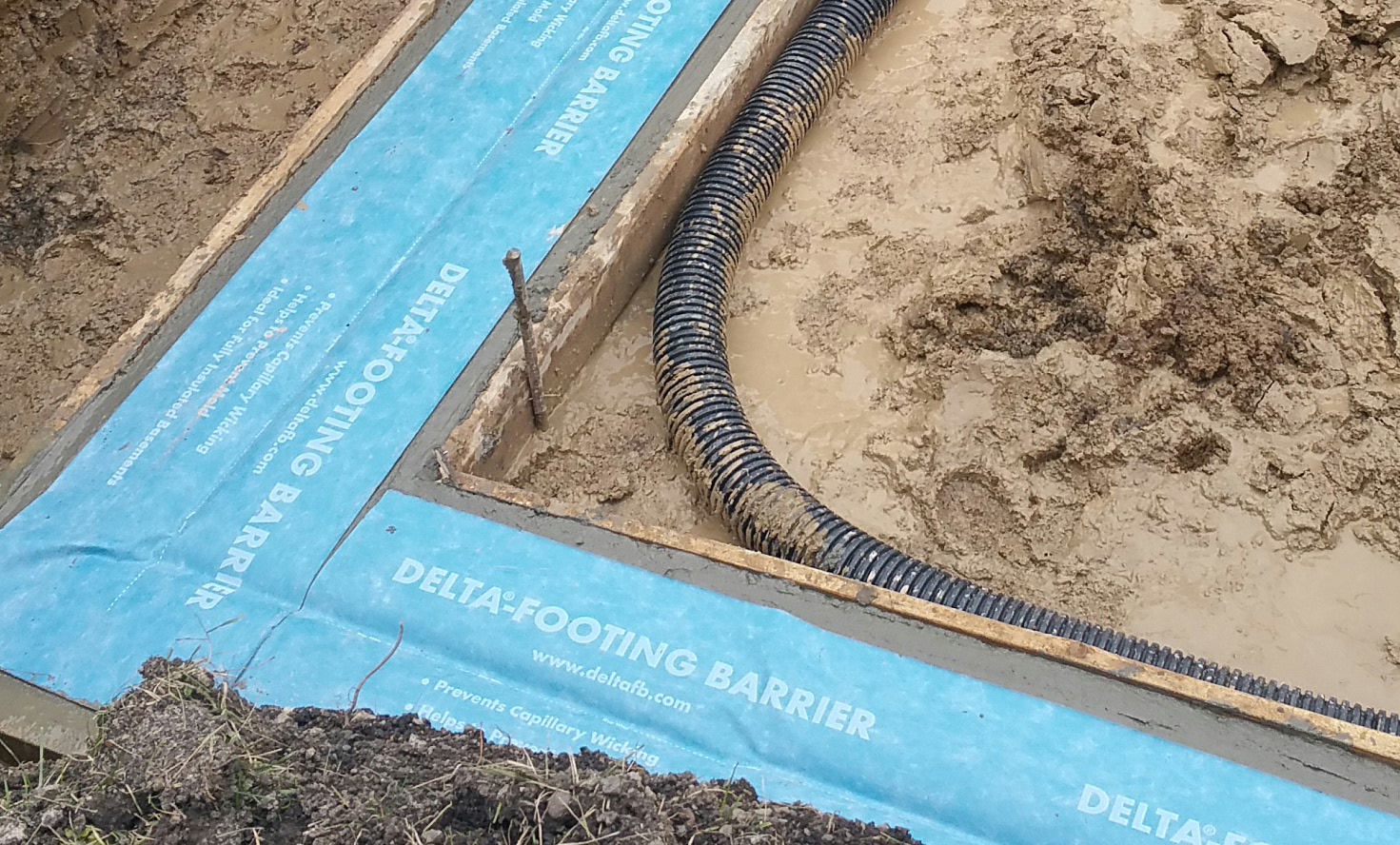
For the top of the footings we used a product from Cosella Dörken called Delta Footing Barrier. Acting as a capillary break, the membrane is supposed to help prevent moisture from wicking up from below the footing, where it could then migrate into the foundation wall and into the basement, or even the wall assembly above (worst case scenario), causing mold or other moisture related damage. It should contribute to making the basement a very livable space (especially when combined with significant amounts of insulation on the exterior walls and under the slab).

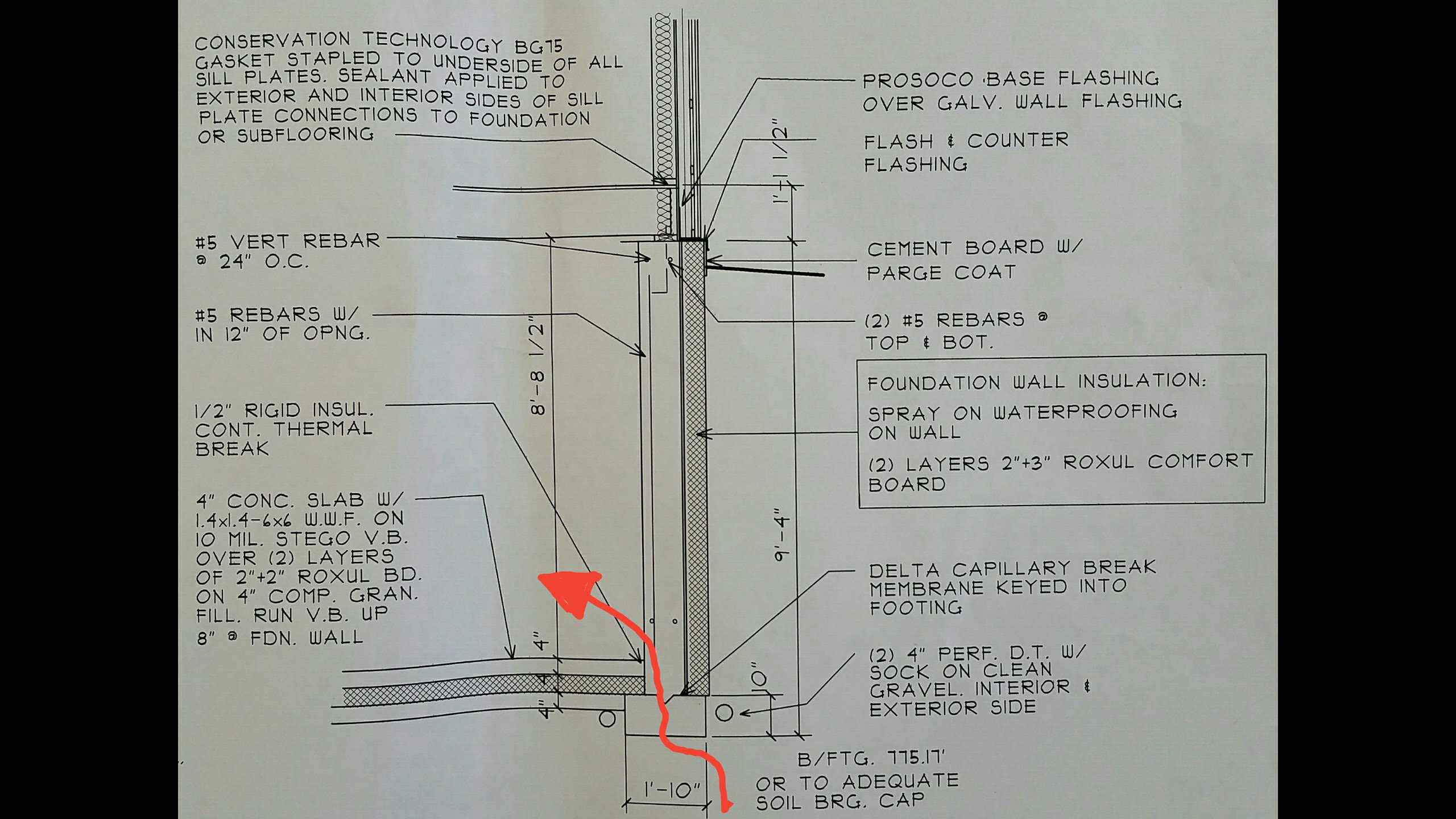
Here’s a detail from the construction drawings:

footing-thermal-bridge-up-from-soil
Red arrow shows thermal bridge and gap in the vapor barrier up through the footing from surrounding soil if Delta membrane were not present.

In other words, this junction represents a weak point in our thermal envelope and vapor barrier. Passive House proponents often talk about using a red pen on a construction drawing to follow the air barrier and thermal envelope (the goal: no gaps in air sealing or the layers of insulation) . In theory, you should be able to do this all the way around the structure without once lifting your pen. If you can lift your pen (meaning there’s a gap in your air barrier or thermal envelope — which would be the case without the Delta membrane on top of our footing), then it’s a weak point that should be addressed (if at all possible).

Even with significant insulation on the exterior wall of the foundation (Roxul Comfortboard 80: 2″ + 3″), along with a sprayed-on waterproofing membrane, as well as a vapor barrier (Stego Wrap) and insulation (Roxul Comfortboard 80: 2″ + 2″) under the basement slab, this junction where the three elements meet — slab, footing, wall — is a weak point. Although it doesn’t address the weakness in R-value, at least it should keep the moisture at bay (probably the biggest complaint associated with basements).

With a 9′ basement, we’re hoping the temperatures at this depth are consistently mild enough to avoid any kind of significant energy penalty. I’m confident this will be the case because in our last home, a typical suburban tract house without much insulation, the basement always stayed cool in the summer and warm in the winter, even though the ducts to the basement had been closed off so the space never saw any direct benefit from the HVAC system.

For minimal cost in materials, the Delta membrane seems well worth it for the added peace of mind.

foundation-delta-membrane-in-box
Rolls of Delta Footing Barrier on site and ready to go.

Here is a video and some photos from our job site:

The guys from Tynis Concrete didn’t seem to mind trying something new, and the membrane went on without any issues.

foundation-delta-fabric-close-up-in-corner
A corner of the footing with the Delta membrane “keyed” into the footing.
I couldn’t find any local suppliers who carried the Delta membrane, so I ordered online from: spycorbuilding.com

foundation-mud-shot
Detail of the bottom of our hole, being prepped for the footings.

Foundation Walls with Roxul Comfortboard 80

For the walls, first we used a spray-on waterproofing membrane from Tremco:

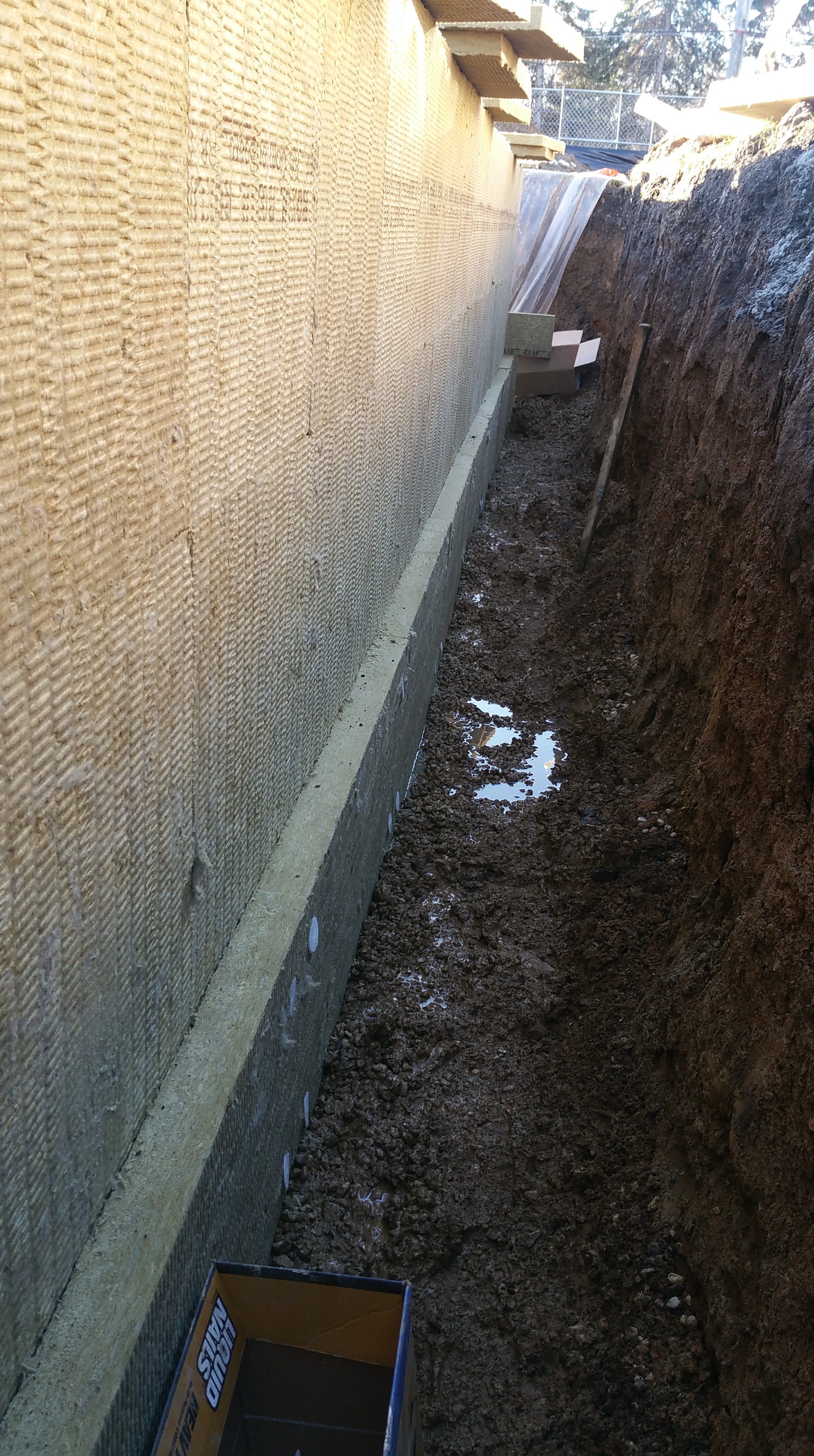
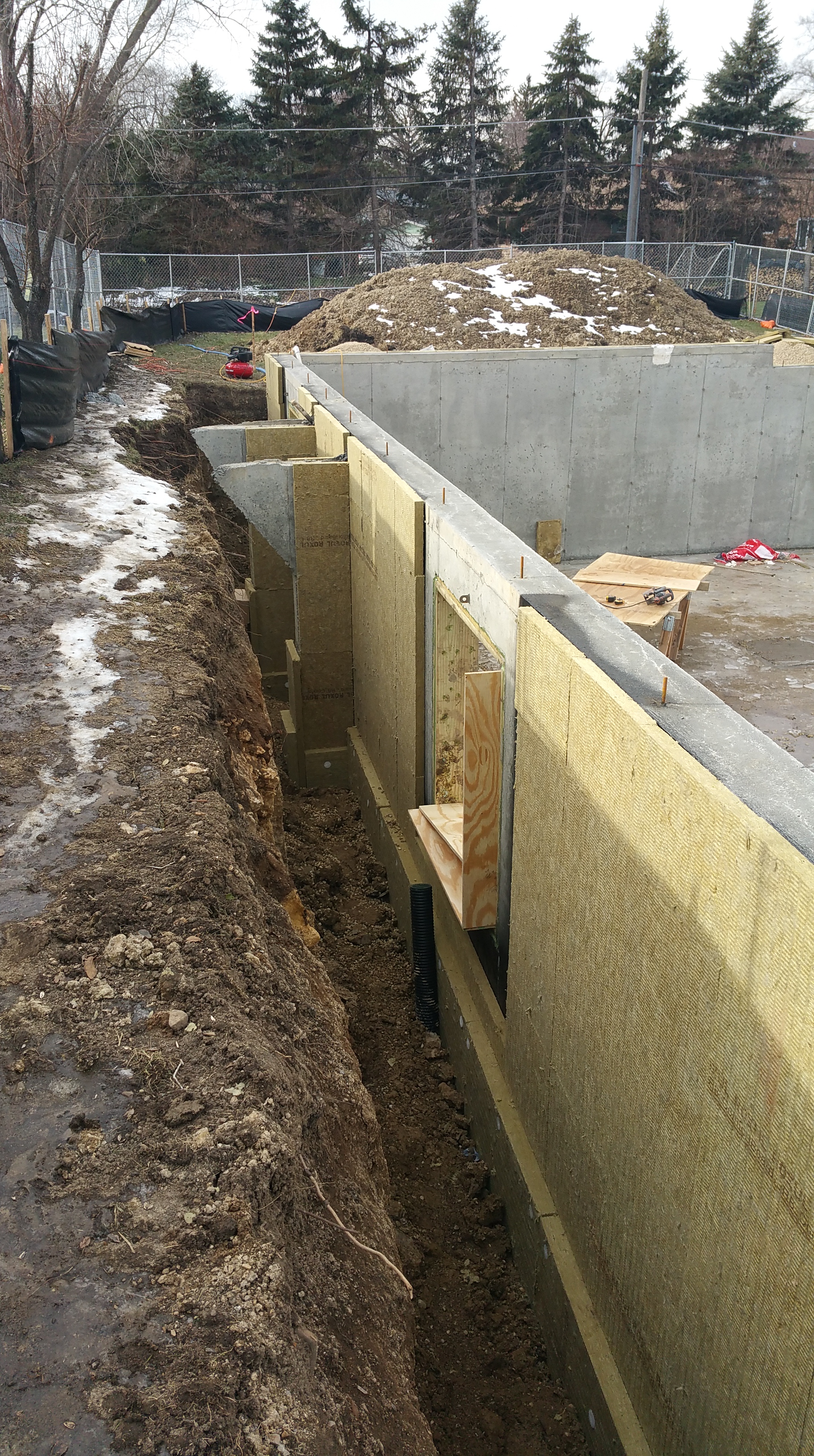
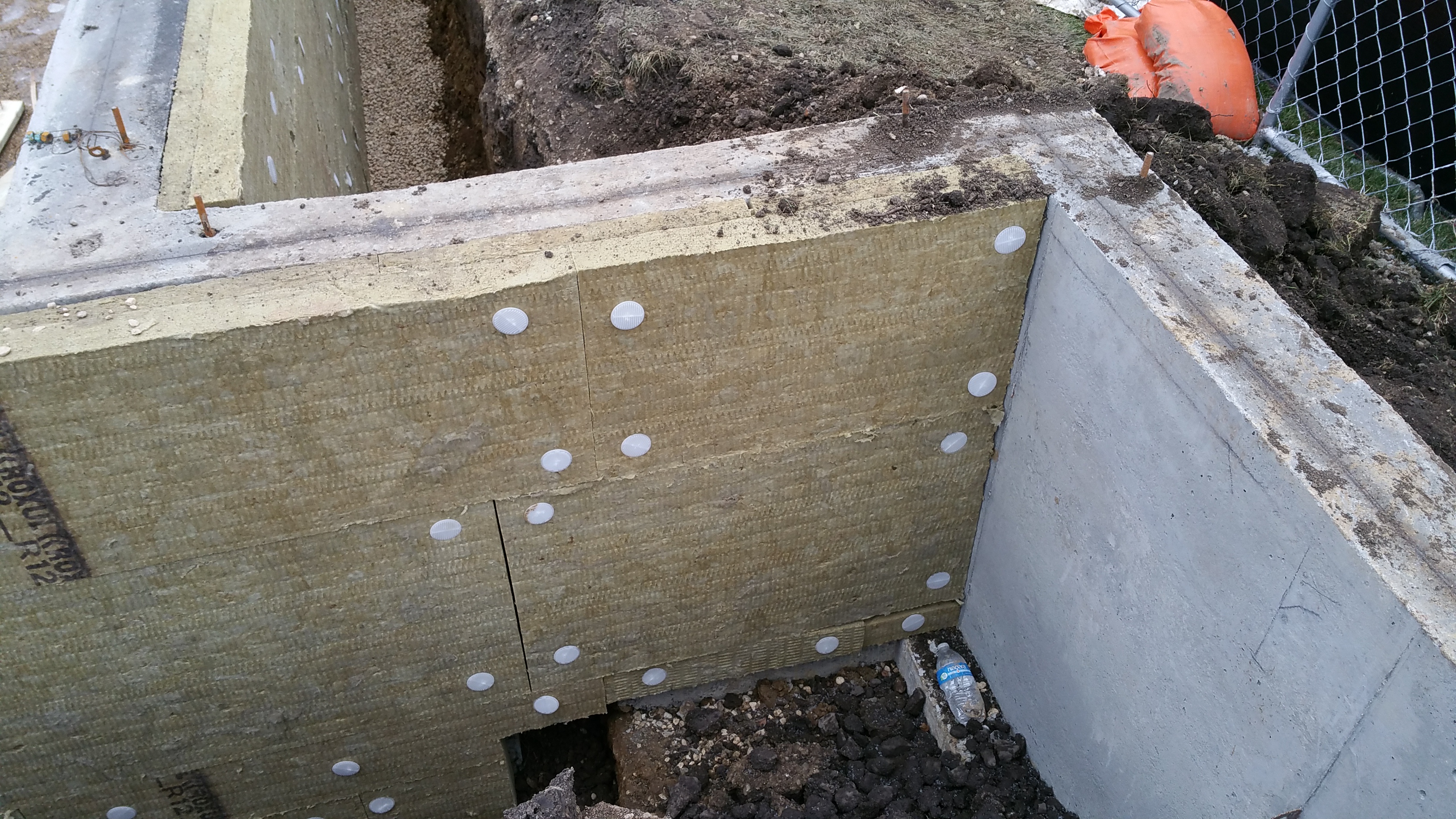
After the waterproofing was complete, we began installing the two layers of Roxul Comfortboard 80 (a dense, rigid form of insulation that can be used below grade, to the exterior side of wall sheathing, and even under a basement slab), which will give the basement foundation walls an R-20 of insulation value.

roxul-delivered-to-the-site
Roxul delivery shows up on site (Comfortboard 80: 2″ and 3″ thick). Roxul is showing up in the Big Box stores here in the Chicago area, so it’s becoming easier to order.

When questions came up about how to install Roxul, or which product to use where, their technical help via email was great — in our case, Fiona Schofield, who gave us a lot of useful information — including the document below, a study on the long-term condition of Roxul (aka stone, rock, or mineral wool) in a below grade application (i.e. up against an exterior foundation wall):

external-thermal-and-moisture-insulation-of-outer-basement-wall (pdf)

In addition, after finding the video below online, in which what looks to be a European version of Roxul is attached to a cinder block wall with an adhesive, or a thinset mortar,

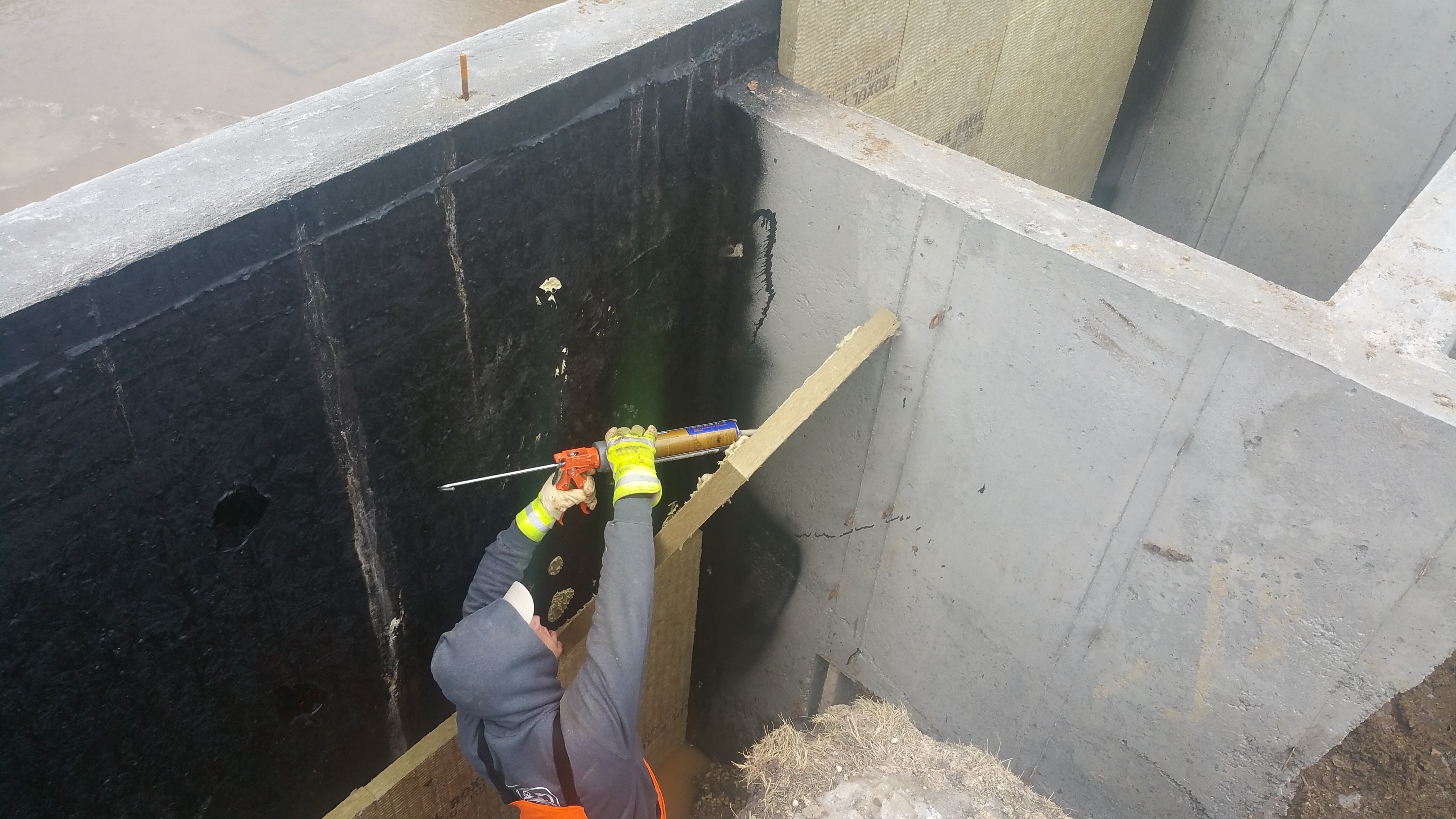
I contacted Fiona and heard back that it was ok to use an adhesive for our first layer (PL Premium, or similar polyurethane adhesive caulk), so long as we used a mechanical fastener for the second layer. In effect, the first layer just needs to stay on long enough for us to get the second layer up and attached with a mechanical fastener. This really saved us some time since the guys didn’t have to drill two full sets of holes.

sammy-butters-the-back-of-the-roxul
Sammy hitting the back of the Roxul with Liquid Nails before setting it into position. The adhesive worked really well at keeping the Roxul in place, even when the foundation was damp in certain areas.

The guys also didn’t seem to mind cutting or otherwise working with the Roxul. We used serrated knives we purchased from Home Depot, made especially for cutting rock wool…

serrated-knife-for-roxul
This knife, purchased from Home Depot, works really well cutting the Roxul.

…which worked fine, but then after some experimenting, the guys also began using a small, handheld sawzall (reciprocating saw), and even a table saw, to get the exact-sized pieces we needed to ensure staggered seams. I had my doubts about the table saw, but Phil said the Roxul cut easily, and it really didn’t seem to kick up a lot of dust (although he did wear a dust mask for protection).

nils-and-bill-getting-1st-layer-of-roxul-up
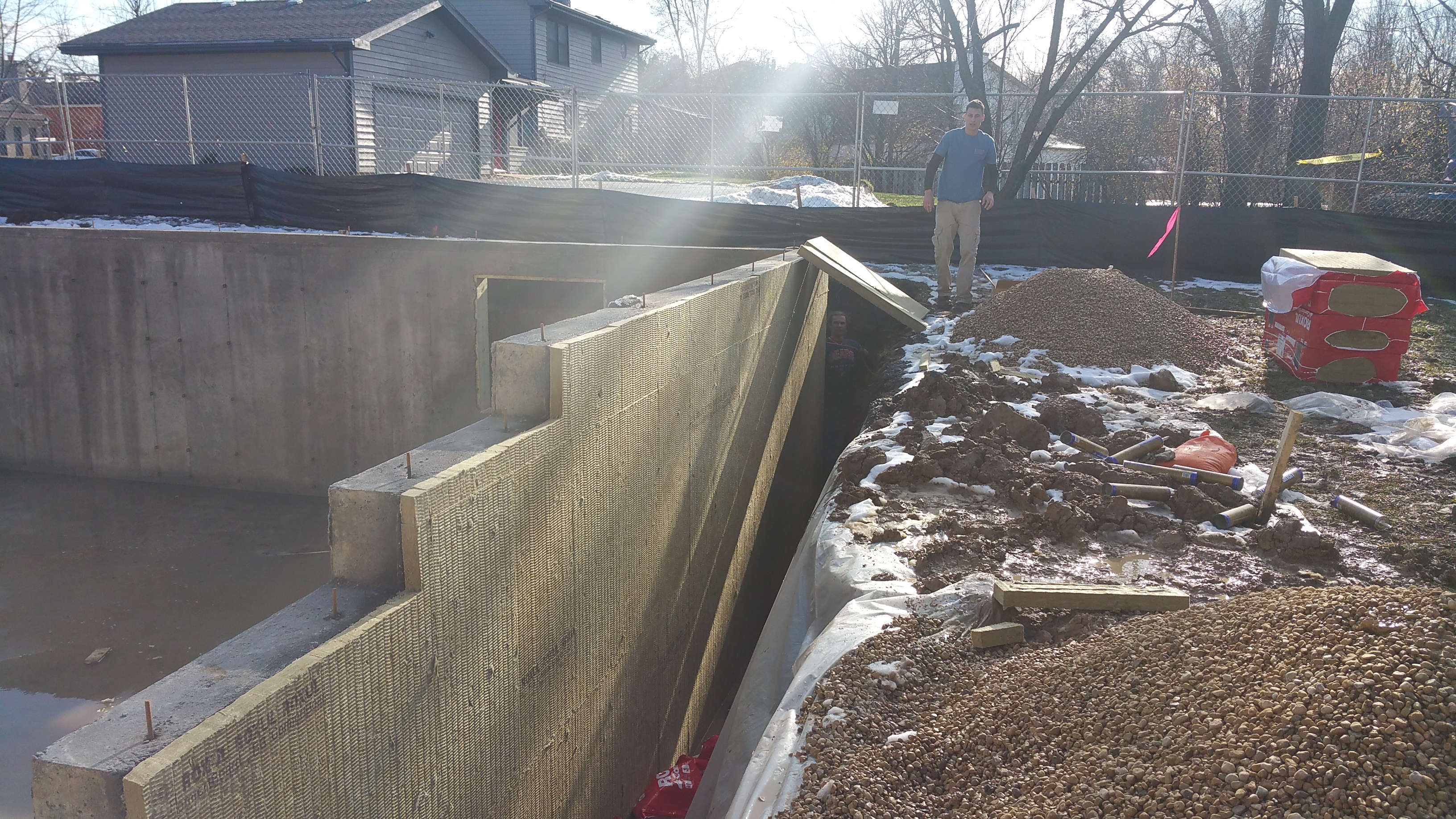
Billy and Nils (in the hole in the background) gluing up the first layer of Roxul.

Once the first layer of Roxul (2″ thick) was in place, we could then install our second layer of Roxul (3″ thick) over the top of it.

After a lot of research, and even posting a question on Green Building Advisor…

Attaching Roxul Comfortboard 80 to Exterior of Foundation Walls

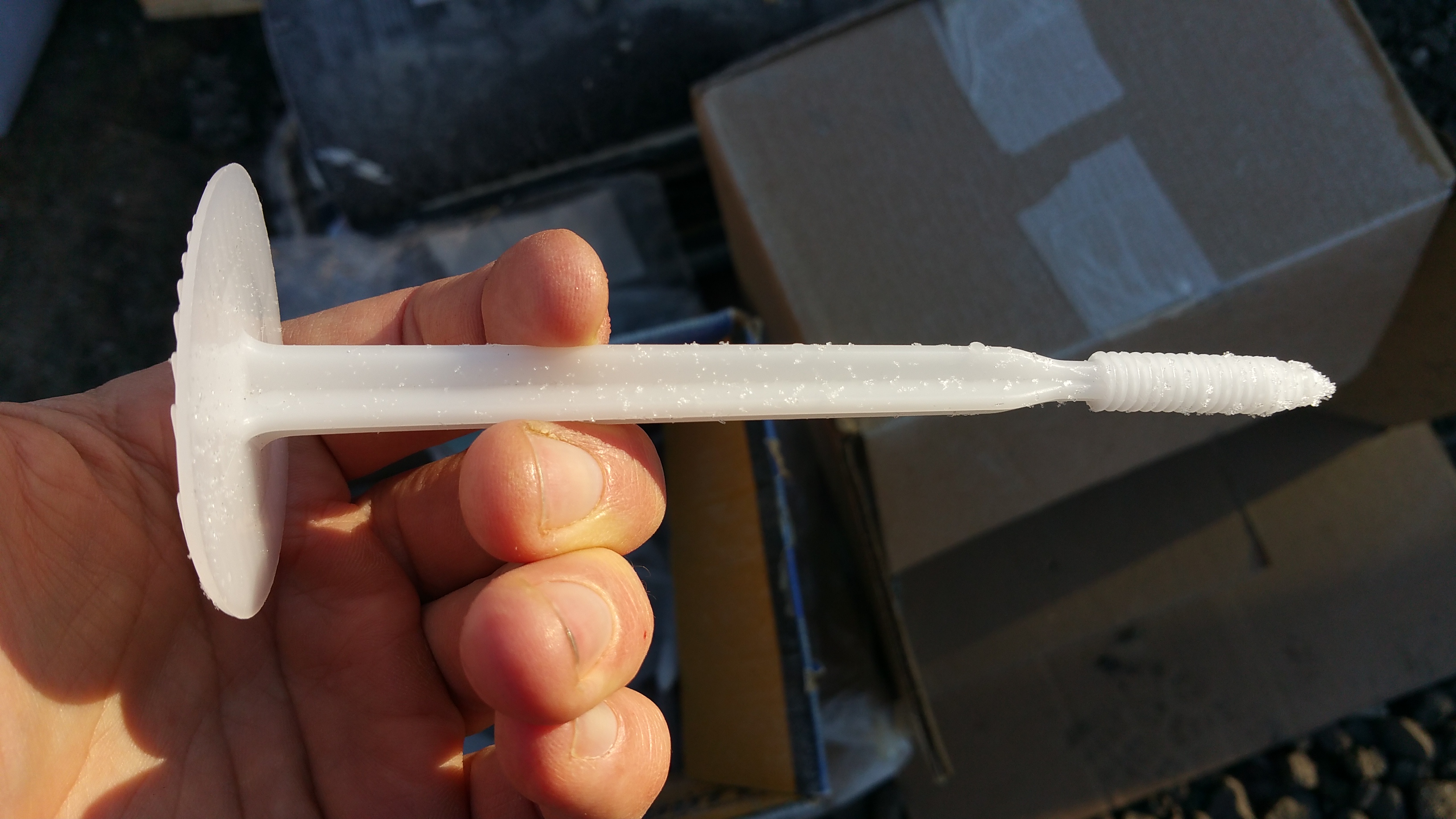
…we decided to go with the Rodenhouse fastener (Plasti-Grip PMF):

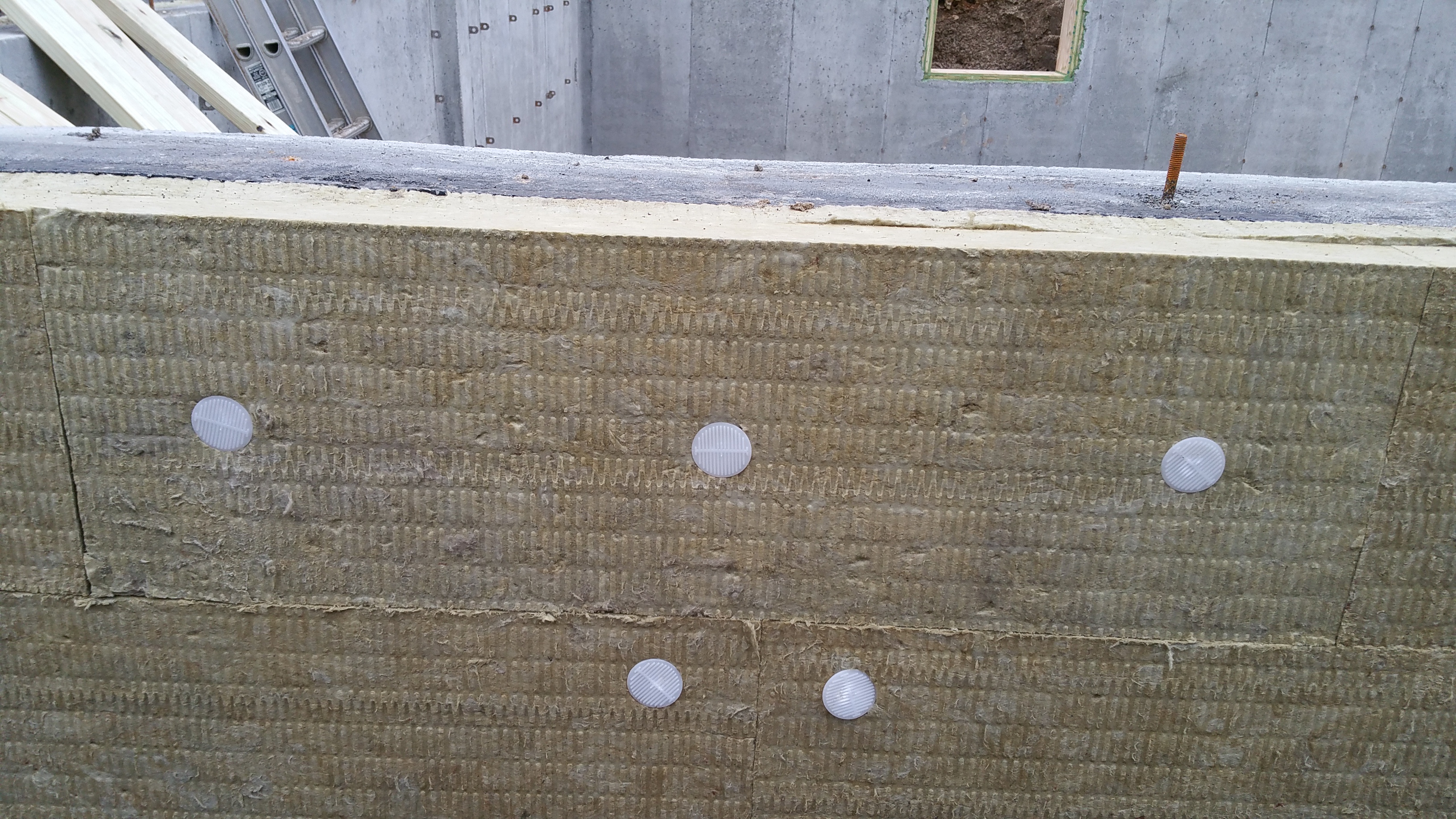
These really are as easy to install as depicted in the video. Using a hammer drill with a 5/16″ bit, the guys drilled a hole to the depth of the fastener, before tapping the PMF fastener home with a hammer. It’s a genuinely straightforward process. Sometimes a fastener wouldn’t sit perfectly, but as long as a majority of the fasteners on each board did, it didn’t seem to be a problem. Based on what I read online, they were much easier to work with than if we had to use Tapcon or similar concrete screws.

rodenhouse-fastener-close-up
Close-up of the Rodenhouse PMF fastener.

They weren’t cheap, but they were well worth the cost in materials for the savings in labor (and frustration). And Mitch Mahler, from Rodenhouse, was easy to work with via email in terms of ordering or getting answers to technical questions.

rodenhouse-fastener-box-w-label
The box the fasteners came in.
in-the-trenches-w-roxul
In the trenches, as the second layer of Roxul gets attached with the Rodenhouse fasteners.
long-narrow-piece-of-roxul-w-3-fasteners
Long, narrow piece of Roxul with 3 Rodenhouse fasteners.

Normally, Roxul recommends 5 fasteners per piece (4 in the corners, 1 in the middle), but we found that 4 on a normal piece, and 3 for a long, narrow piece worked fine — at least for the foundation, where the backfill will help to keep the Roxul in place over the long haul.

Thermal Bridging in the Foundation

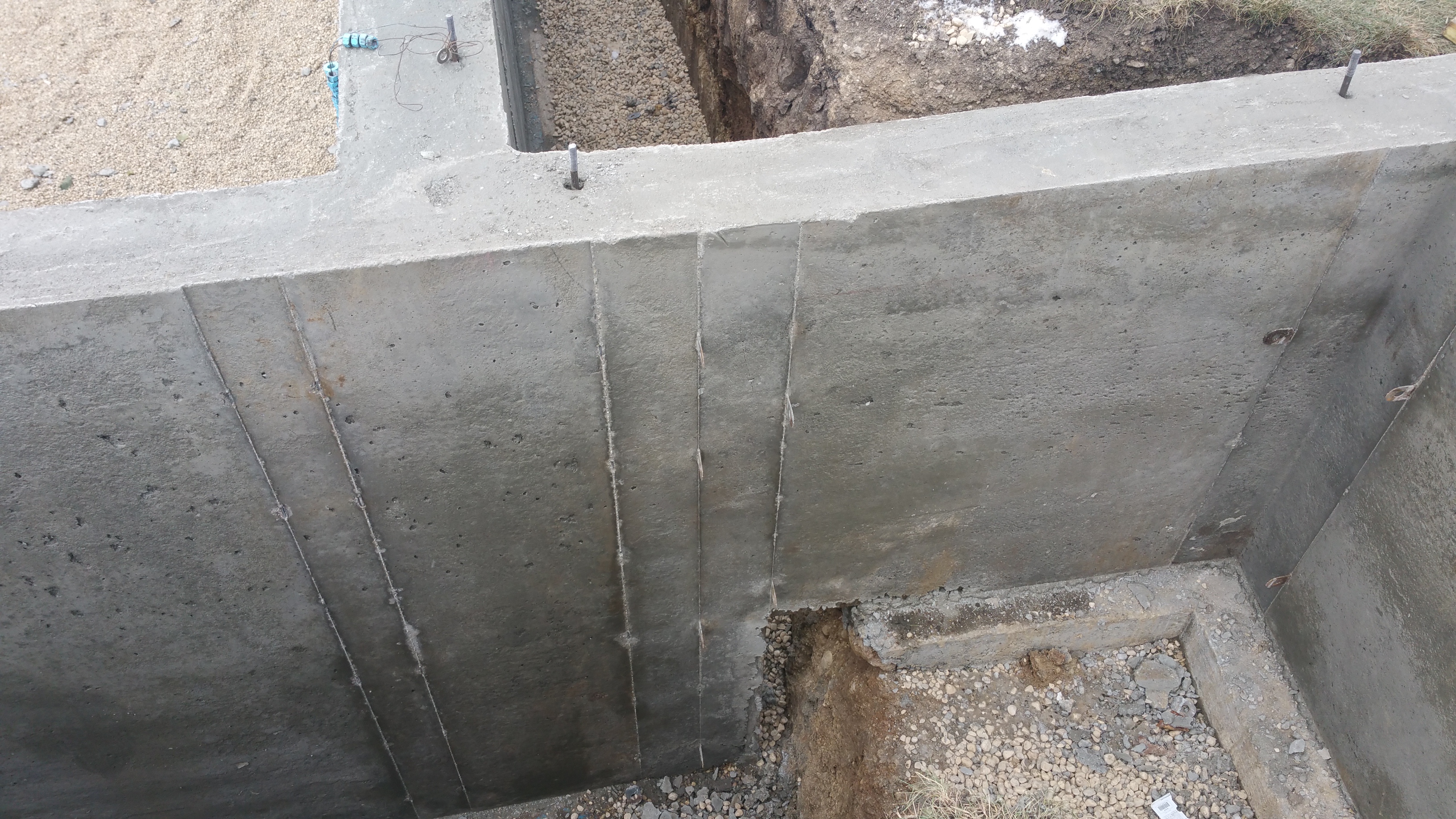
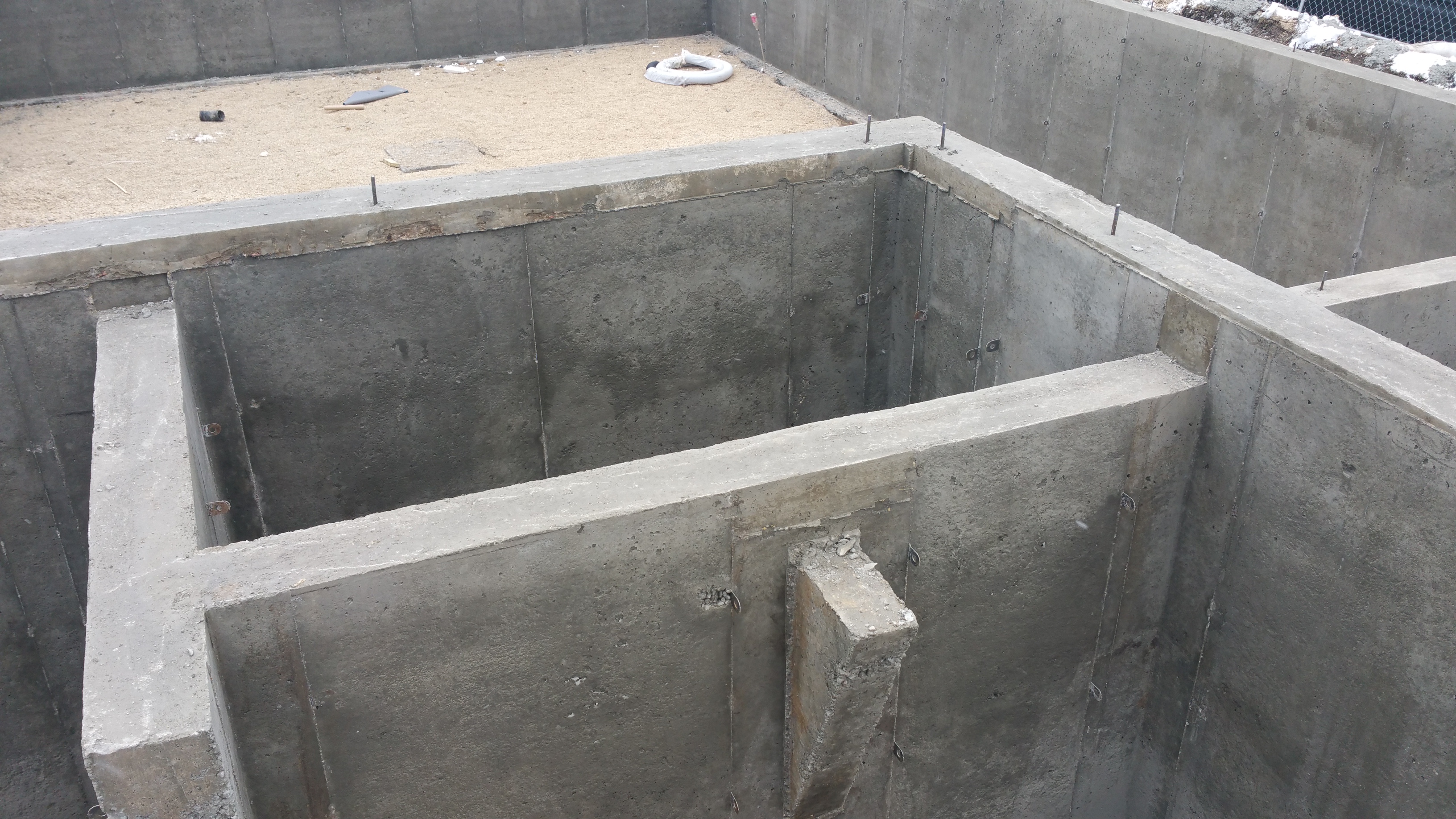
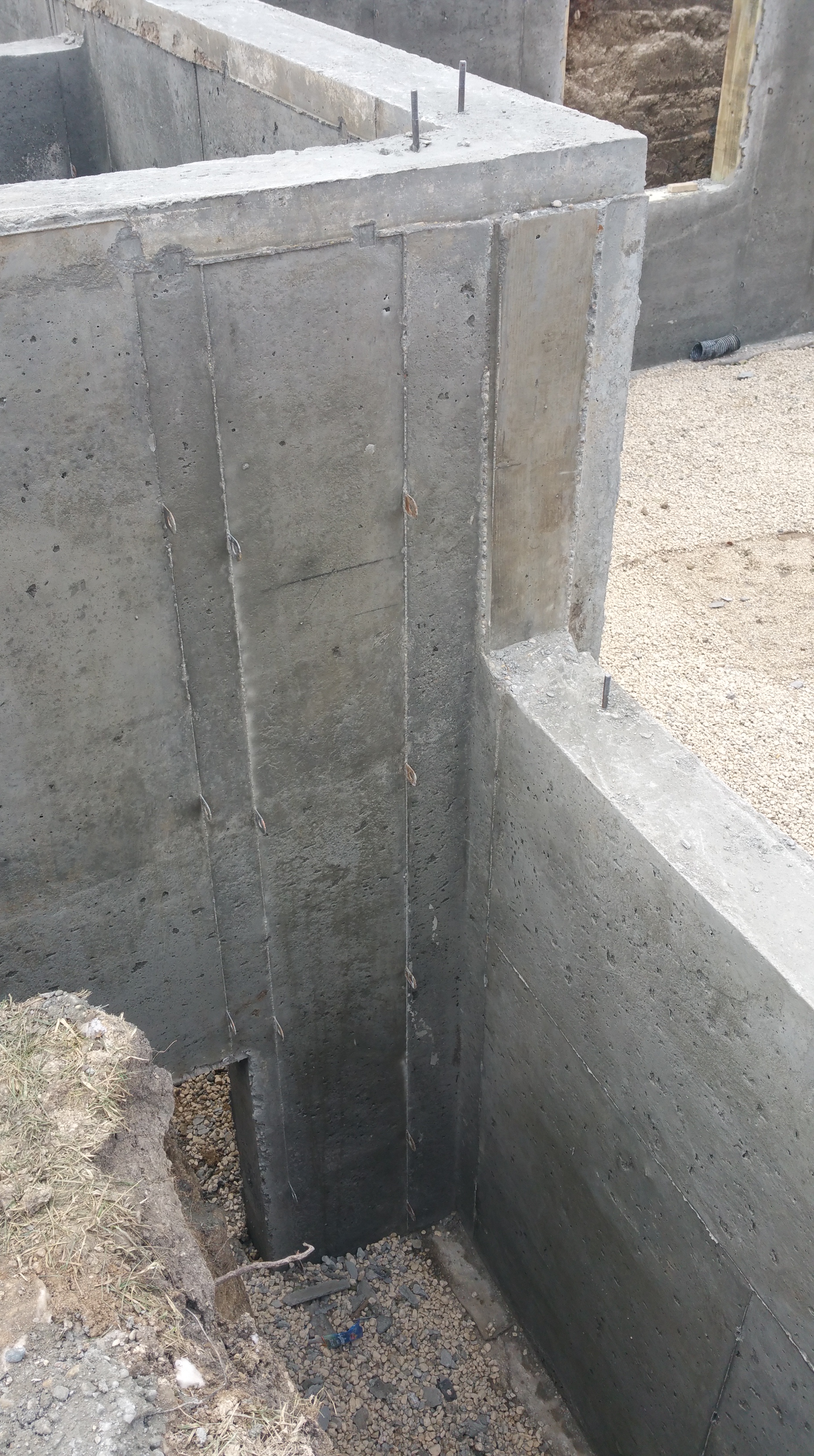
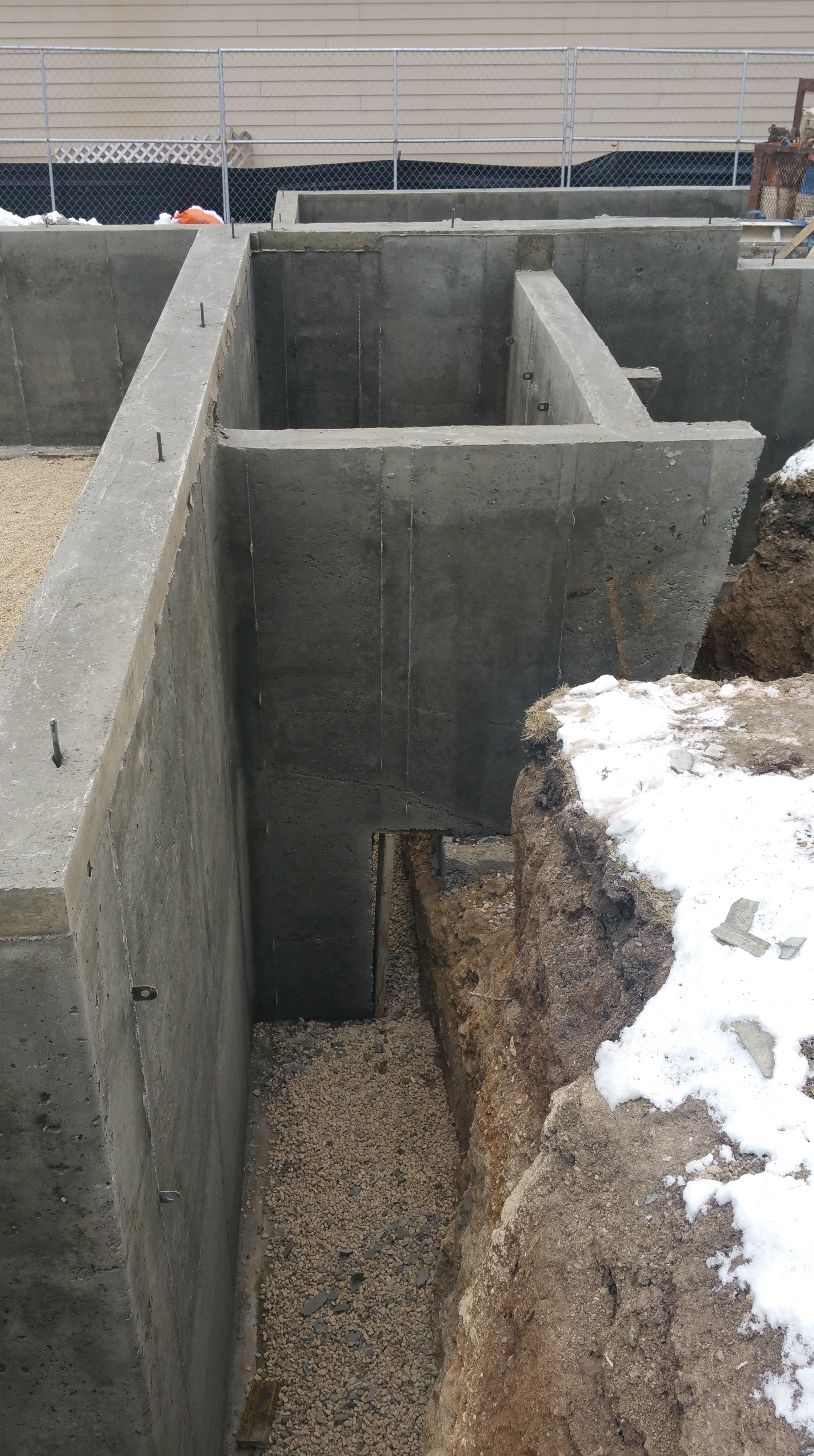
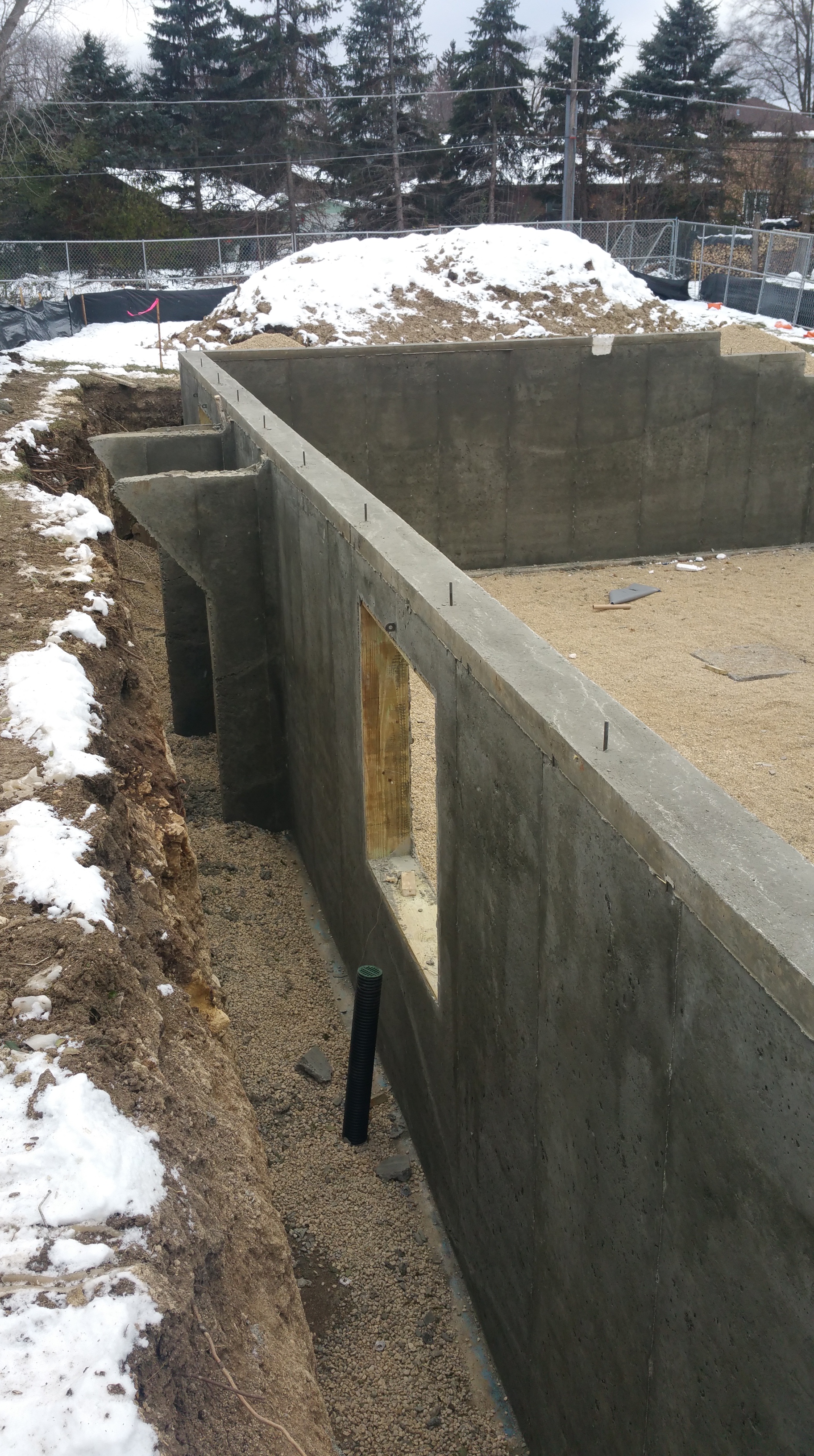
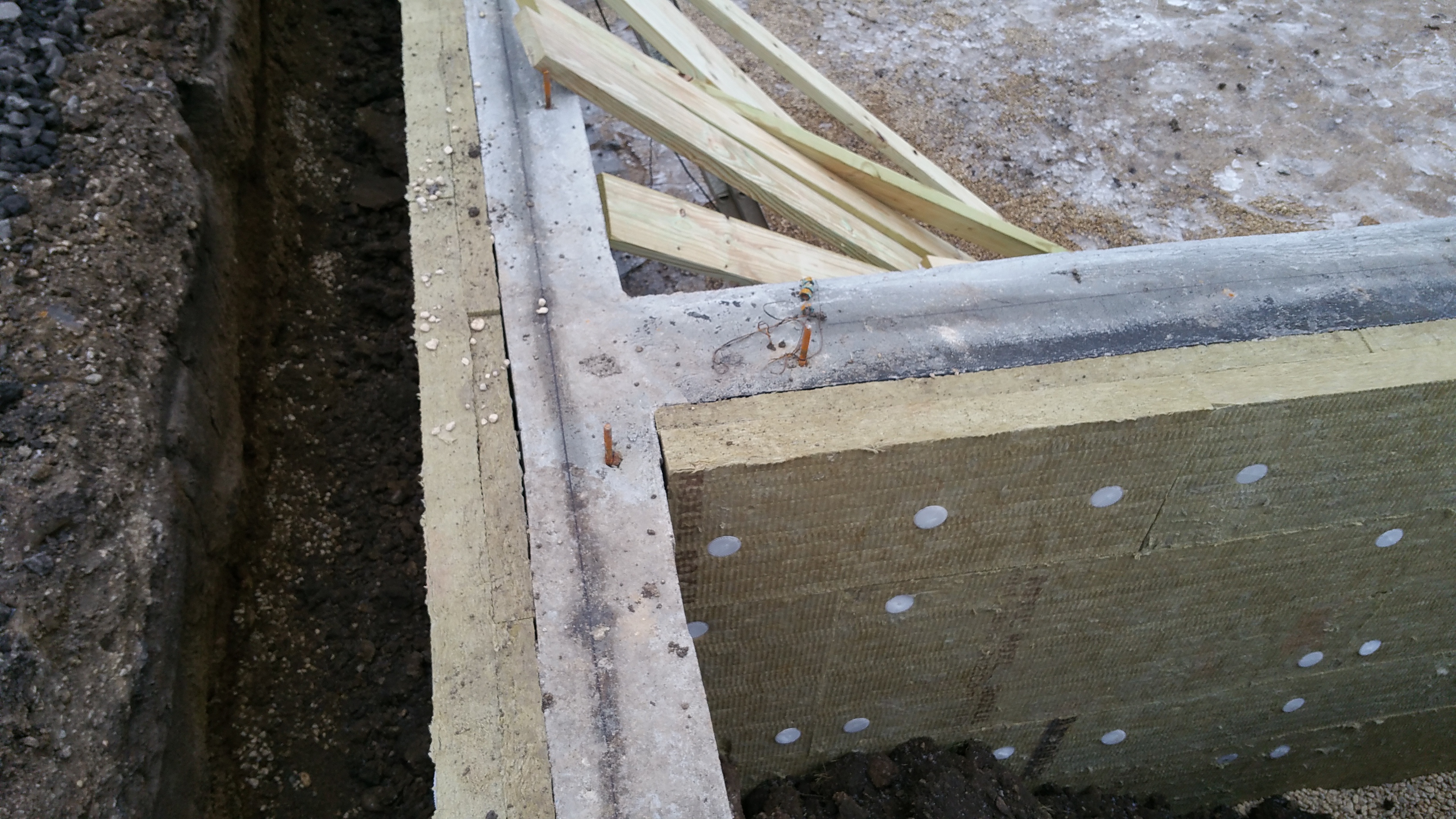
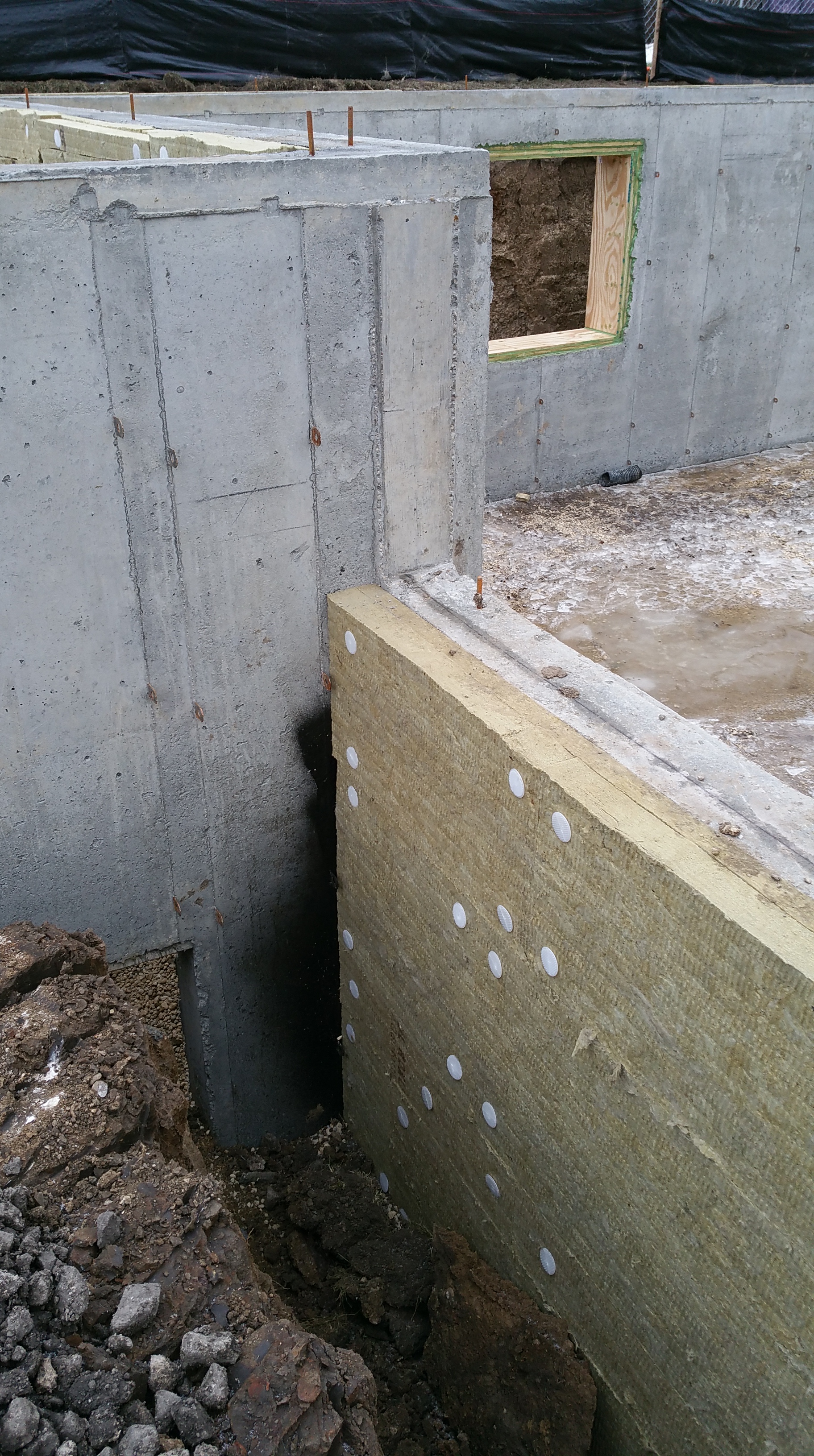
Following Passive House science principles, we tried to remove as many points of thermal bridging in the structure as we could. One area where this was addressed in the construction drawings was a 7″ thermal break between the basement foundation and the attached garage foundation. In other words, there would be no physical connection between the garage and house foundations at all. The only connection would occur above, at the level of framing, where they would be tied structurally together. The idea was that we could place our two layers of Roxul (2″ + 3″) in that gap, thus maintaining our 5″ of Roxul on the exterior of the foundation, uninterrupted (the key point here) around the perimeter of the basement foundation.

On the day the footings were installed, however, our concrete subcontractor expressed serious reservations about the long-term structural stability of the framed house and garage above this gap — in effect, he was worried that over time the two foundations might settle and move apart, wreaking havoc with the framed structures above.

So I was back to post another question on Green Building Advisor (a fantastic resource for any green build or self-build) on the topic:

How important is a thermal break between a house foundation and an attached garage foundation?

Here are some photos showing these connections:

foundation-north-corner-garagehouse-connection
Garage foundation meeting up with corner of house foundation (north side of house).
foundation-garage-house-connection-north-corner
Close-up of this garage-house foundation connection, from inside the garage.
foundation-front-porch-garage-to-house-porch-to-house-connections
Front porch. Thermal bridge from garage to house is off to the far right.
foundation-garage-house-connection-inside-corner-of-garage-inside-corner-of-front-porch
Inside corner of garage where garage-front porch-house connect.
foundation-front-porch-to-house-connection-outside-corner-of-porch
Outside corner of front porch. Technically, another thermal bridge from porch to house foundation.
foundation-side-porch
Wing wall for side porch stoop. Yet another thermal bridge to the house foundation.

Unfortunately, there just doesn’t seem to be a lot of information available as to how to proceed. In the end, we decided to ignore these connections, hoping that the thermal bridging at these two points (garage-house, garage-front porch-house), in particular, won’t be all that significant (to our heating and AC costs, or, for example, cold getting into the foundation and then rising up and getting into the wall assembly above these two points where it could become interstitial condensation — unwanted, and potentially dangerous, moisture in the wall).

I assumed Passive House builders would incorporate rigid foam insulation into the concrete forms at these points, but I couldn’t find any pictures or descriptions showing or talking about this in books, magazines, or anywhere online. Either Passive House builders ignore these kind of connections, or I just missed the information somehow. 

*** If anyone knows of good sources on this, let me know, and I will post links here to help others in the design stage of their own build ***

Update: David Goodyear is building a Passive House in Newfoundland, and he has successfully used rigid foam between the house and garage foundations. You can read about it on his blog here:

Flat Rock Passive House: A Tale of Two Foundations
foundation-side-porch
BEFORE: Monument to Italian Brutalism.
side-porch-getting-wrapped-in-roxul
AFTER: Wrapped in snuggly blanket of Roxul. The wing wall was eventually entirely covered except for the tops.

Below are the other points of thermal bridging in the foundations, now covered in Roxul:

south-inside-corner-of-garage-w-roxul
Corner of garage foundation meeting up with house foundation (standing inside garage).
south-view-of-garage-house-foundation-connection-w-roxul
Same corner, from outside, looking at house foundation to the right.
inside-garage-garagehouse-connection-w-roxul
Garage-front porch-house connection (from inside garage).
front-porch-w-roxul
Outside corner of front porch meeting up with house foundation.

We did our best to cover these thermal bridges, but clearly it’s imperfect, so all we can do is hope there won’t be a significant energy penalty associated with these connections.

Basement Windows and Roxul

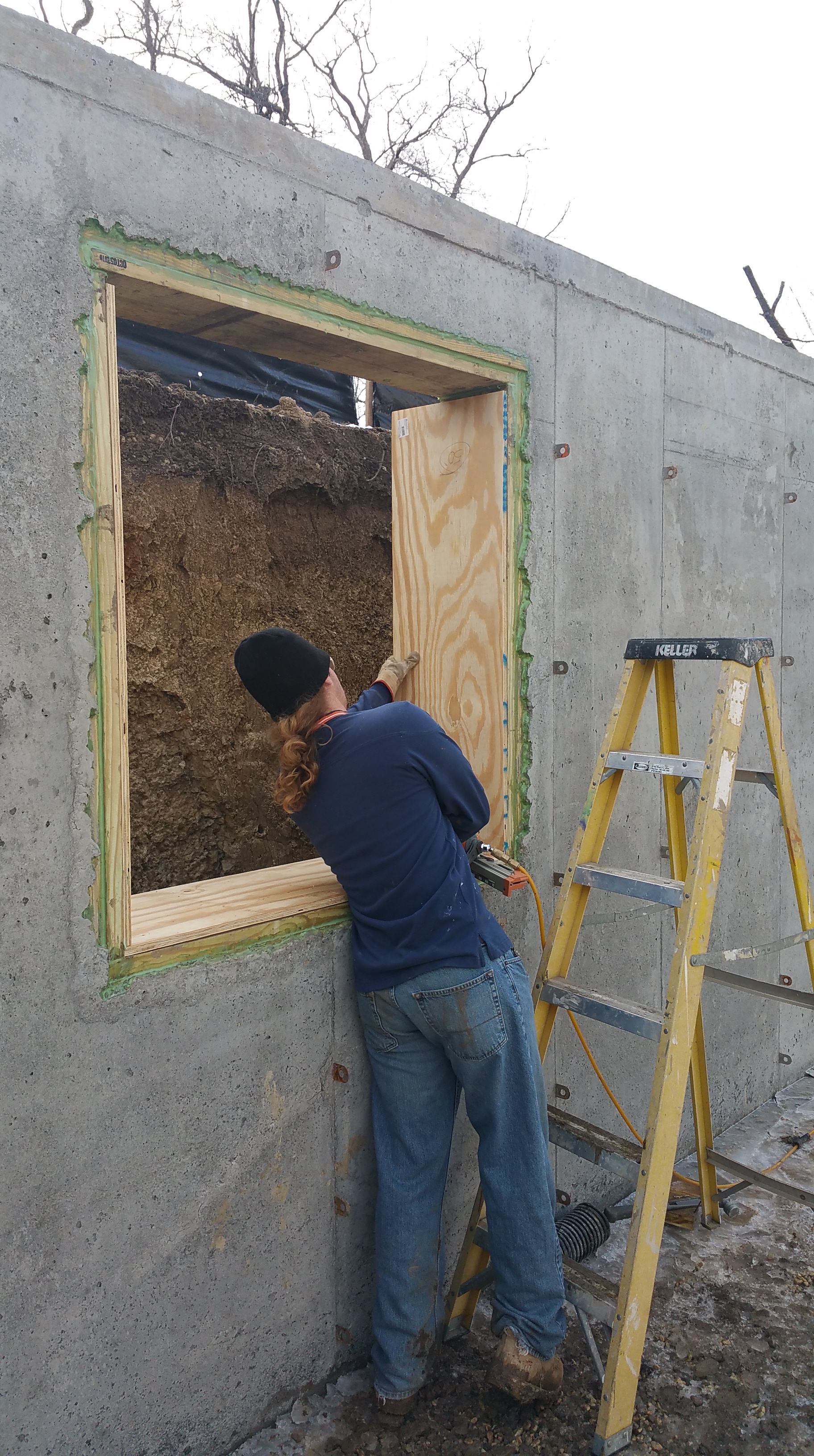
As the Roxul was going on the foundation, Phil and Nils installed window bucks for the two basement windows. The bucks were sized so they meet up flush with the two layers of Roxul. Eventually a layer of HardieBacker board and two coats of Tuff II (the product we’ll be using for the parge coat) will cover the window bucks, and also the transition between the top of the foundation walls and grade around the perimeter of the house.

nils-installing-basement-window-bucks
Nils installing the basement window bucks as the Roxul is being installed on the exterior side of the foundation.

I initially intended to use the R-Guard line of liquid membranes by Prosoco for air sealing and waterproofing all seams and window/door openings, but cold temperatures made this impossible (they require 40° F and rising, which would be the exception rather than the rule here in Chicago for December and January). Maybe because of years house painting (caulking and drywall patching) the liquid membranes seem easier to use and less fussy to get right (the big issue with the tapes is avoiding wrinkles and properly shingle flashing to get water moving in the right direction).

Our Plan B was the series of Pro Clima products sold by 475 High Performance Building Supply. Most of them, including the sealant, can be used down to 14° F without issues.

Another option would’ve been the line of Siga tapes, another popular choice used in Europe, available from Small Planet Supply.

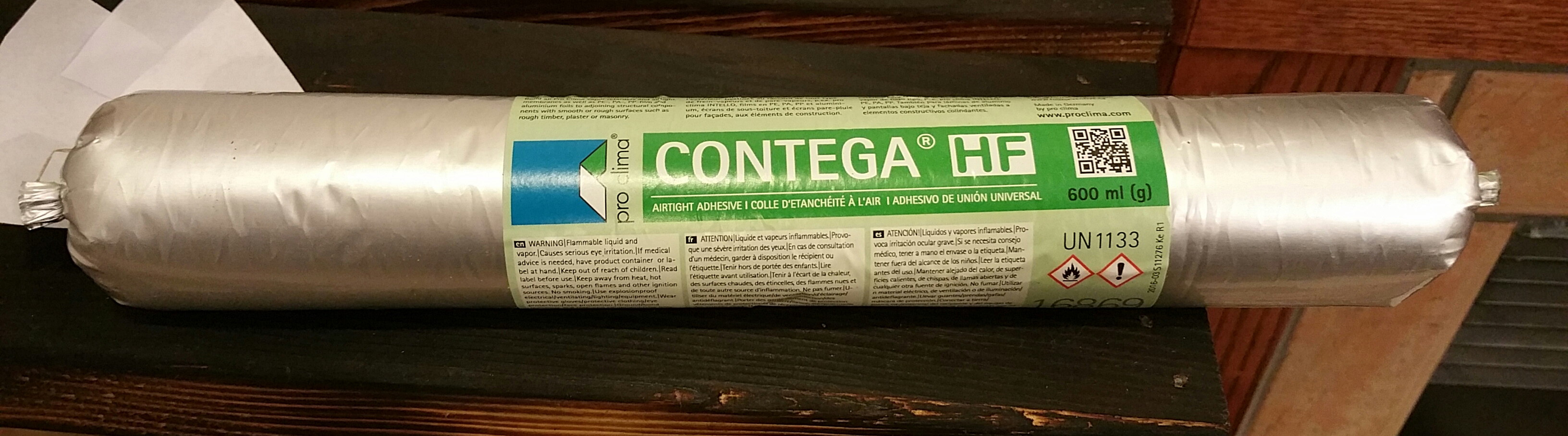
So as the window bucks went in, I followed, applying Contega HF sealant to all the seams and gaps. The sealant is acting as our first layer of air blockage. It’s super sticky, so I don’t doubt that it’s permanently flexible. I did a mock-up of our wall assembly months ago, and the HF on the seams is still tacky to the touch. It goes on light green, then slightly darkens as it dries.

contega-hf-sealant-in-20-oz-sausage
Contega HF sealant in a 20 oz. sausage. It’s also available in the more familiar 10 oz. caulk tubes.

A few suggestions for using the HF Sealant:

  • I’ve found that completely snipping off the metal clip on the end of the sausage (as opposed to just cutting a couple of small slits around it) prevents it from getting jammed in the front end of the gun.
  • If I have a half-finished sausage of HF at the end of the day, I put it in a tightly wrapped plastic bag overnight (see photo below), which allows me to use it within a day or two without any problems.
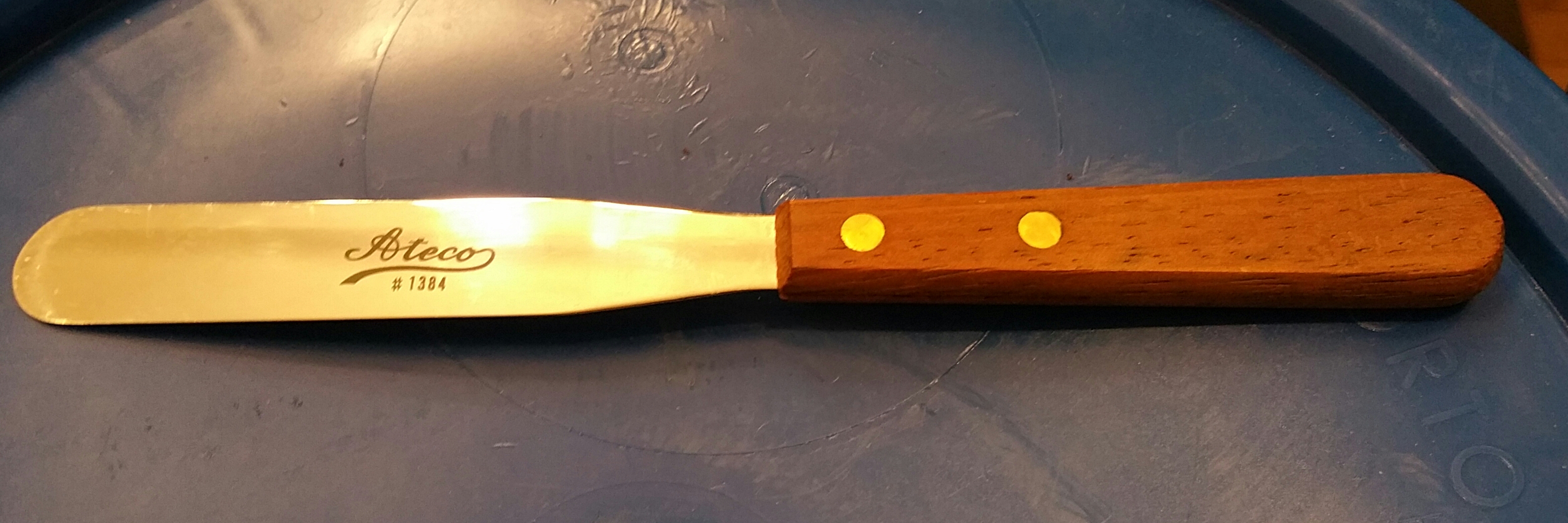
  • Use a tiny spatula (see photo below) to tool the HF into place rather than your finger, as you normally would with a caulk — it’s just too sticky.
  • Because the HF is so sticky, I wear Nitrile gloves, so when it starts to get everywhere — and it will get everywhere if you let it — I just simply change to a new pair.
  • For clean up, the Citrus Solvent we’ve been using with the tung oil works great.
newborn-sausage-gun
The Newborn brand of sausage gun we’re using for the HF sealant. Found it on Amazon. A really well-made tool.
ateco-spatula
Found this on Amazon. I thought it was construction grade, but it’s made for kitchen use. It’s durable, and I like the thin blade since it offers more “feel” than a thicker blade, making it easier to tool the HF into place without displacing too much of it in the process.

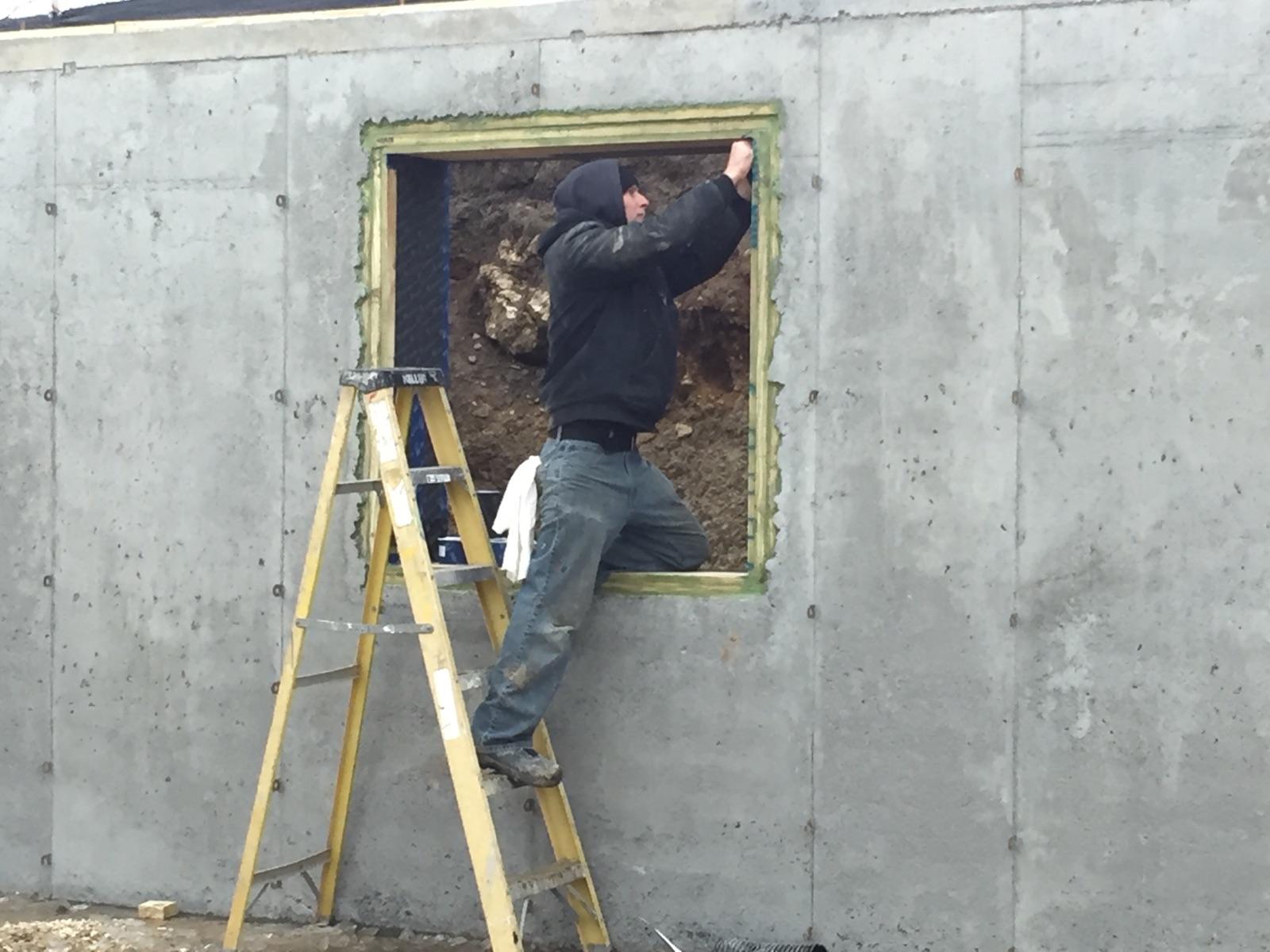
It’s easy to forget the realities of a construction site when planning details, like the use of the Pro Clima tapes. I pictured it being a pretty straightforward process, not a winter day in the 20’s, fingers numb, propped up on an unbalanced ladder in the hole, while the other guys are cutting wood and Roxul around me — a case of adapt or die, I guess, and a reminder not to be overconfident about the products you’ll be using, or the installation process that inevitably goes with them.

installing-pro-clima-tapes-on-ext-side-of-base-wdw-bucks
Applying the Pro Clima tapes to the exterior side of the window bucks.

It was important that the connection between the window bucks and the concrete of the foundation be air sealed and made water tight before it gets completely covered by the two layers of Roxul.

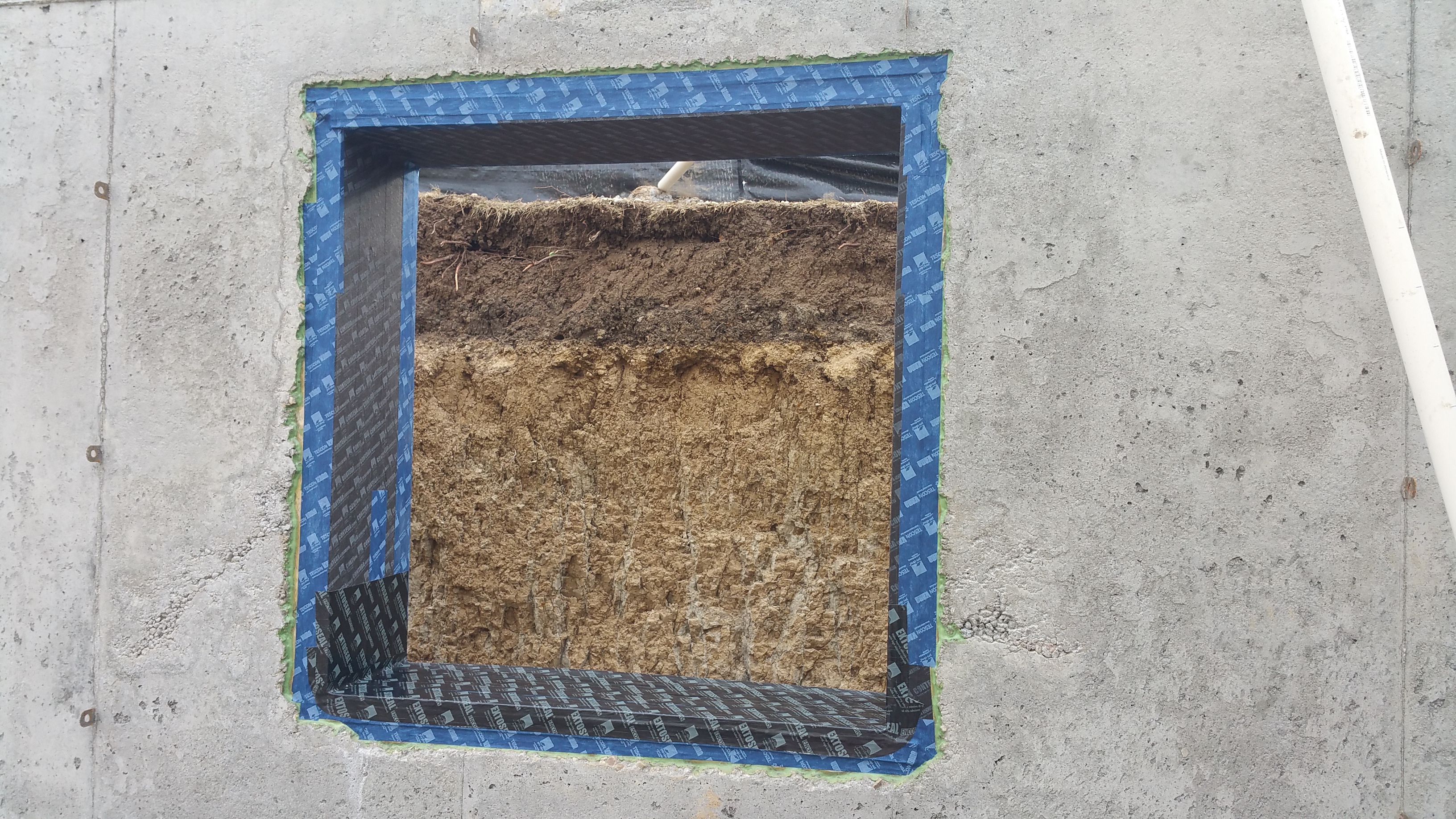
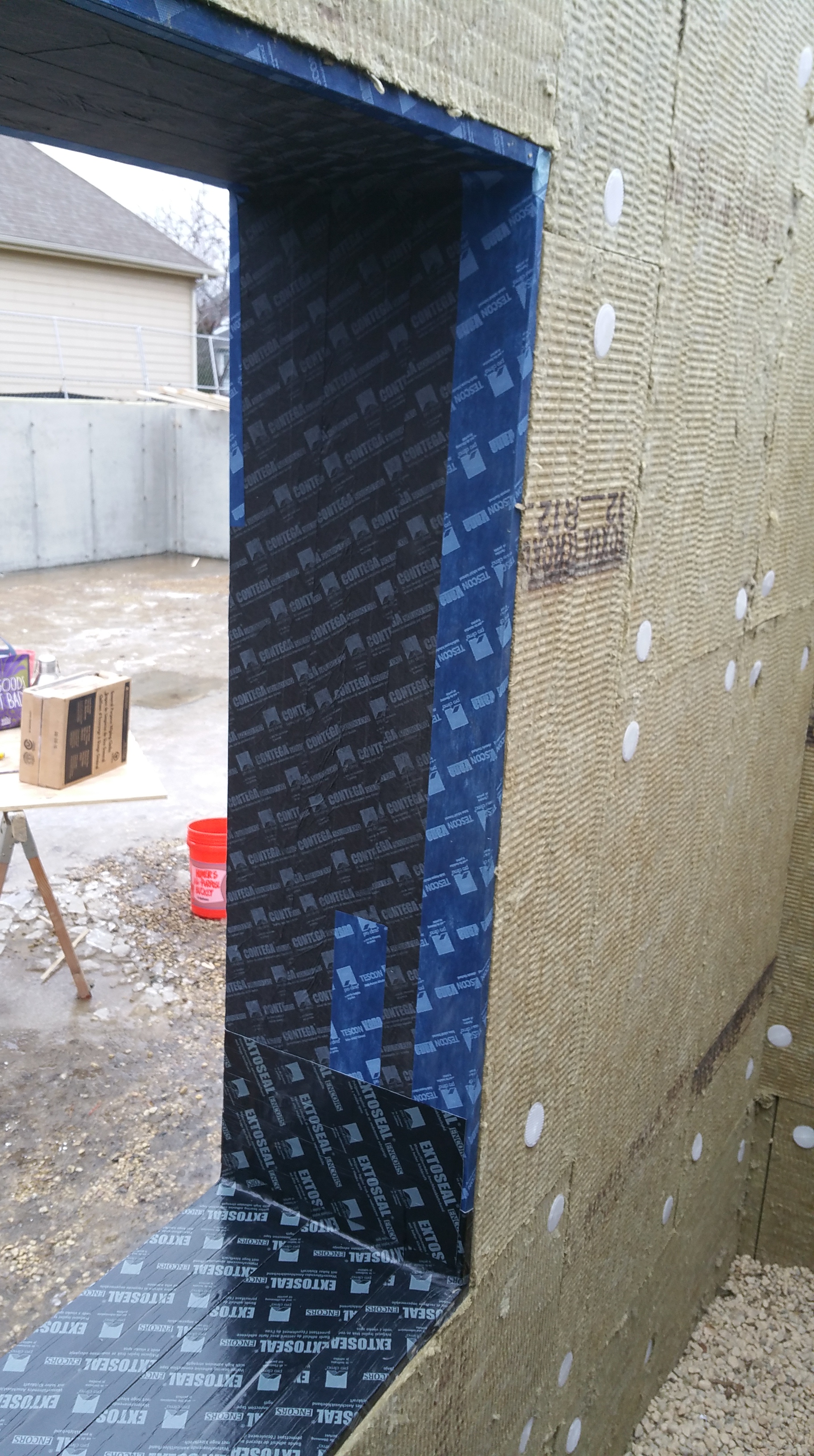
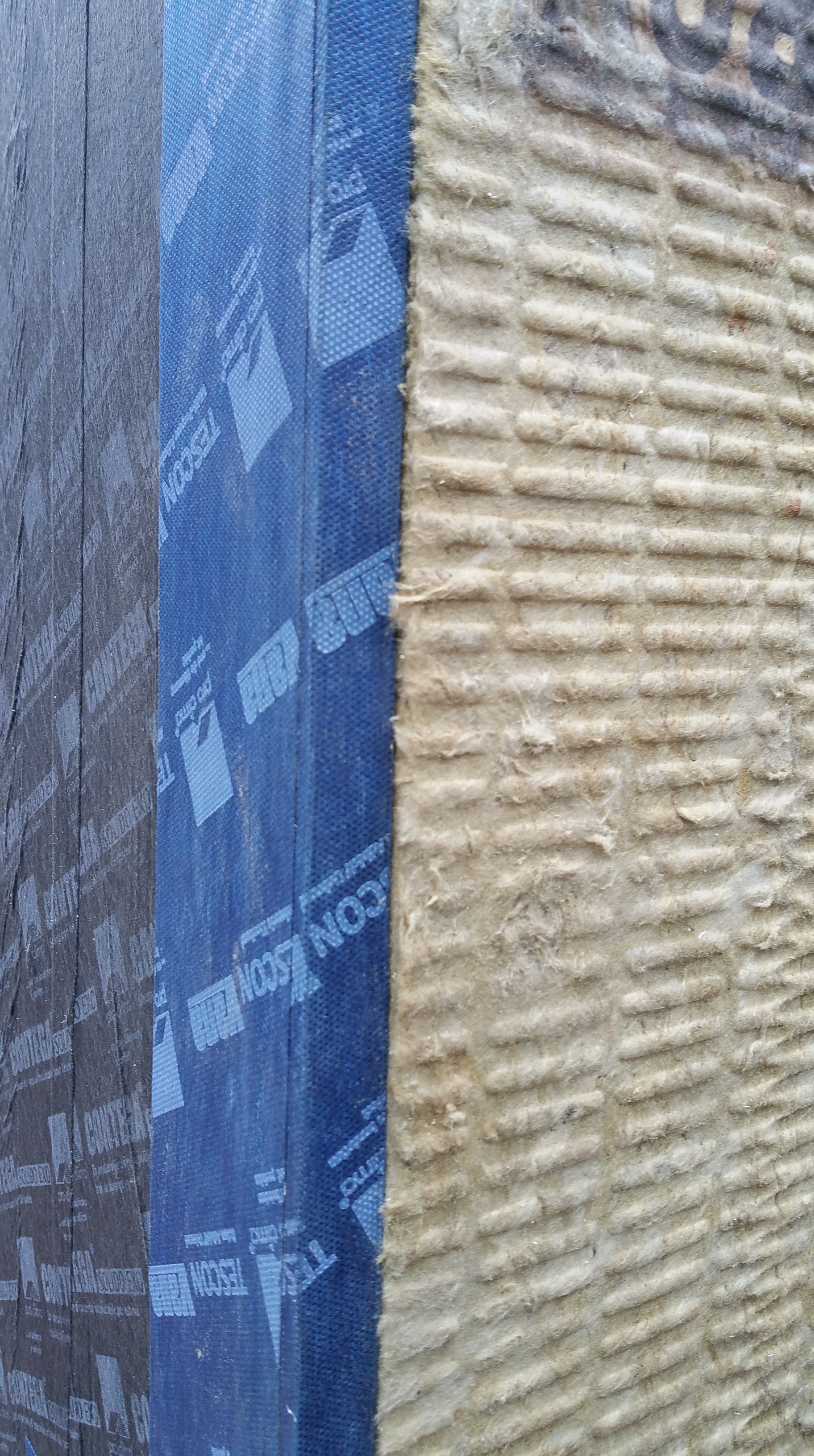
It’s been in the 20’s and 30’s, so the HF sealant took a couple of days to firm up before I could then apply the series of Pro Clima tapes. I’m using a combination of tapes, including the Tescon Vana (the bright blue), Profil (light blue — great for making inside and outside corners), Contega Solido Exo (black, 6″ wide), and the Extoseal Encors for our sills (475 HPBS has a great series of videos showing how to use each tape).

installing-pro-clima-tapes-on-basement-window
Finishing off the buck from inside the basement.

We knew the bucks would be sitting for some time, exposed to the elements, before the windows actually show up, so we decided to completely cover the openings just to be safe. This gave me extra practice using the tapes, which definitely helped, and it meant not stressing out every time the forecast called for rain or snow.

basement-window-buck-covered-in-tape
Basement window buck covered in Contega HF sealant and Pro Clima tapes.

The only tape that’s giving me fits is the black Contega Solido Exo. It’s thinner than the other tapes, so it has a propensity to want to stick to itself (wrinkles are more difficult to avoid), and I find it much harder to pull it away from its peel-and-stick backing than the other tapes. I worried that the Extoseal Encors might be difficult to get right, but it — along with the Tescon Vana and Profil tapes — has been surprisingly easy to work with.

This video was my Bible for installing the Extoseal Encors:

In lieu of on-site training from someone who’s used a specific product consistently, videos like this one are invaluable when using new products and you want to get the details right. Without videos like this, you’d be in for a frustrating process of trial and error.

For instance, even with this excellent video, I noticed when I did our mock wall assembly that because the Extoseal Encors can stretch around corners it’s easy to stretch it too much, thereby inadvertently thinning it out. I’ve found that when I get to a corner it’s better to just fold it around the edge rather quickly, without overthinking it too much, which helps to maintain the thickness of the material at and around the corners (arguably the product’s strongest attribute in helping to avoid water damage).

I can’t recommend enough doing a mock wall assembly, or practicing on scraps, to get a feel for using these products, before you find yourself on-site doing it for real.

basement-window-buck-before-roxul
Basement window buck sealed and taped on the exterior side before being covered in Roxul.
close-up-basement-wdw-buck-covered-by-roxul
Basement window buck surrounded by two layers of Roxul.
basement-window-buck-and-roxul-meet-up
Close-up of outside edge of basement window buck and Roxul connection.

We’re almost ready to climb out of the hole. It will be exciting to watch the guys start framing so we can see the basic form of the house begin to take shape.

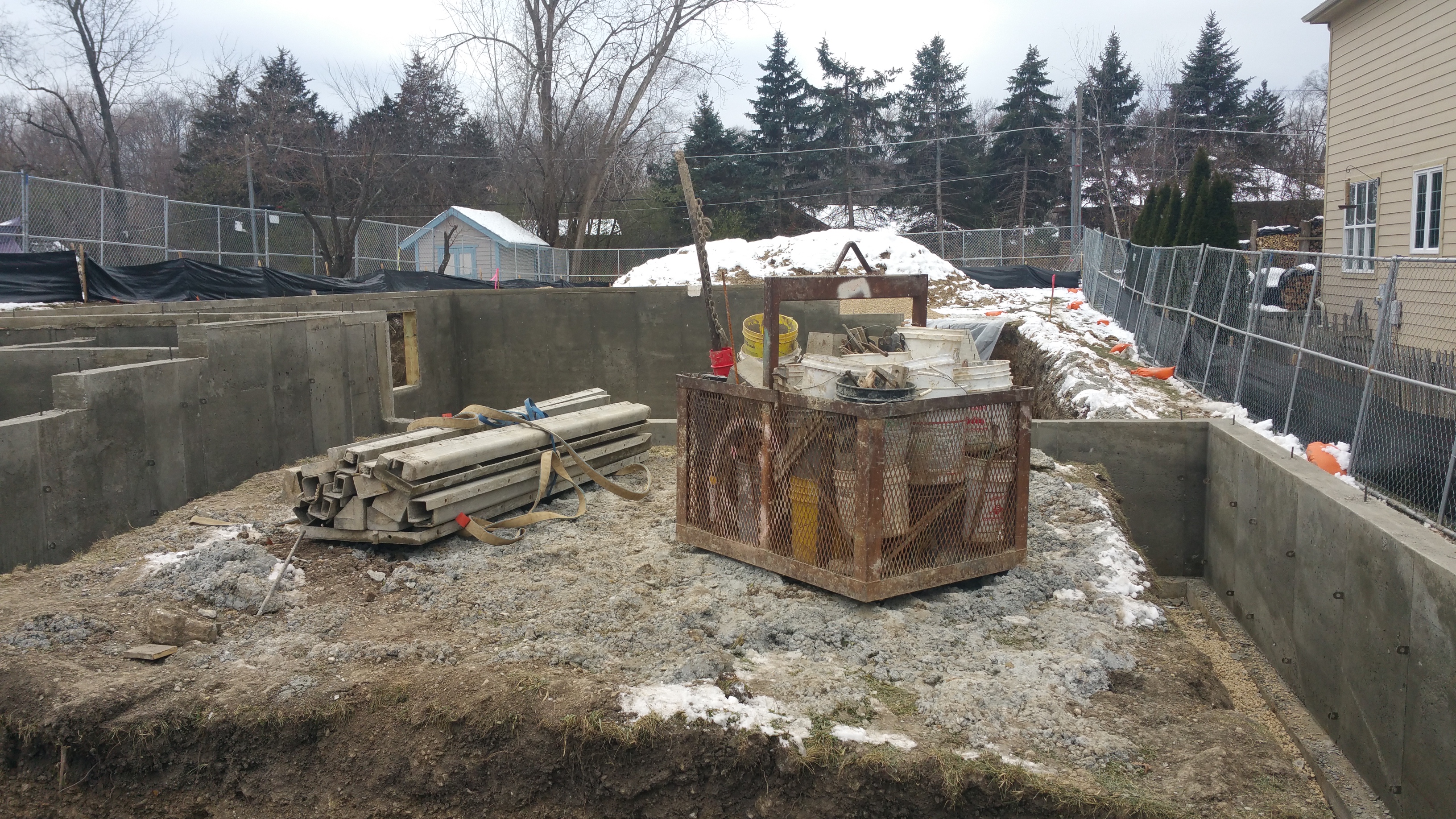
foundation-tools-ready-to-leave-site
Tools ready to head to the next job site. Concrete guys (they’re mostly guys) are the unsung heroes of construction (excavators should be included as well) — like offensive linemen in football, no one pays much attention to them until a mistake is made.
foundation-concrete-jewelry
Concrete jewelry.
queen-of-dirt-mountain
Queen of Dirt Mountain.

Oiling Charred Cedar Siding

0

Shou Sugi Ban with Tung Oil

The oil I see used most often on charred wood is Penefin, which is available in many of the big box stores. Another one I’ve used in the past is Sikkens. Cabot is yet another brand I’ve used (mostly for decks).

Any semi-transparent wood stain should work. If you go with a brushed char finish, you may want to experiment with color options to see what kind of effect it may have on the final finish (the semi-transparent stains typically come in a range of subtle color choices).

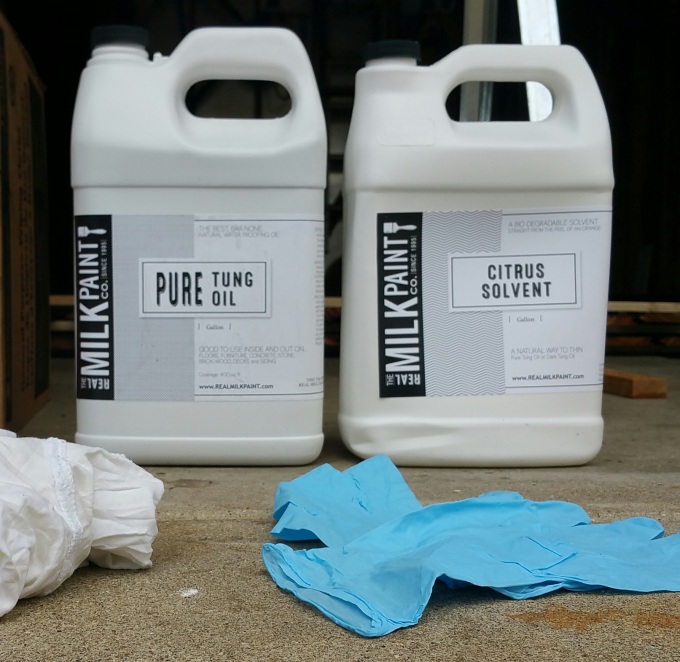
In our case, we decided to use Tung Oil mixed with Citrus Solvent (available from: realmilkpaint.com). Having used it previously on arts-and-crafts projects with good results, and because it’s considered No VOC, we felt it was a good choice (although not the cheapest option). We’ll also be using the same combination of products for our hardwood flooring.

tung-oil-citrus-solvent
Tung Oil & Citrus Solvent. We use a 1:1, or 50%-50% mix that combines the two products together.

We used a 1:1 mixture of Tung Oil and Citrus Solvent (they even sell it this way, pre-mixed, if you don’t want to deal with combining individual batches together). The Citrus Solvent acts like a traditional paint thinner (without the VOC’s or strong chemical smell), diluting the Tung Oil so it can more easily soak into the wood (it also smells great since it’s made from orange peels). The Citrus Solvent is also used for cleaning up tools, equipment, and any spills of the tung oil (also works great as a general purpose degreaser — especially above and around a stovetop).

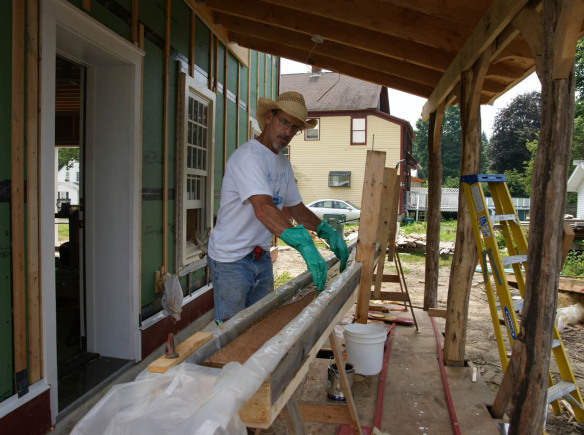
USE CAUTION! — Although natural and safe, the Citrus Solvent can irritate bare skin. I always use either Latex or Nitrile gloves (readily available at any hardware store).

If you try using the Tung Oil alone, the difference in performance is obvious (the oil will mostly just sit on the surface, with little of it soaking in — a frustrating waste of time and money).

I decided to use a trough for dipping each board based on a project I saw online:

SONY DSC
Spartan & Hannah’s Home: zeroandbeyond.com

Their house and blog caught my attention early on, when we were just beginning to think about building new. Their project, along with several others, really got me excited about the possibility of building “green”.

Here’s a couple more:

Four Thick Walls (blog)

GO Logic (Red House project; featured in the video below)

Spartan and Hannah’s home (zeroandbeyond.com) is an excellent example of the Pretty Good House concept, and it’s definitely worth checking out, especially under the heading of Presentations: How to Build an Affordable Net Zero / Super Energy-efficient Home (pdf).

A lot of great information to get you thinking about exactly what it is you may want to build, and how to financially pull it off. They also have a lot of thoughtful and inventive design elements (love their granite floor built with cut waste from various countertop jobs — a very creative idea with a unique look).

Anyway, back to the trough: It’s much faster than trying to use a brush or roller, and it guarantees full coverage (many thanks to Spartan & Hannah for posting this simple, but time saving idea).

Below is my version of the same thing:

trough-long-view-from-side-up-drive
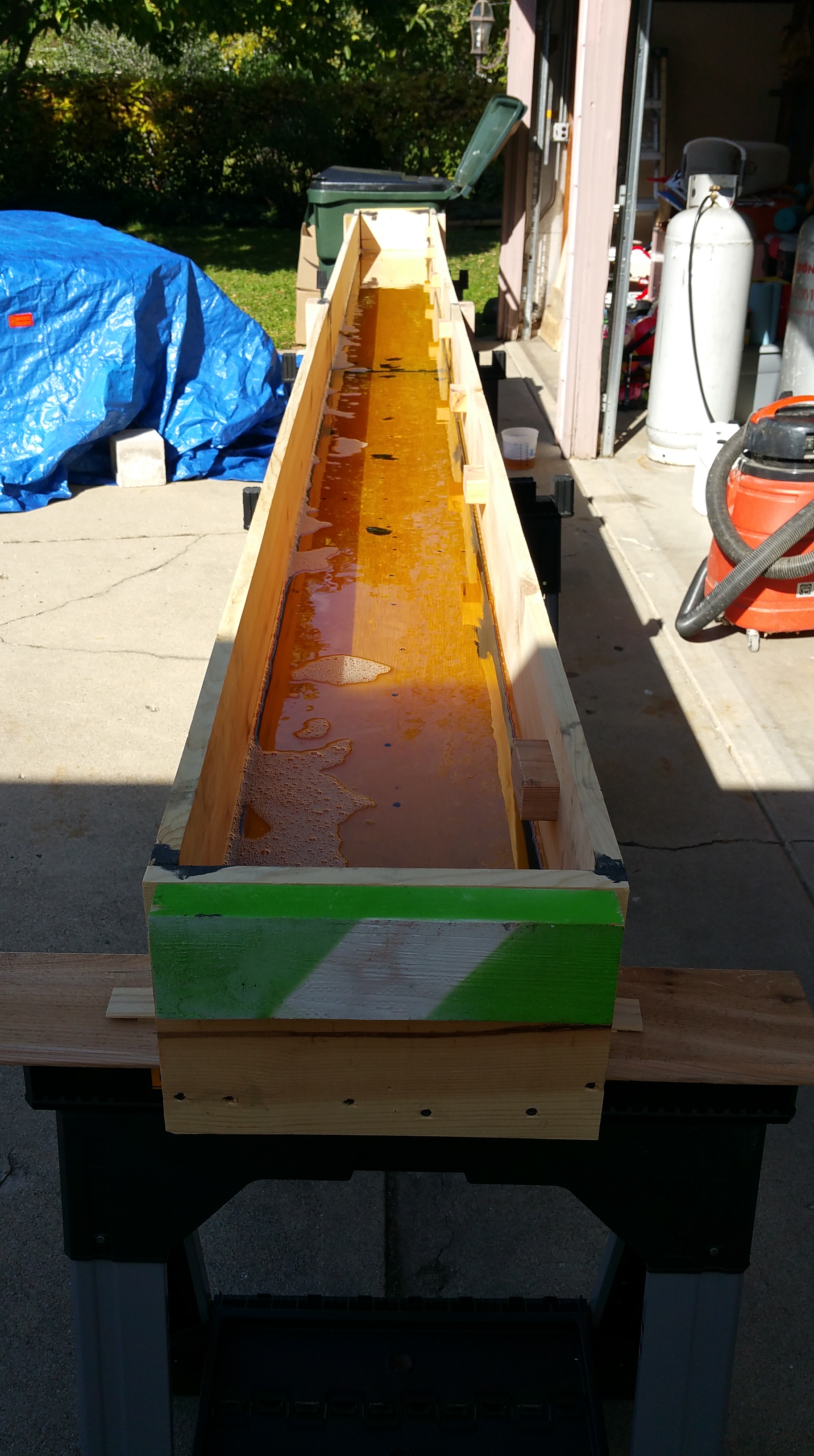
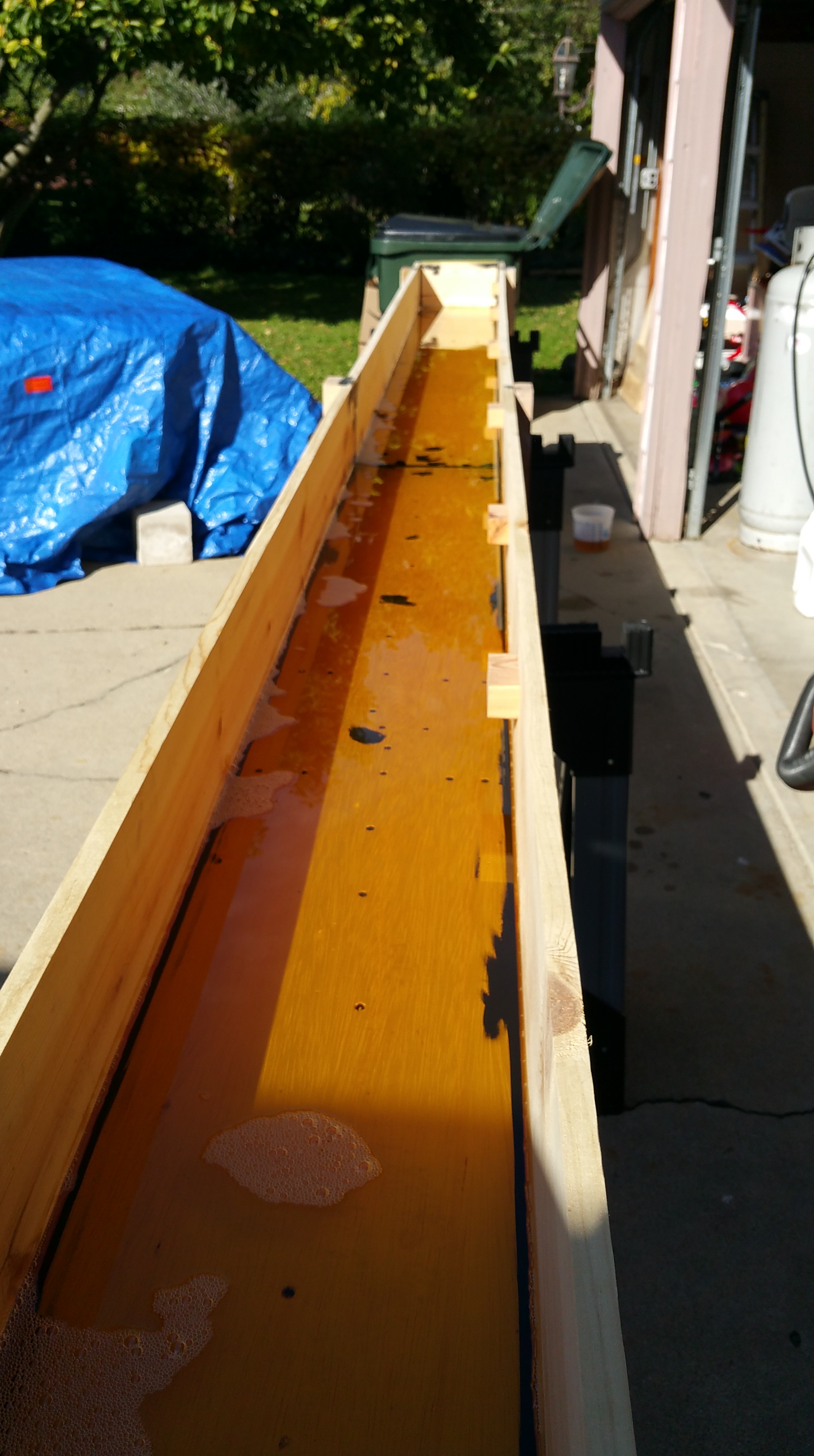
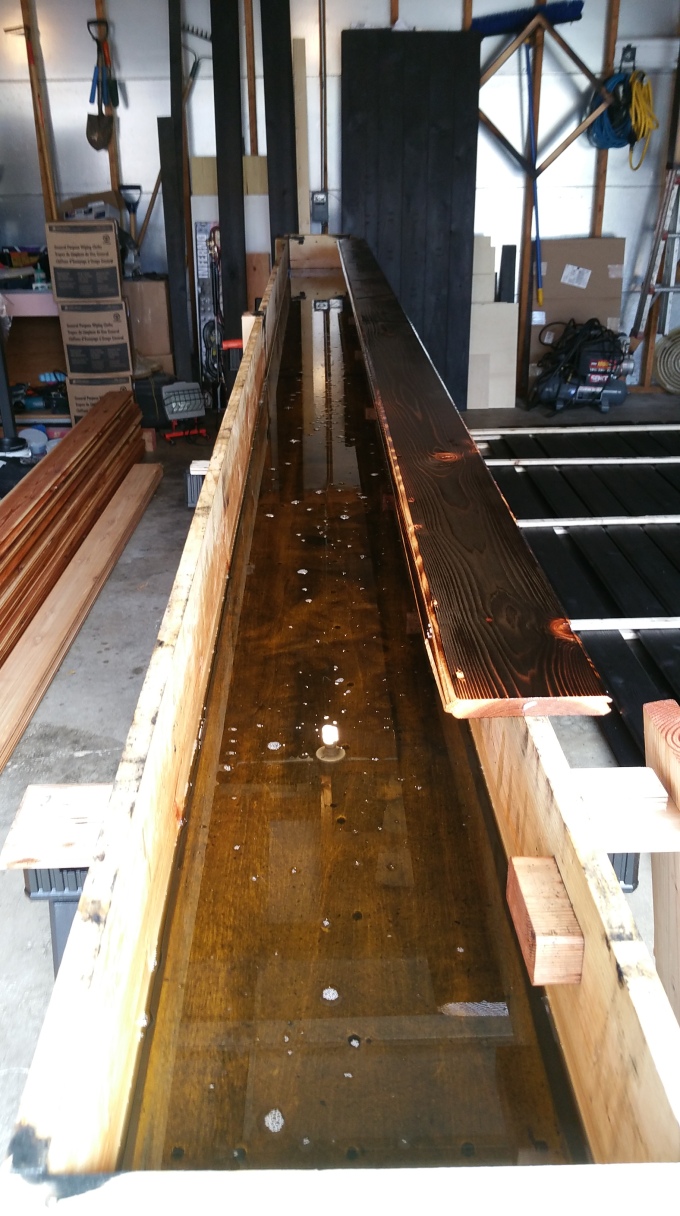
Made from scraps with 1×12 pine for the sides, and then 3/4″ plywood on the bottom. There are also 2×4’s underneath for structural stability. It’s about 1′ longer than our longest board, making it easy to get boards in and out (roughly 17′).
trough-long-view
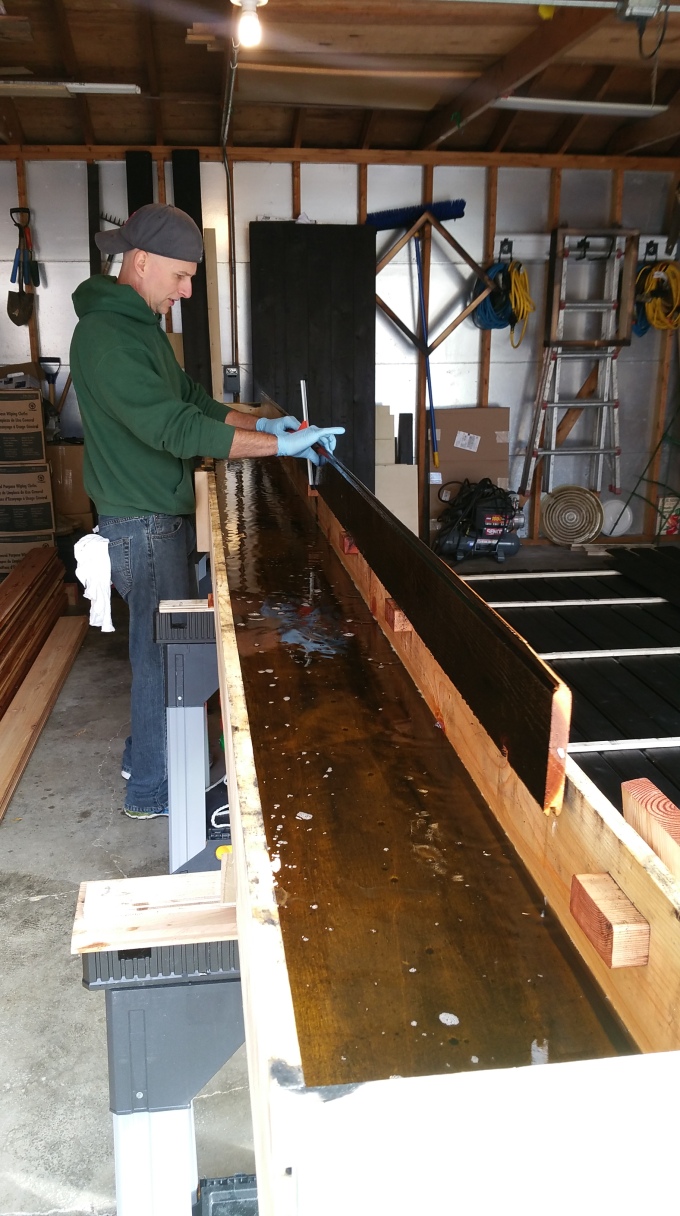
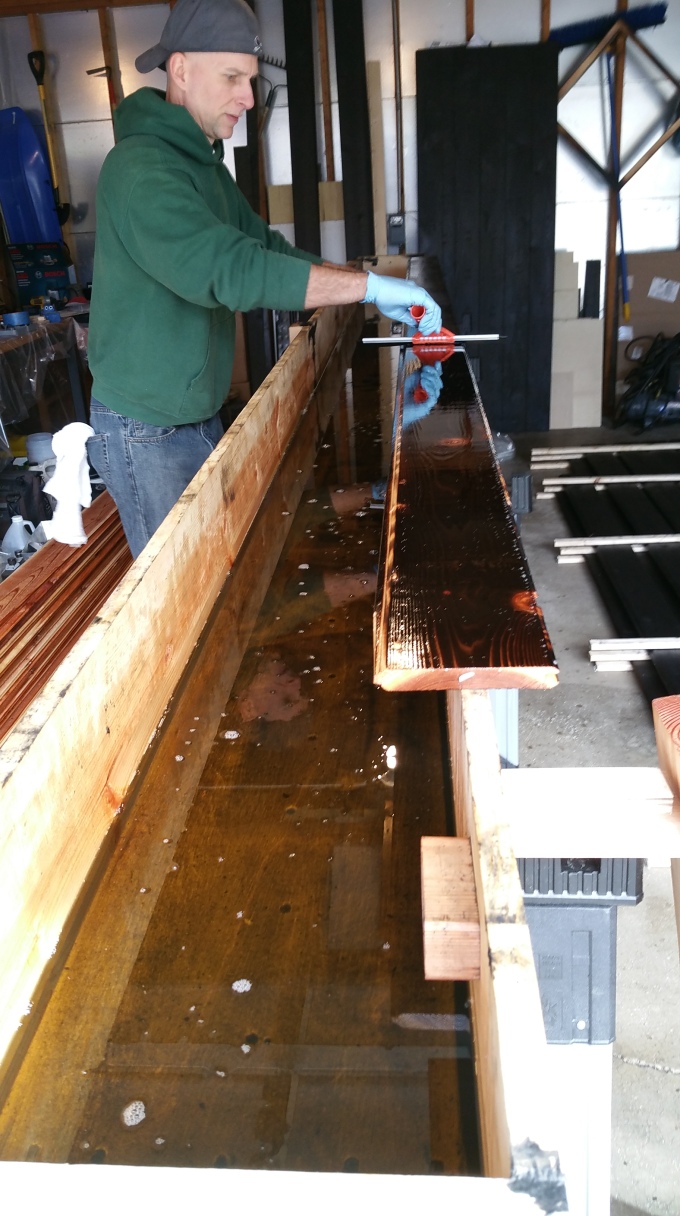
Inside the trough, and to the right, I used cut ends of 2×4’s to create a ledge to rest the piece of cedar on while wiping it down with a squeegee. On each end of the trough I added a 2×4 to make it easier to lift and move around.
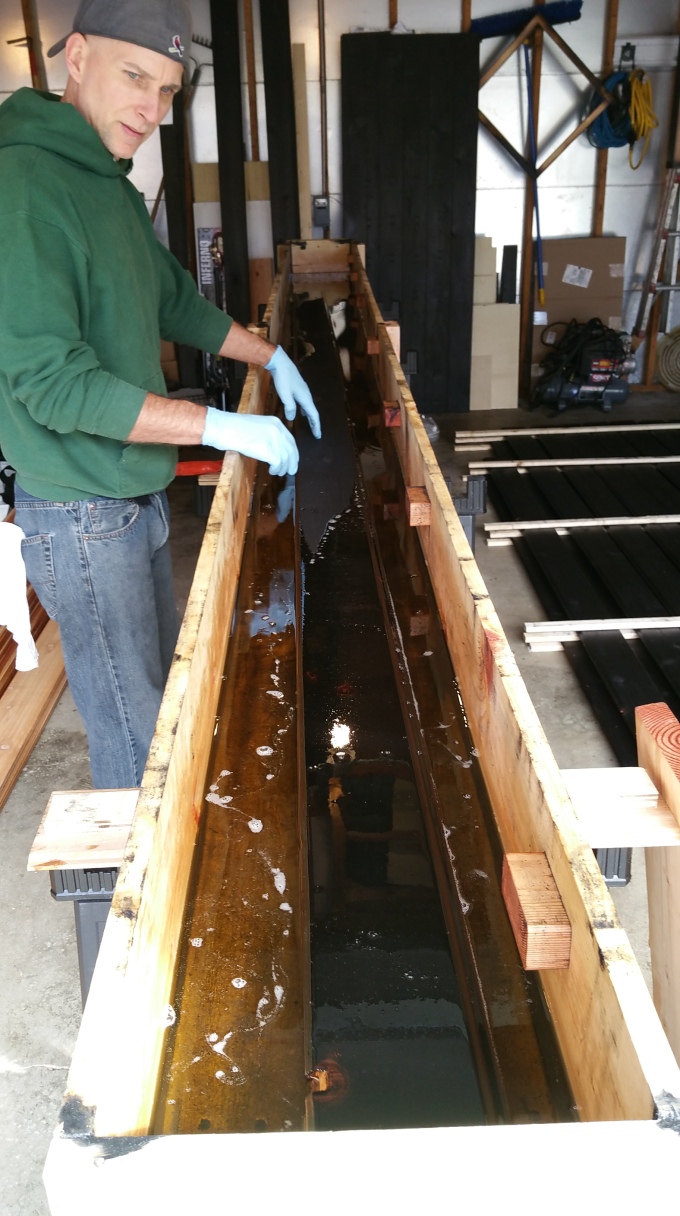
trough-looking-in-and-down-w-tung-oil
Once built, I went back and caulked all the seams, and any deeply set screws. We fill the trough with 6-8 gallons of the Tung Oil & Citrus Solvent mixture. It lasts quite awhile (and it’s fun to soak the boards).

Once in the trough, we would let each board sit for about 30 seconds in the Tung Oil and Citrus Solvent bath, before pulling it up and resting it on the 2×4 ledge. Seated on its perch, the board would get wiped down initially with just a squeegee.

board-in-the-trough
Soaking for 30 seconds.
sitting-on-the-edge-for-squeegee
Resting on the 2×4 ledge for wiping down the rough side.
squeegee-back-side
Board flipped, resting on the ledge, wiping down the smooth side.
on-the-ledge-ready-for-drying-rack
Board wiped on both sides, now ready for the drying rack.

At this point, we would walk it over to the drying rack.

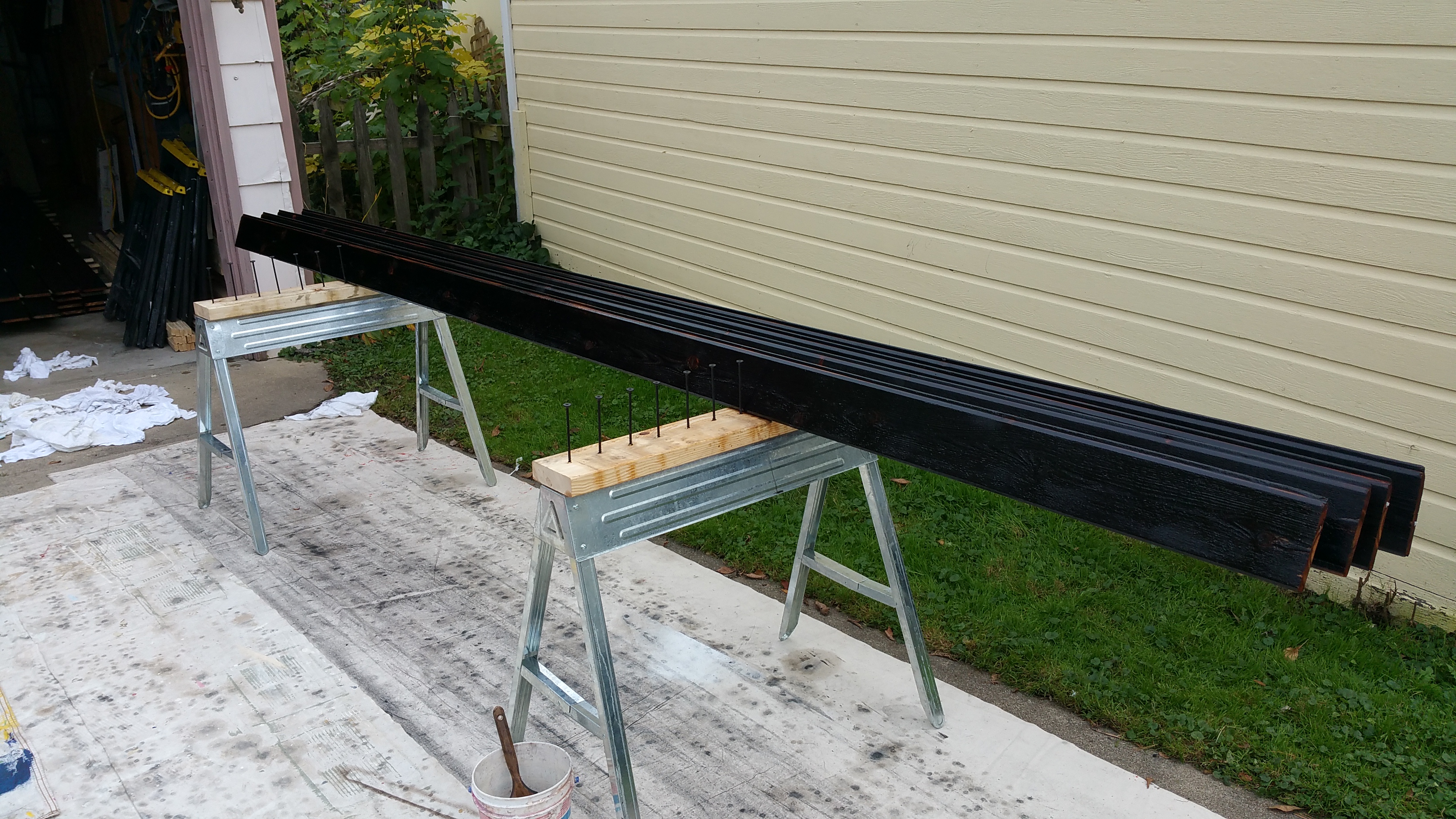
drying-rack-wide-view
drying-rack-end-of
Picked up these inexpensive sawhorses at Home Depot. The 2×6 is screwed to the horse from below. We used 6″ screws to make our rows.

Once on the rack, we would use a brush to apply an additional coat of Tung Oil and Citrus Solvent, but only to the rough side, since it will be exposed directly to the elements.

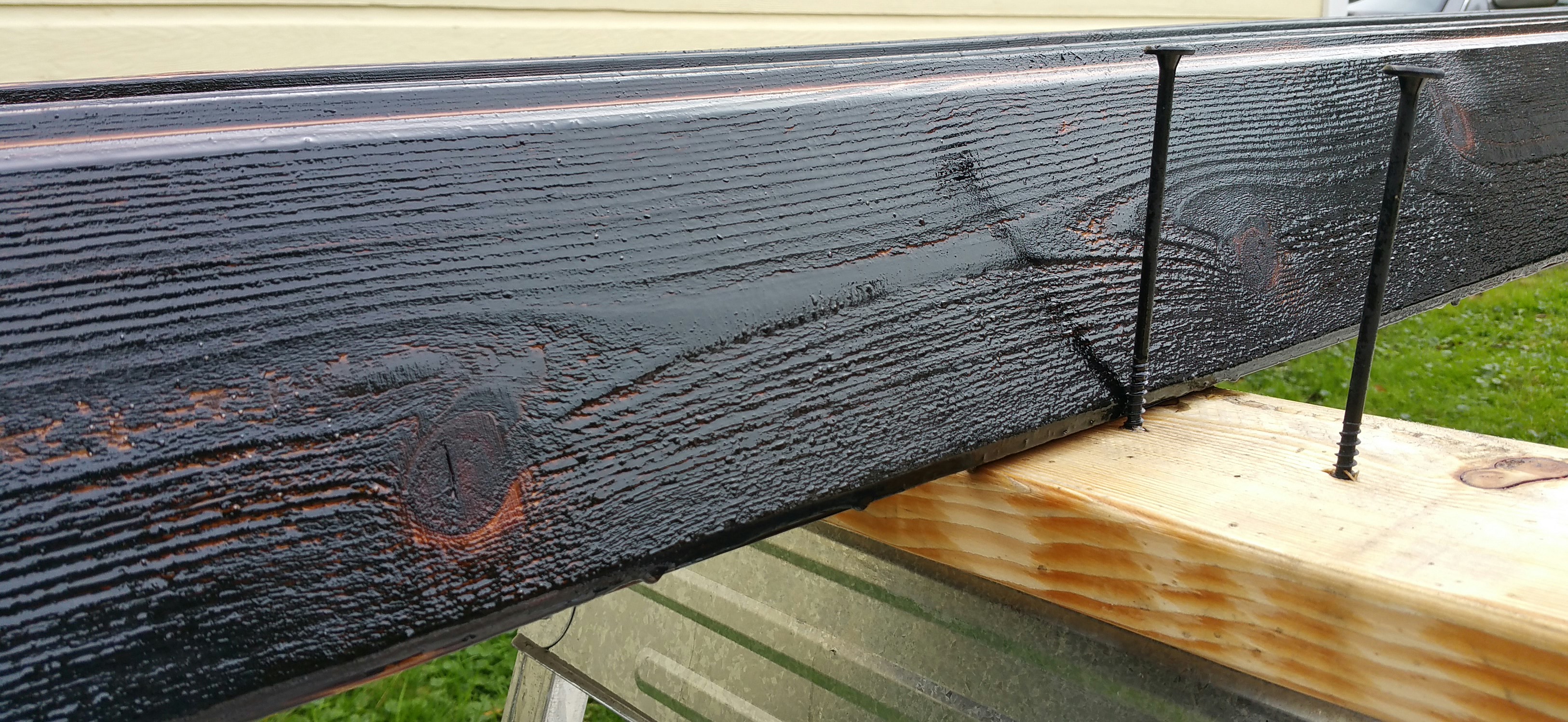
close-up-drying-rack-w-screws-brushed
A board on the drying rack, just after being brushed with the Tung Oil. Spacing out the 6″ screws gives enough room for 10 boards.

After about 20 minutes on the drying rack, we would wipe down both sides of each board (the most laborious part of the job). Usually by the time you’ve placed the tenth board and brushed it, the first board is ready to be wiped down. We found that dust free cotton rags are the best option for this.

Typically, there’s not much oil left on the surface, as most of it has soaked in. The wiping just removes any excess that could cause an unwanted film to form on the surface of the wood (not attractive).

oiled-board-mostly-dry-ready-for-wipe-down
Board ready to be wiped down after resting for at least 20 minutes on the drying rack — most of the oil has visibly soaked in.

The only real down side to the wiping (apart from the time, energy, and the cost of the rags) is that it makes the boards more uniform in appearance — in other words, some of the texture in the gator look is lost due to the wiping. Nevertheless, this comes with an added benefit, namely, removing any char that might otherwise flake off in the first couple of rainstorms.
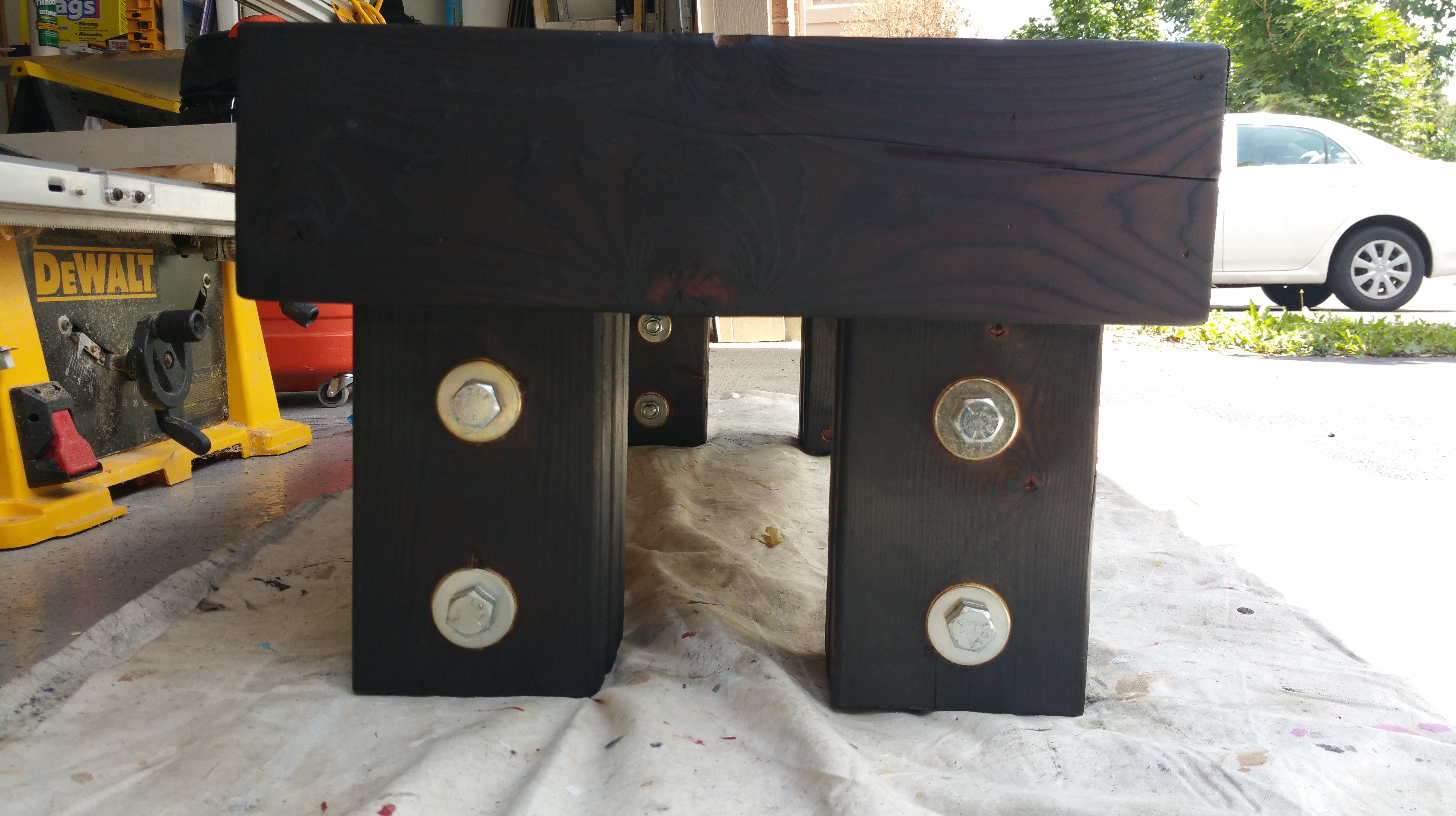
When the boards are finished and completely dry, the finish looks very durable (and sleek).

oiled-charred-boards-on-the-stack-to-dry
Oiled boards.
oiled-stack-begun
Oiled boards being stacked for drying.
Depending on temperature and humidity, it takes roughly a week for the boards to be dry to the touch.

monkeys-helping
My helpers. This is the fun part: applying Tung Oil to new boards — the change in appearance is immediate and dramatic.
natual-cedar-oiled
Oiled  “natural” cedar, waiting to be wiped down.
natural-and-charred-together
Natural oiled cedar next to charred cedar. We’re going to keep some boards natural as an accent.

It’s the wiping down of each board that requires some real elbow grease – no surprise my daughter disappeared at that point in the process (can’t blame her, it’s tedious work).

As long as you have at least two people working together — pulling boards, dipping, transferring to the drying rack, and then wiping down — the process isn’t too bad. Going solo would get old very quickly. It’s even better if you have a couple of people just setting up the drying rack and wiping down while a third person pulls boards and dips.

There’s no question the process takes time and effort, but the results are unique and, we think, very beautiful.

bee-on-charred-cedar
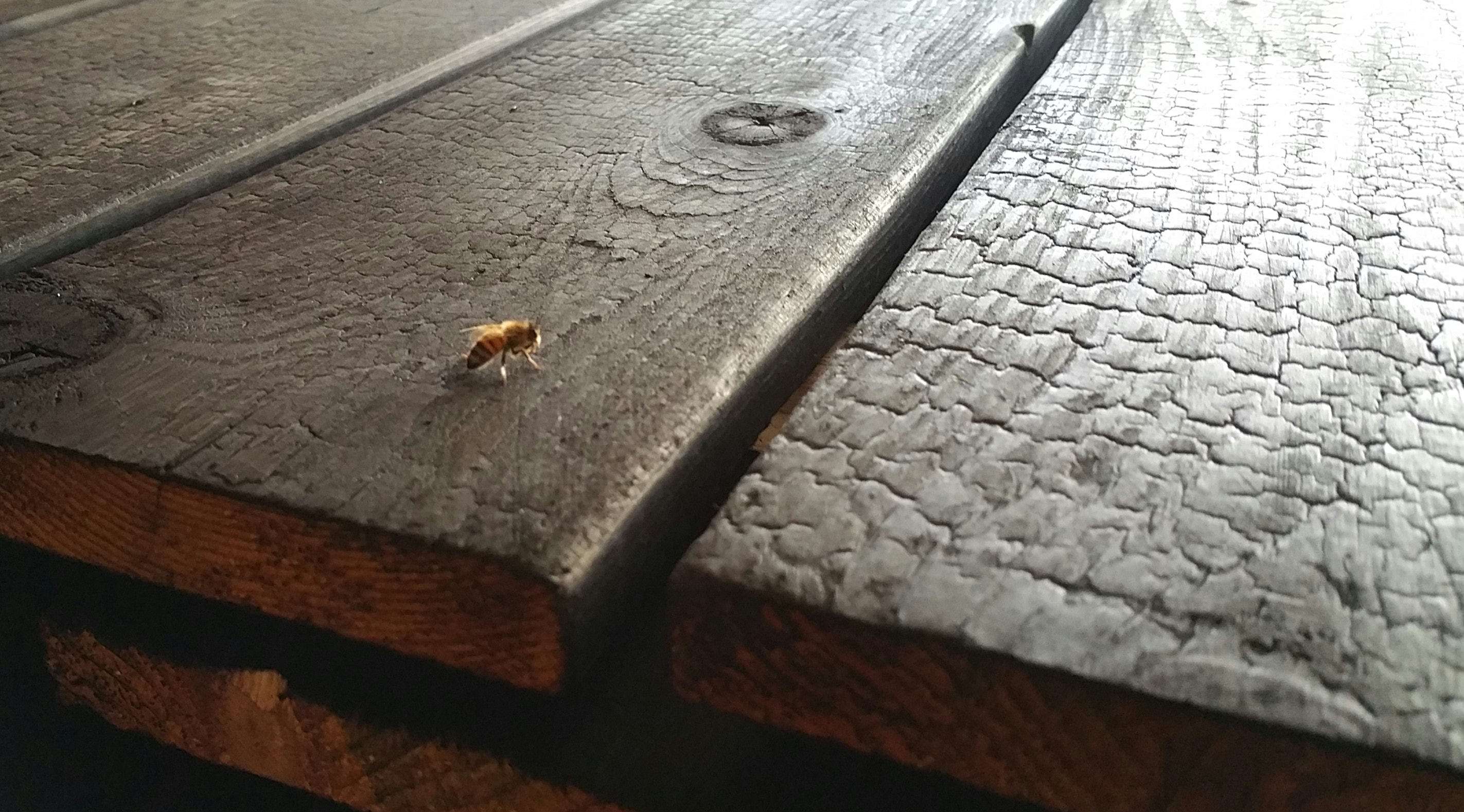
The last bees of the season keep showing up as we oil the boards. They can’t resist the citrus solvent. It’s always sad to see them go at this time of the year.

September, 2019 Update: To see how the charred cedar turned out on the house, go here:

Siding Part 2: Charred Cedar (Shou Sugi Ban)

Cedar Siding Delivered…

2

… LET’S BURN IT!!!

For our siding we’re using an old Japanese technique for preserving wood called Shou Sugi Ban (aka: charred cedar — although any number of species of wood could work).

charred-cedar-burn-and-natural
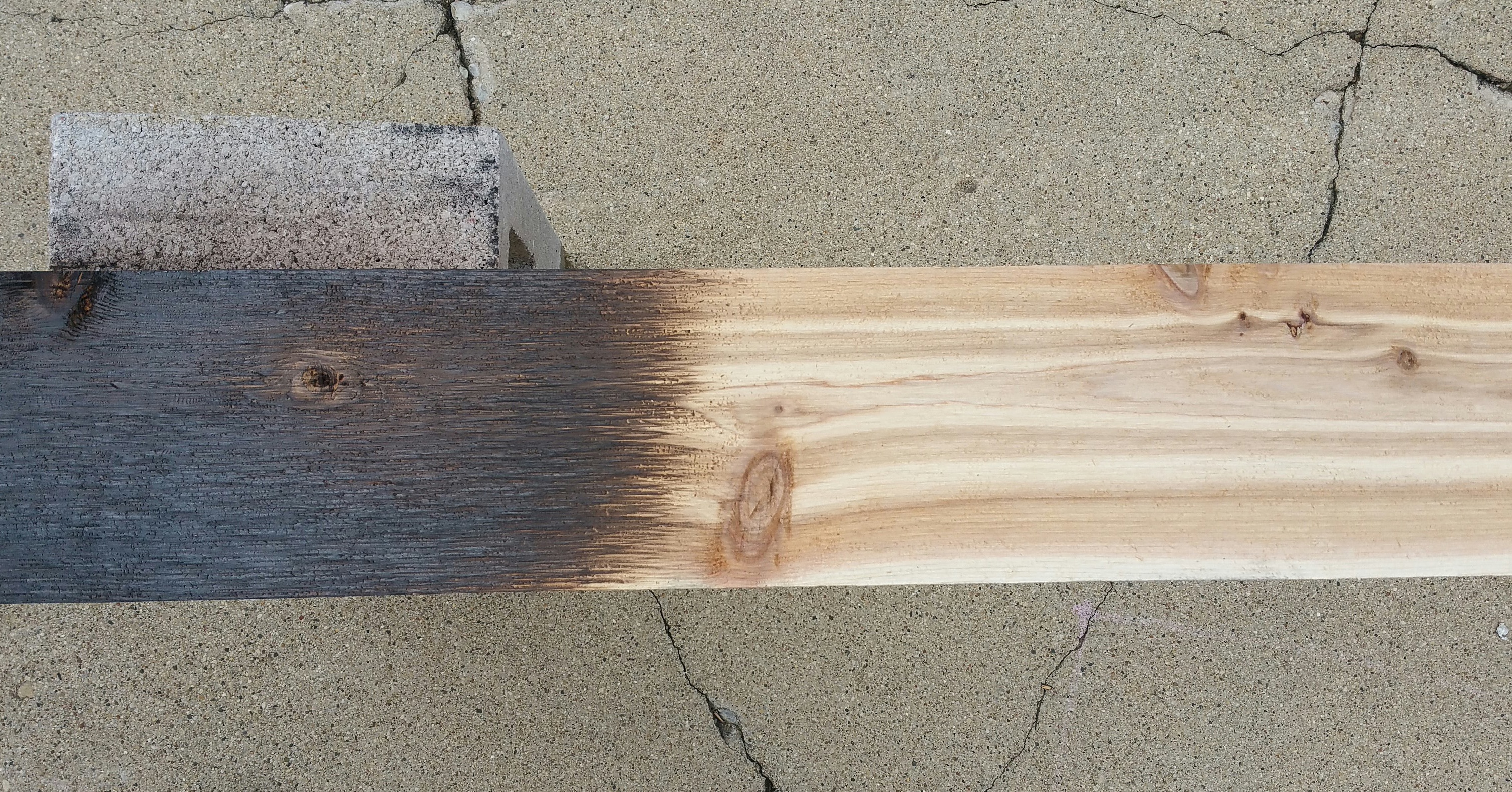
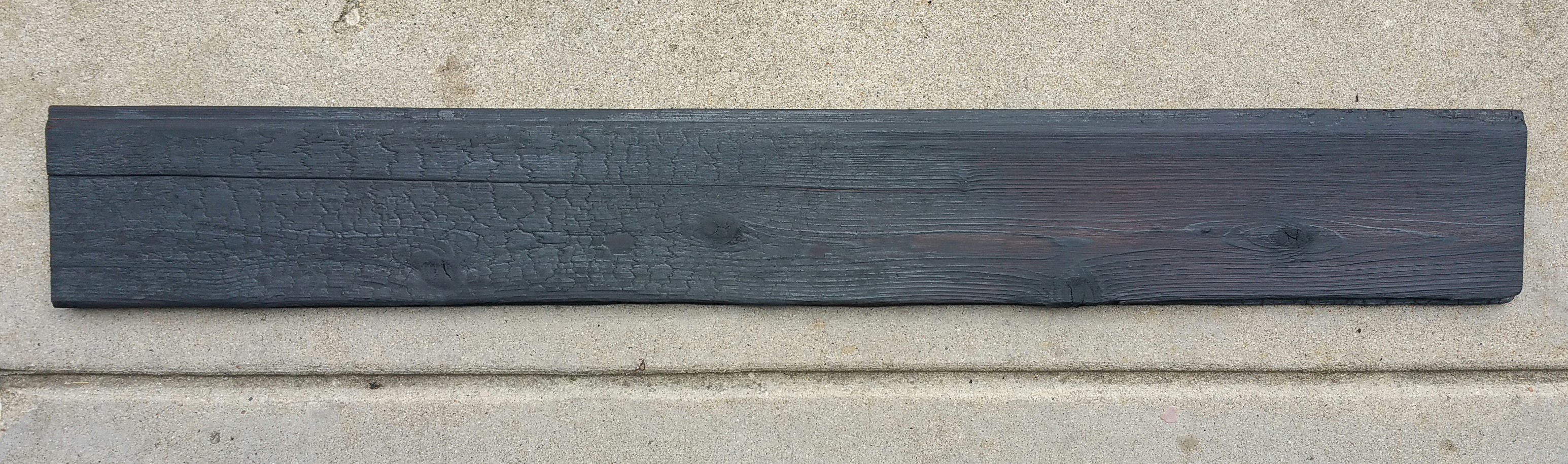
Charring a 1×6 piece of cedar. This will likely end up as either a piece of window or door trim.

You can check out a series of helpful DIY videos here:

Starting Over…

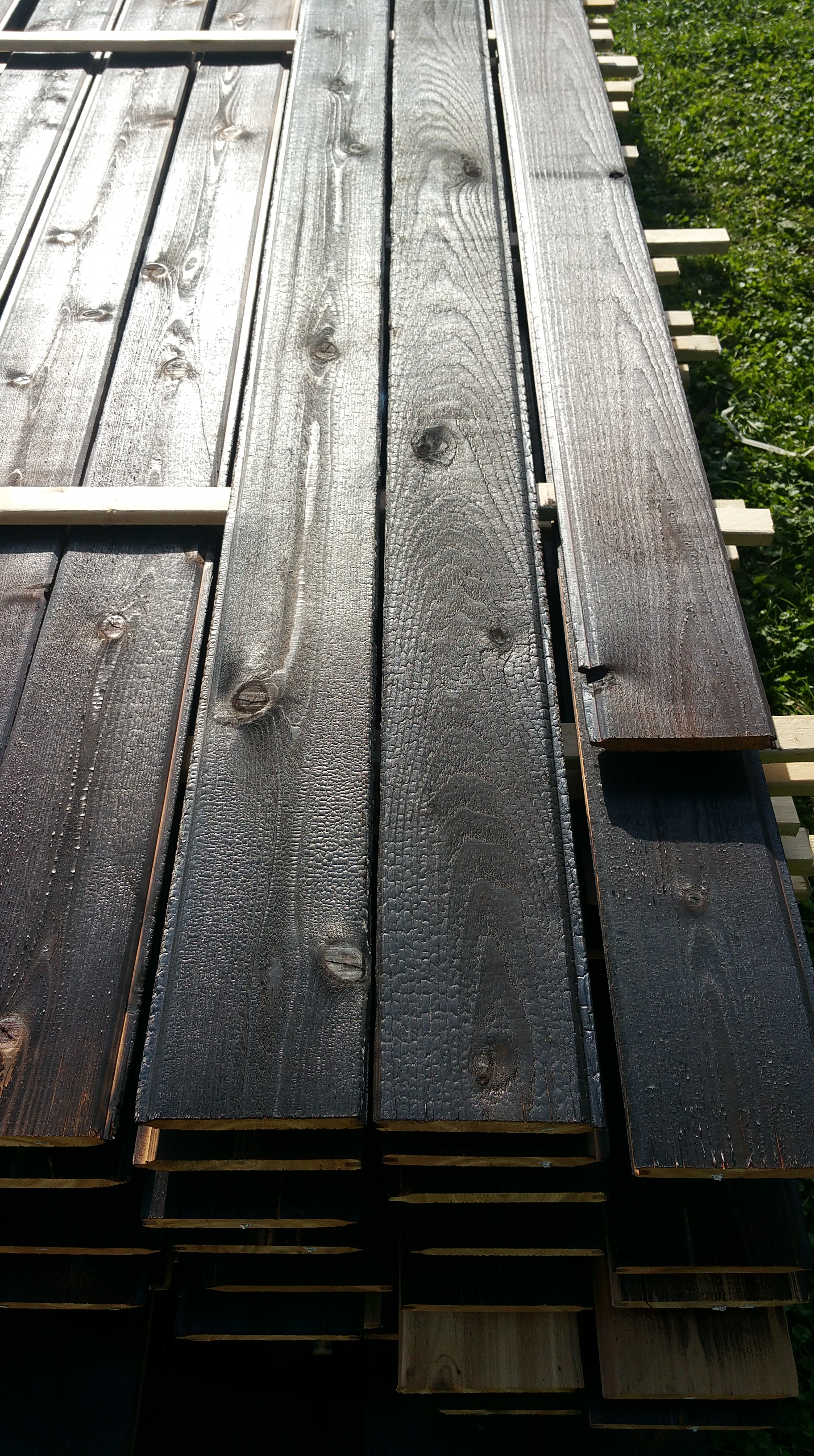
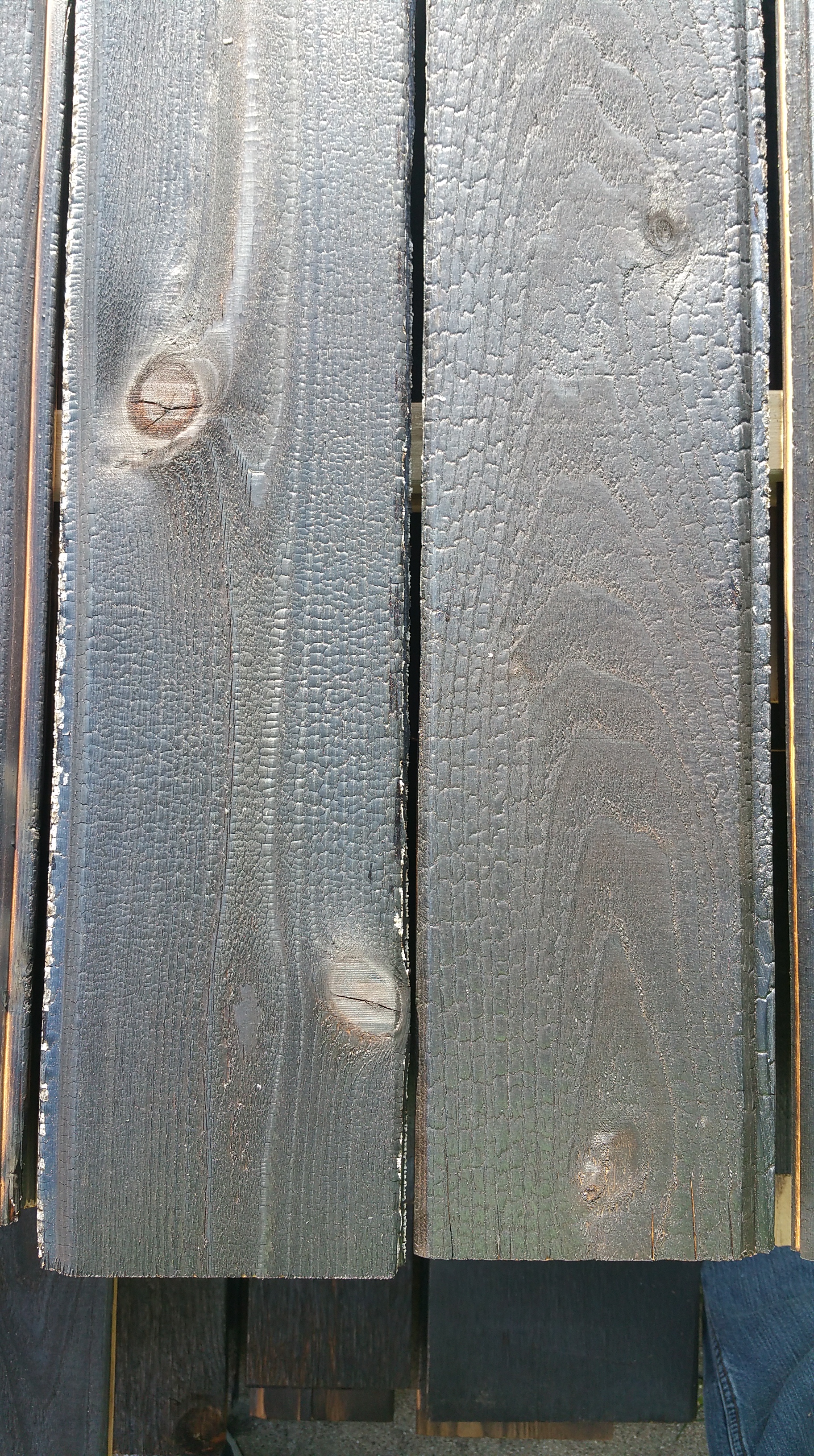
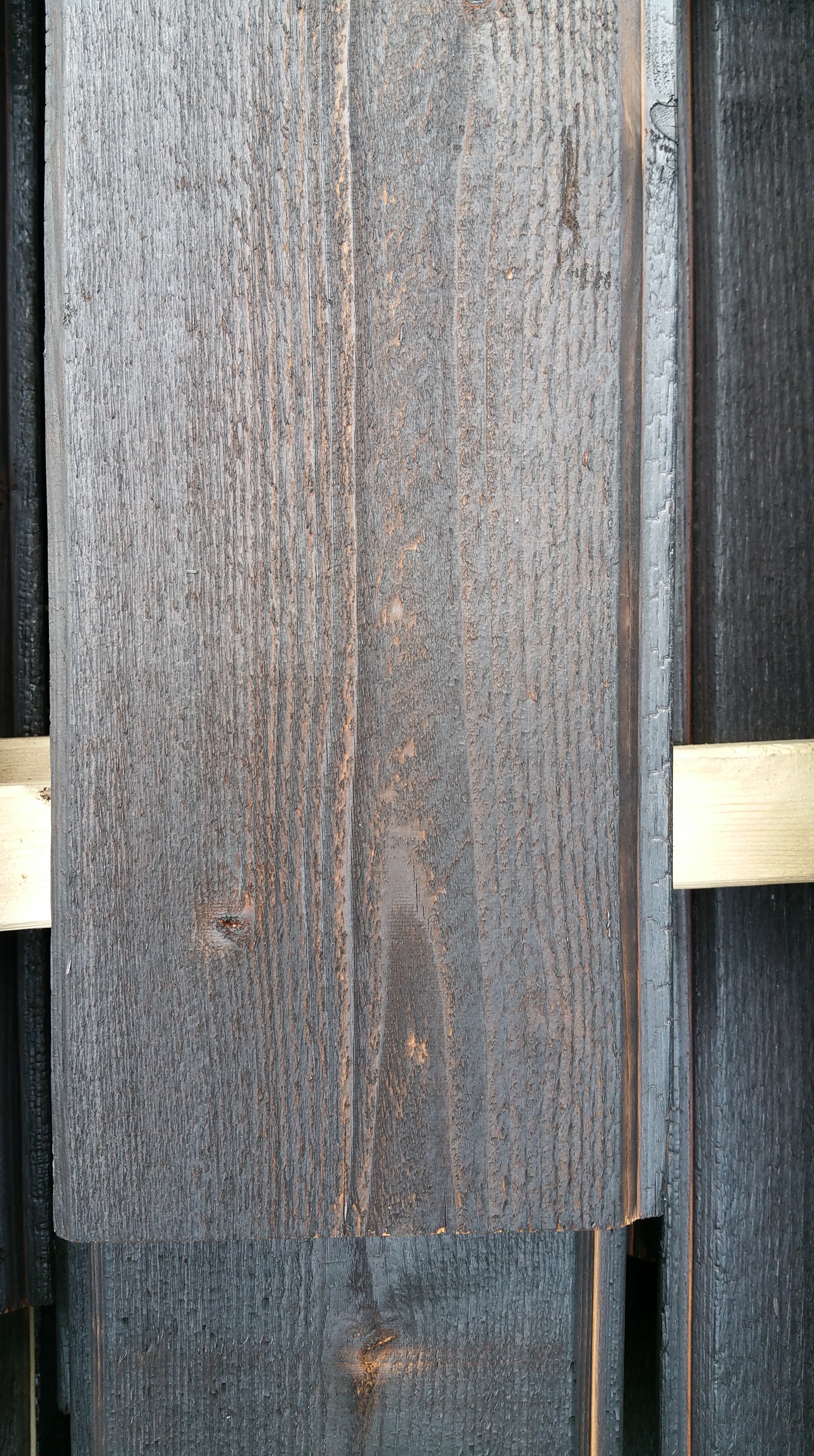
There’s some flexibility in exactly how it’s done, and there are various looks that can be achieved. For example, we’re going for mostly a “gator” finish, meaning the cedar will have an alligator skin-like appearance. This is considered a heavy burn.

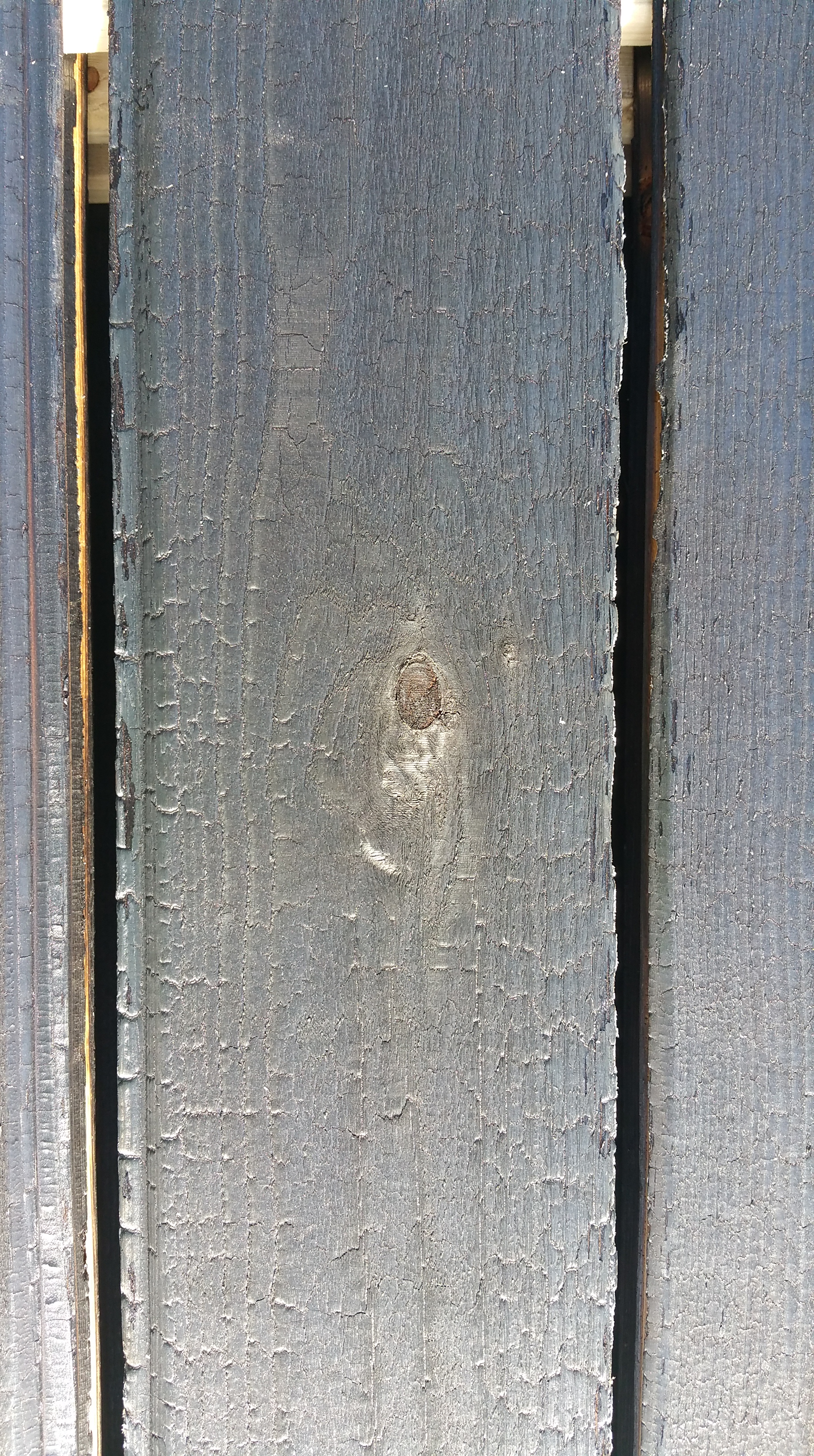
An alternative way of doing it would be to “gator” it first with fire, then scrape the excess char off, leaving behind a smoother, lighter, but still charred and protected finish (see video below).

Video of Brushed Charred Cedar: Dry vs. Wet Brush

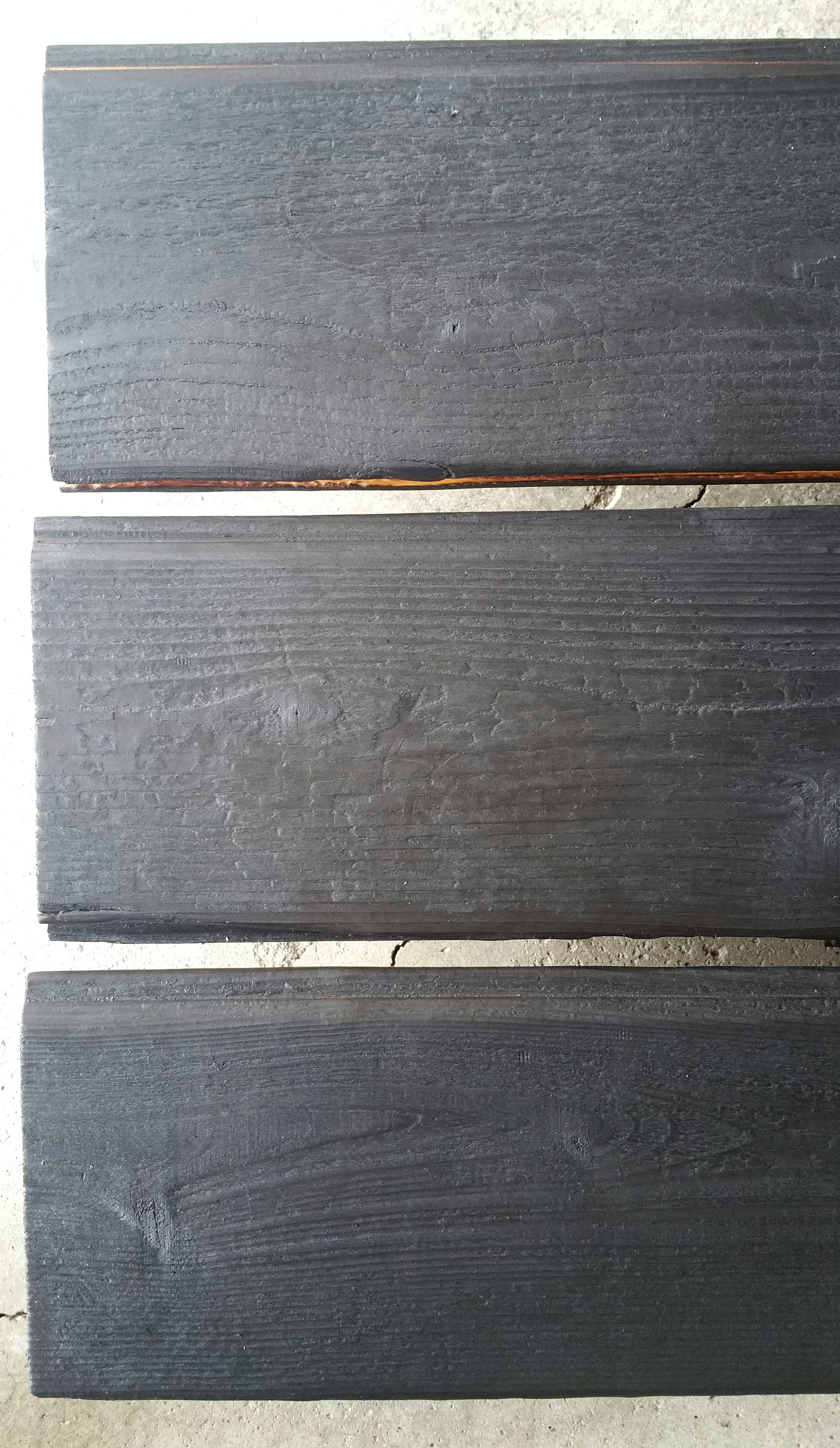
Here are a few pictures that highlight the difference:

charred cedar samples on driveway
2 boards on the left: gator finish / 3 boards on the right: brushed finish.

Once the charred wood has been oiled (whether it’s with a gator finish or a brushed finish), it will look something like this:

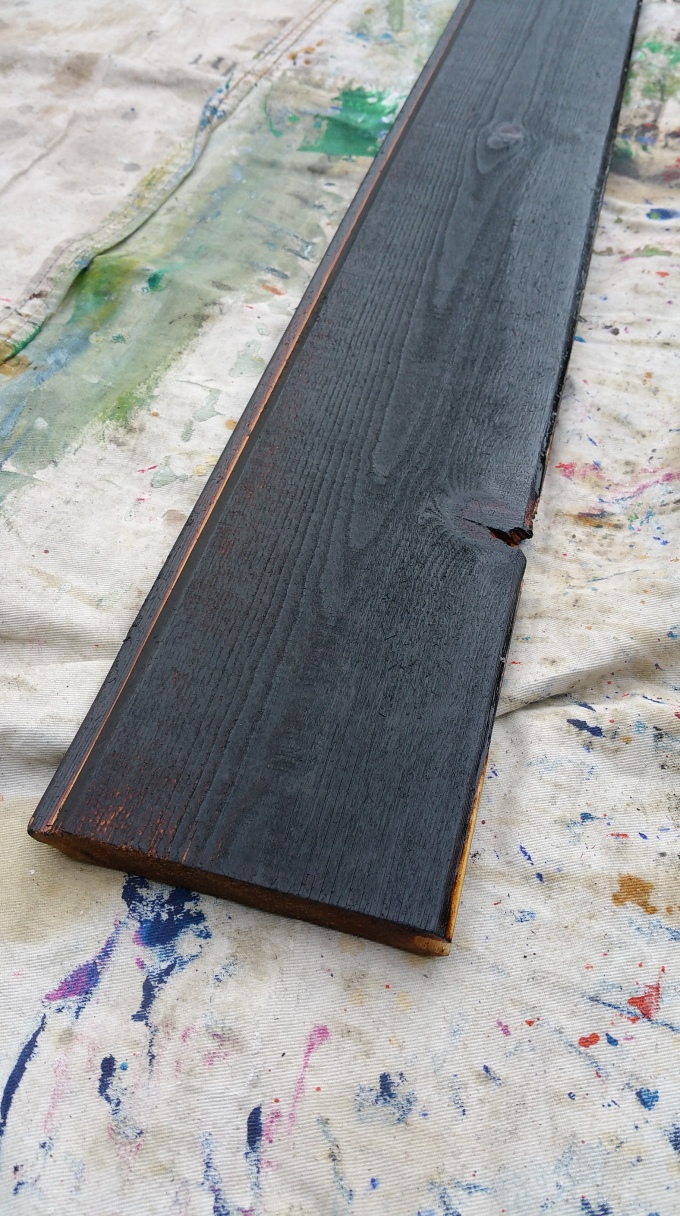
charred-board-gator-to-brushed
Scrap board showing gator and brushed finish after oiling.
charred-w-gator-finish
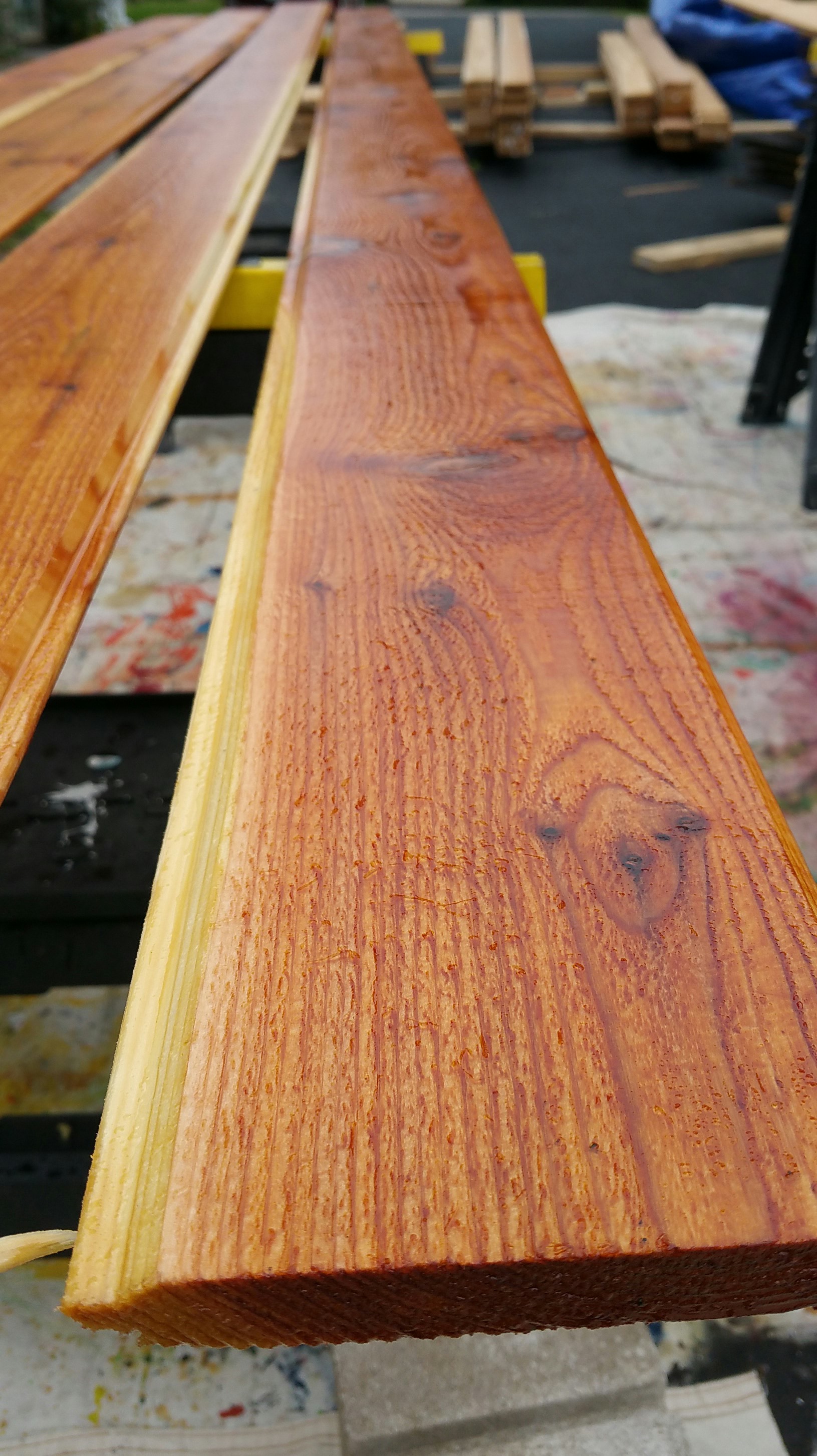
Close-up of gator finish after oiling.
charred-w-brushed-finish
Close-up of brushed finish after oiling (cloudy day). In sunlight, the red tones of the cedar become more pronounced.

There are companies in the US that are exploring the limits of what can be done with shou sugi ban, including the use of various species of wood, a range of options in the level of char, and potential areas for its installation:

Delta Millworks (Texas)

reSAWN TIMBER co. (Pennsylvania)

charred-cedar-small-pile
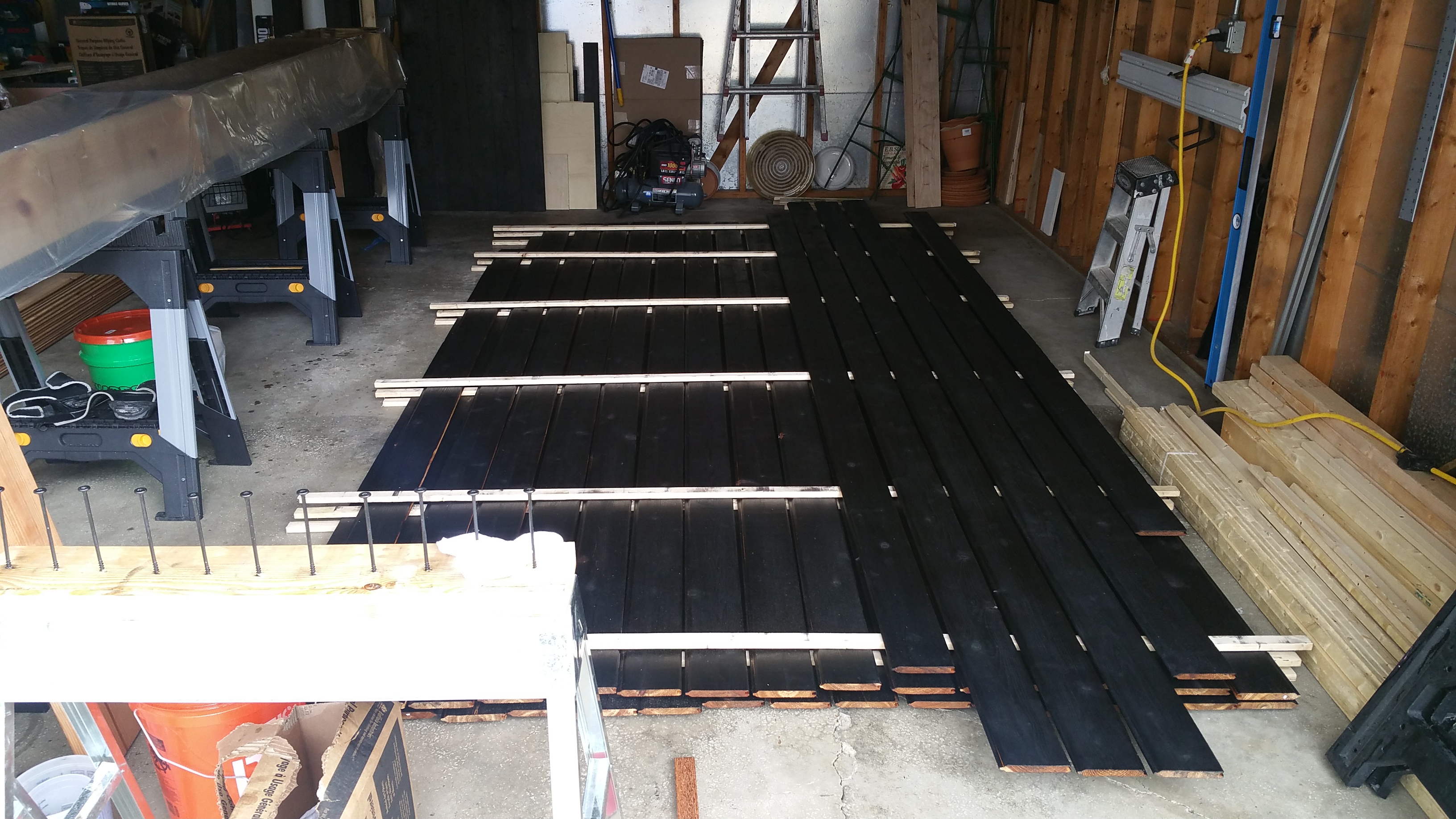
The beginnings of our stack, using 1×2’s to give the wood support and plenty of space for air circulation (this becomes more important after we apply the oil finish).

Either way, the char doesn’t go very deep into the wood, and it doesn’t have to in order to be effective — either for looks or durability.

For instance, once the wood has been charred, it will be fire resistant. The charred surface actually protects the wood from further burning. I had to see this to believe it, but if you char a piece and then hold the torch in one spot it really does resist burning (you can eventually reduce the wood to ash, but it takes a surprisingly long time).

The charred wood will also be unappetizing to insects or rodents, and once covered in its attractive black armor, the surface can face decades of sun and rain (80-100 years is the usual claim for its longevity) with little or no maintenance, apart from an occasional fresh coat of oil (every 15 years or so?).

Our wall assembly will utilize a fairly substantial rain screen, meaning there will be significant air movement behind the siding, so one could argue it should be unnecessary to char the back of each piece, but we’ve chosen to do so for the added peace of mind (and not a really significant amount of additional time — and the charring is fun to do anyway).

For cut ends and mitered joints, we will use tung oil to help seal these areas (similar to painted wood siding that gets a swipe of oil based primer in these same spots just before installation).

charred-cedar-small-pile-low-angle
Most of the siding will be 1×6 tongue and groove. The remaining 1x material will be for areas of trim.

Once charred, the wood can immediately be installed, or, as we’ve chosen to do, you can oil it first. After experimenting a little back in 2015, applying an oil finish seems to bind the char to the wood better than leaving it just “as is” (regardless if the level of char is light or heavy).

Also, if you don’t oil, then the surface remains like a charcoal briquet, so any time it’s touched some of the char will rub off — just imagine the reaction of friends or family the first time someone leans against the siding, or if you have kids running around and they touch the char. It could be a real mess.

In addition, if you choose not to oil, then every time the charred wood is cut during installation black dust will go flying (whoever does the installation will not be pleased when their hands, bodies, and lungs are covered in a layer of fine soot — picture a 19th century Welsh coal miner).

So for durability, looks, and ease of installation, we’ve decided to take the extra step of oiling each piece as well (more about this process later).

charred-cedar-texture-long-view-of-pile
The stack as the sun begins to set.
charred-cedar-close-up-gator-2
An alligator (or just ‘gator’) finish with the knots still showing through.
charred-cedar-close-up-%22gator%22
The charred wood, depending on the angle and level of light, can take on silvery tones (although, in our experience, this mostly goes away once the wood has been oiled — producing a uniformly black appearance).
charred-cedar-close-up-lighter-version
A board with a lighter char.

There is a range in the level of char we want to achieve. While most boards will have the gator finish, much lighter boards (a few even lighter than the one pictured above) will be part of the mix as well. We think this will make for a more interesting overall look, but it also takes the pressure off, slightly, if you have more than one person doing the charring (each person will have a slightly different definition of ‘gator’).

We’re also curious to see how the lighter boards will age with time: Will the lighter undertones of raw cedar turn gray and blend nicely with the char? Or will the natural color, peeking through the black surface, stick around longer than we think?

As far as the tools involved, the following have worked for us:

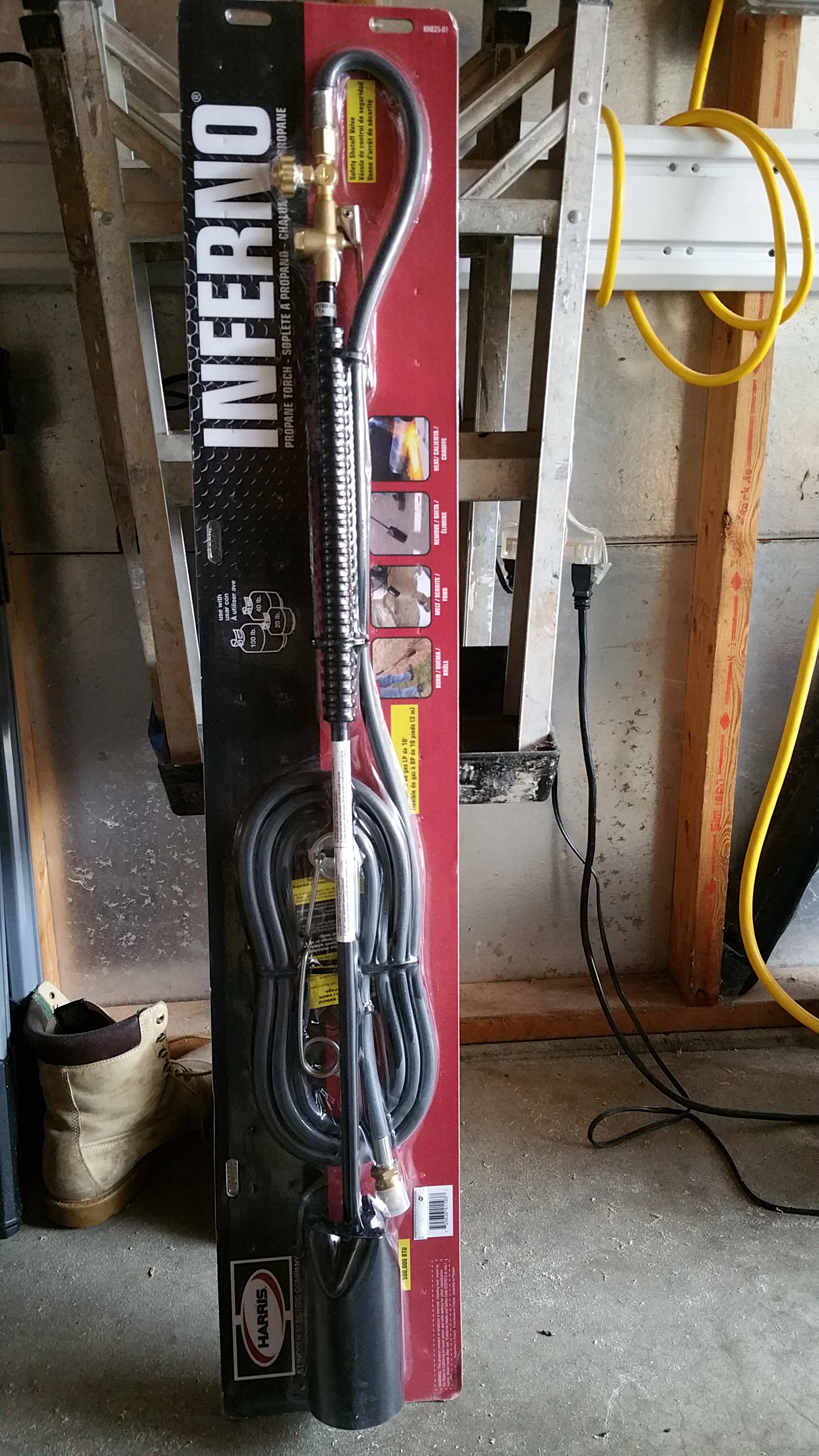
inferno-torch-full-shot
Found the Inferno torch on Amazon.com and at our local Home Depot.
inferno-close-up
So far, it’s been a real workhorse.
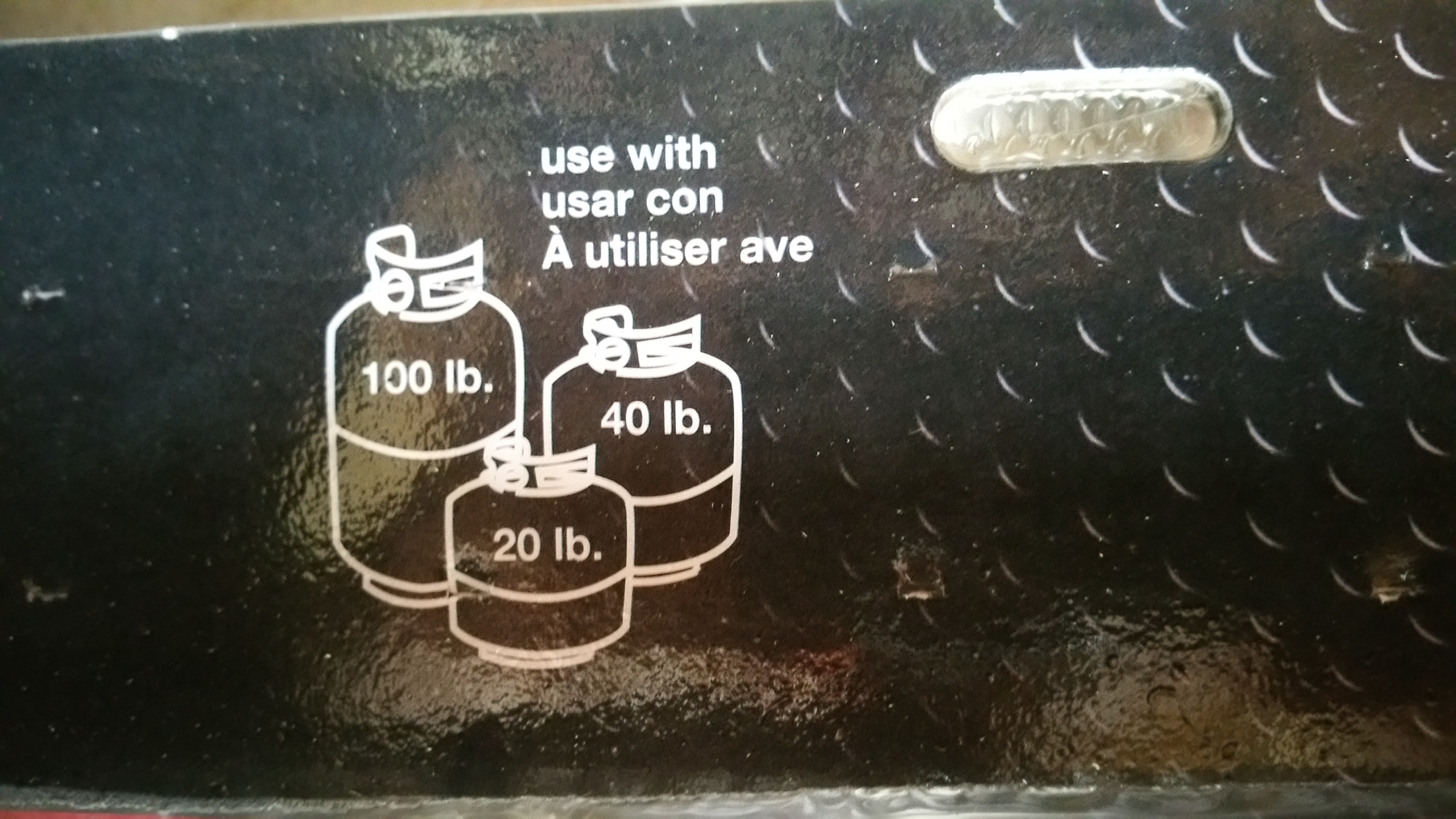
inferno-w-various-tank-sizes
The inferno will work with almost any size tank.
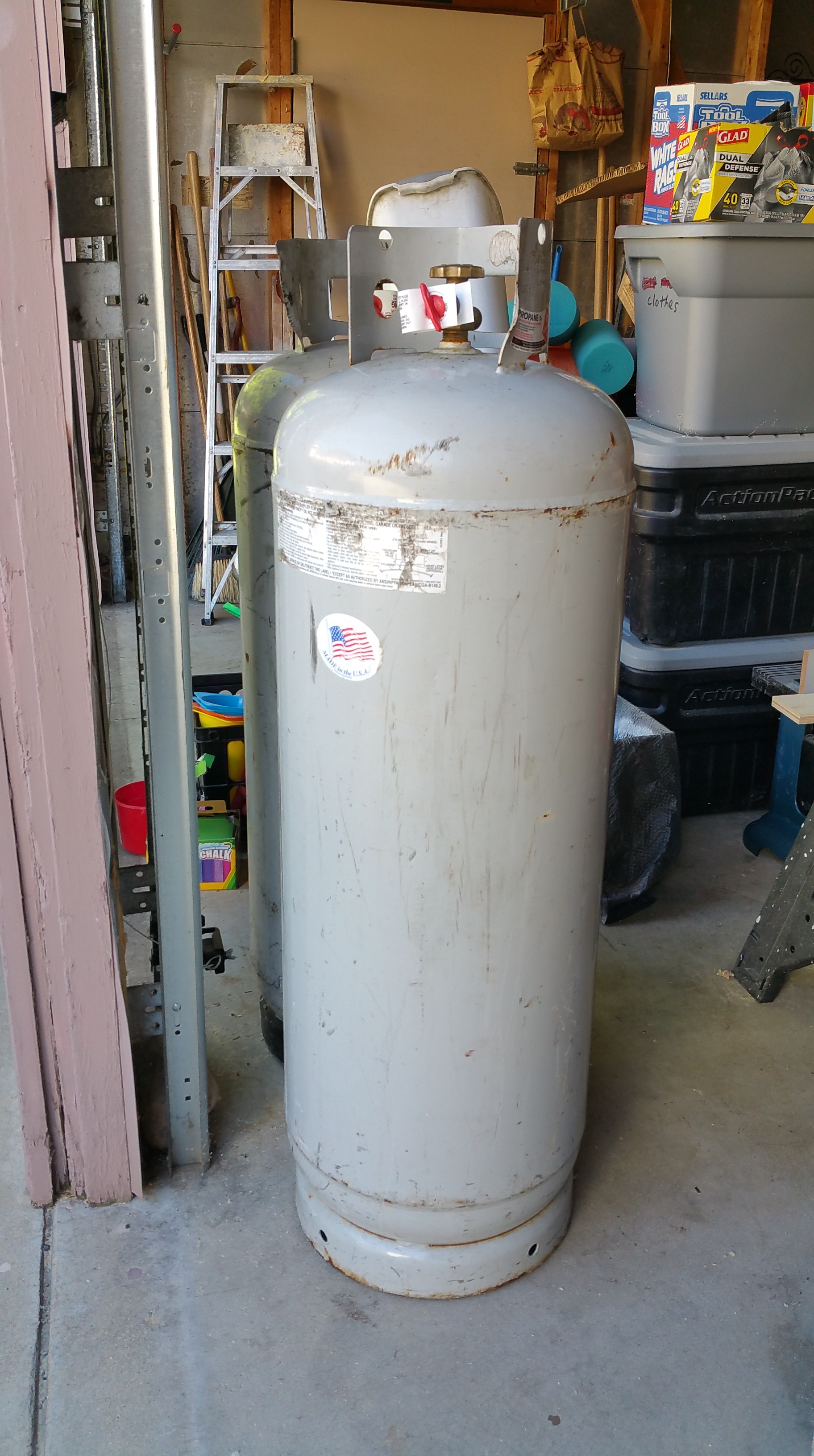
100-tank-from-tebons-gas
100 lb. tank from Tebon’s Gas Service in Niles, Illinois.

We were planning to use the typical 40 pound propane tank that’s used for grilling. Fortunately, my wife was smart enough to look around online for us, and she found these 100 lb. tanks instead.

These 100 lb. tanks have worked out great — no trips to a big box store for refills on the smaller tanks. And by buying the gas in bulk, they’ve also saved us some money as well.

100-tank-w-condensation-full-shot

You can follow the level of the tank by looking for condensation. The only down side to these larger tanks is once they hit this level, about 1/4 full, pressure drops significantly, so it takes twice as long to burn a board.

Here are some of the key connections involved:

hose-to-tank-connection
hose-to-hose-connection
10′ hose combined with 25′ extension hose.
hose-to-torch-connection-1
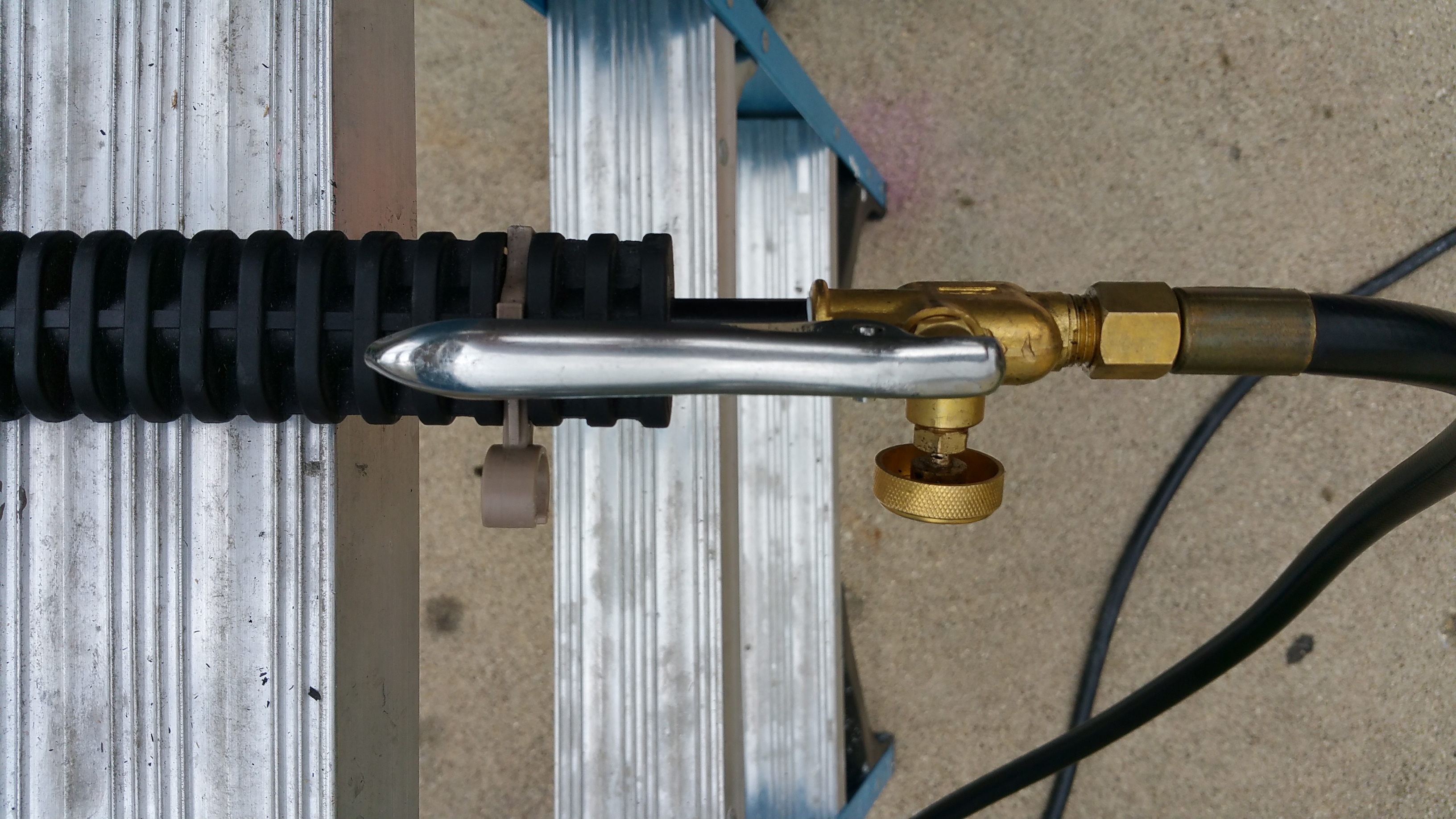
The long silver component is the throttle for the boost function.

The Inferno comes with a 10′ hose, which works okay, but we bought a 25′ extension hose on Amazon that definitely makes life easier by allowing you to get further away from the tank for a wider range of motion.

sealant-for-hose-connections
If you decide to use an extension hose, you’ll need this sealant to make proper, sealed connections. If you’re lucky, someone in tool repair at your local hardware store will do this for you.

In terms of safety, in addition to a pair of sunglasses or construction safety glasses, proper hearing protection is a must. If you’re doing just one or two boards, the noise level of the torch isn’t a big deal. However, if you plan to do dozens of boards at one time, we would definitely recommend some kind of hearing protection. The torch is undeniably loud (we’re lucky we have patient, forgiving neighbors).

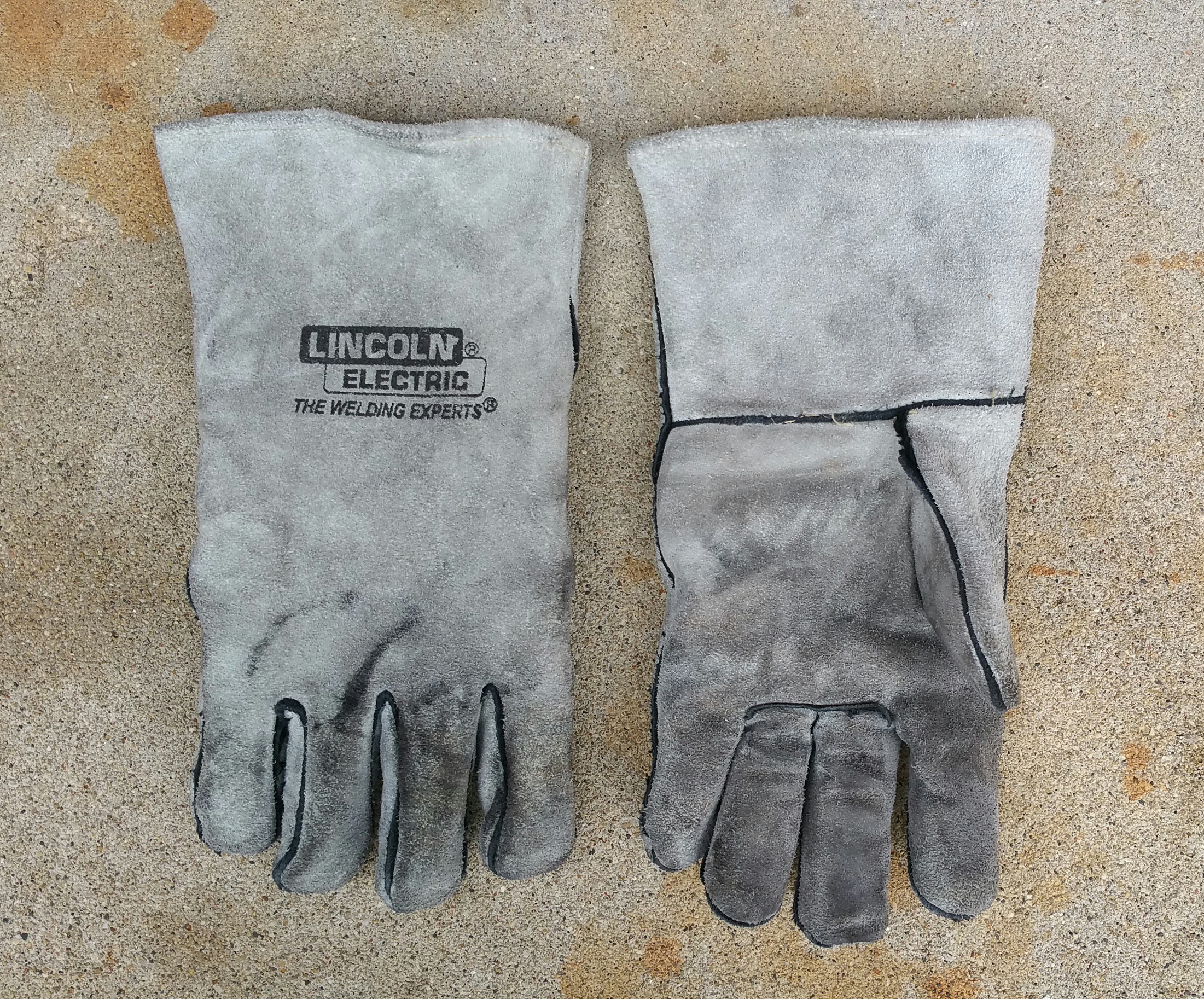
Welding gloves have also been a real help. On windy days, the boards tend to stay lit longer, but it’s easy to just pat or rub out the small areas of flame with the welding gloves. And they’re a must for moving the boards around right after charring.

welding-gloves
We found these in our local Home Depot tool department.

We also keep a couple of 5 gallon buckets around, only partially filled, so it would be easy to toss it at someone who’s just burst into flames (let’s hope this never happens).

In addition, we have a 6′ step ladder set up as a station to hold the torch when not in use, and it’s a convenient spot to drape a garden hose with a nice spray nozzle, so it’s in easy reach if something should go wrong. We also occasionally spray down the concrete, hoping this discourages any stray embers from landing and then floating away to ignite something in the surrounding area.

To be honest, the only time I got myself in trouble was when the 100 lb. tank was 1/4 full and the pressure had dropped. Normally, we barely have gas running through the hose and coming out of the torch because the boost switch on the torch is so effective. Because of the pressure drop, I turned up more gas, hoping it would counteract the loss of pressure, but instead I just managed to catch my jeans on fire at the knee (momentarily, thanks to a handy 5 gallon bucket of water). I was extremely lucky, and lesson definitely learned.

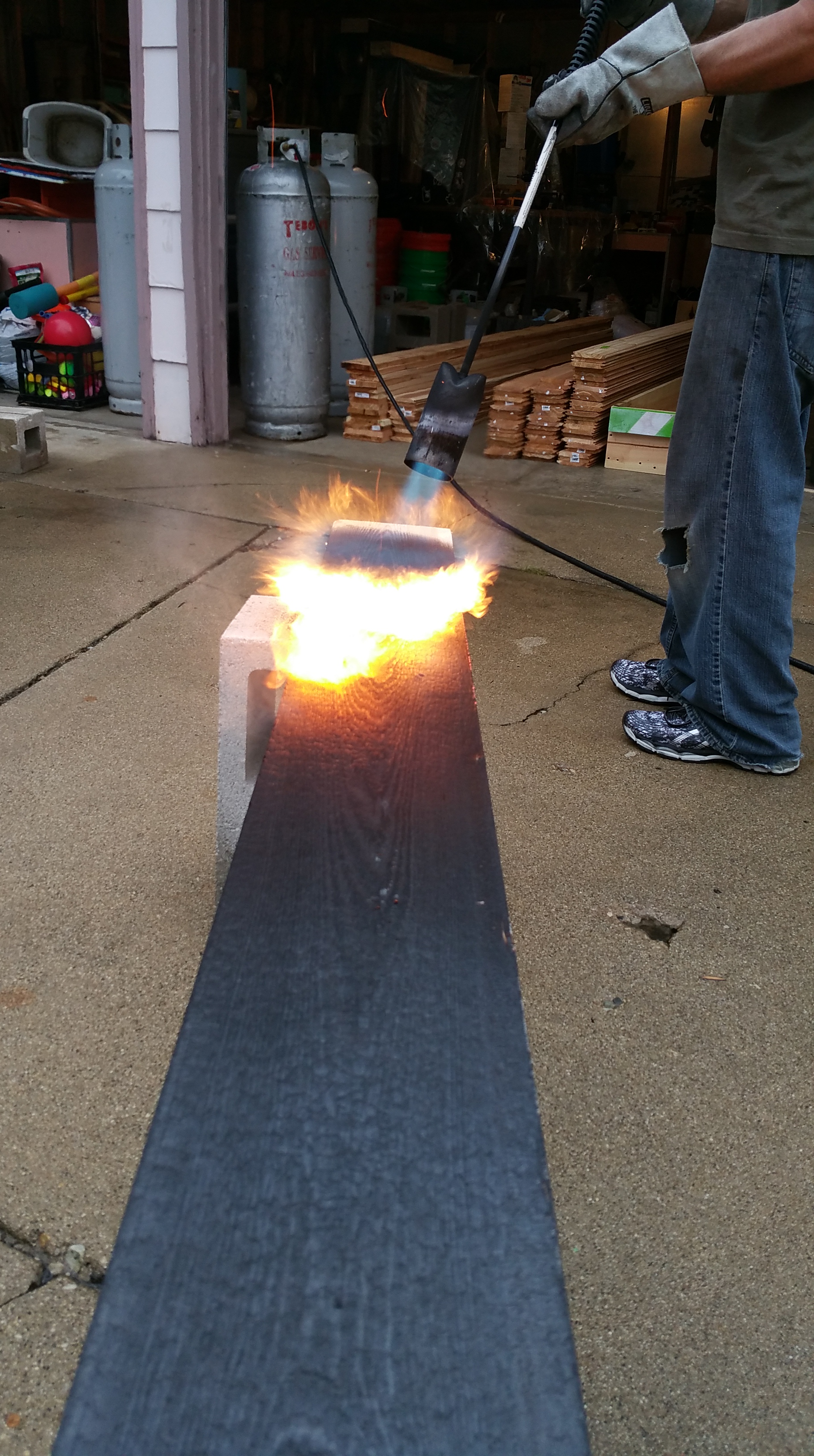
Right as the sun is going down is the most exciting time to burn — the flame becomes vivid, and it’s really fun to watch as it dances across the surface of the board.

torch-evening-flame
charring-1x8-cedar-2
That left hole in the knee is the one that I managed to catch on fire — notice I’m keeping a safe distance from the flame.
lions-head-in-flames
Playing with fire: Do you see the lion’s head?
head-of-a-cardinal
Head of a cardinal?

Videos demonstrating the charring:

Video 1: Charring 1x Material

Video 2: Charring

The 1x material, whether 1×6 or 1×8, takes longer to burn since we found it impossible to get the face and the edge all in one pass. You can definitely pick up more of a rhythm with the 1×6 T&G boards. And we haven’t gone for a gator appearance on the back (smooth side) of each board, instead going for a lighter char, which also helps to speed things up for each board.

How much will all this cost?

How long will it take?

For our single story, just under 1700 sq. ft. house (outside dimensions), with an attached 2-car garage, these are how our numbers break down:

  • Time to burn (per board): about 1-2 minutes a side
  • In 6-8 hours, 40-80 boards is realistic (depends on level of char, and if it’s 1x or T&G)
  • Total time to burn all the boards we should need: ±80 hours
  • For torch, hearing protection, welding gloves, extension hose: $100-150
  • Per 100 lb. tank: $80-90 (8 total tanks to finish).
  • 1×2’s, or similar material, for stacking the completed boards: $100-200
  • #3 or better Cedar (1×6 T&G, 1×6, and 1×8): approx. $8-10,000

Keep in mind, this doesn’t include the time or expense required to oil each board (again, more on that later).

One final, additional challenge was getting quality boards.

Our first order of cedar, via a big box store, came from Mary’s River (they’ve either gone out of business, or their manufacturing plant burned down — depends on who you ask). Their rate of waste was about 10-15%, so not bad at all. It felt like I had to go looking for bad boards (board bends to the left or right at the end, U-shaped from the middle, broken or missing tongues/grooves, or cracked/split boards).

In subsequent orders, with a company called Tri-Pro, the rate of waste was about 40%. Luckily, the big box stores are okay with returns, nevertheless this gets frustrating.

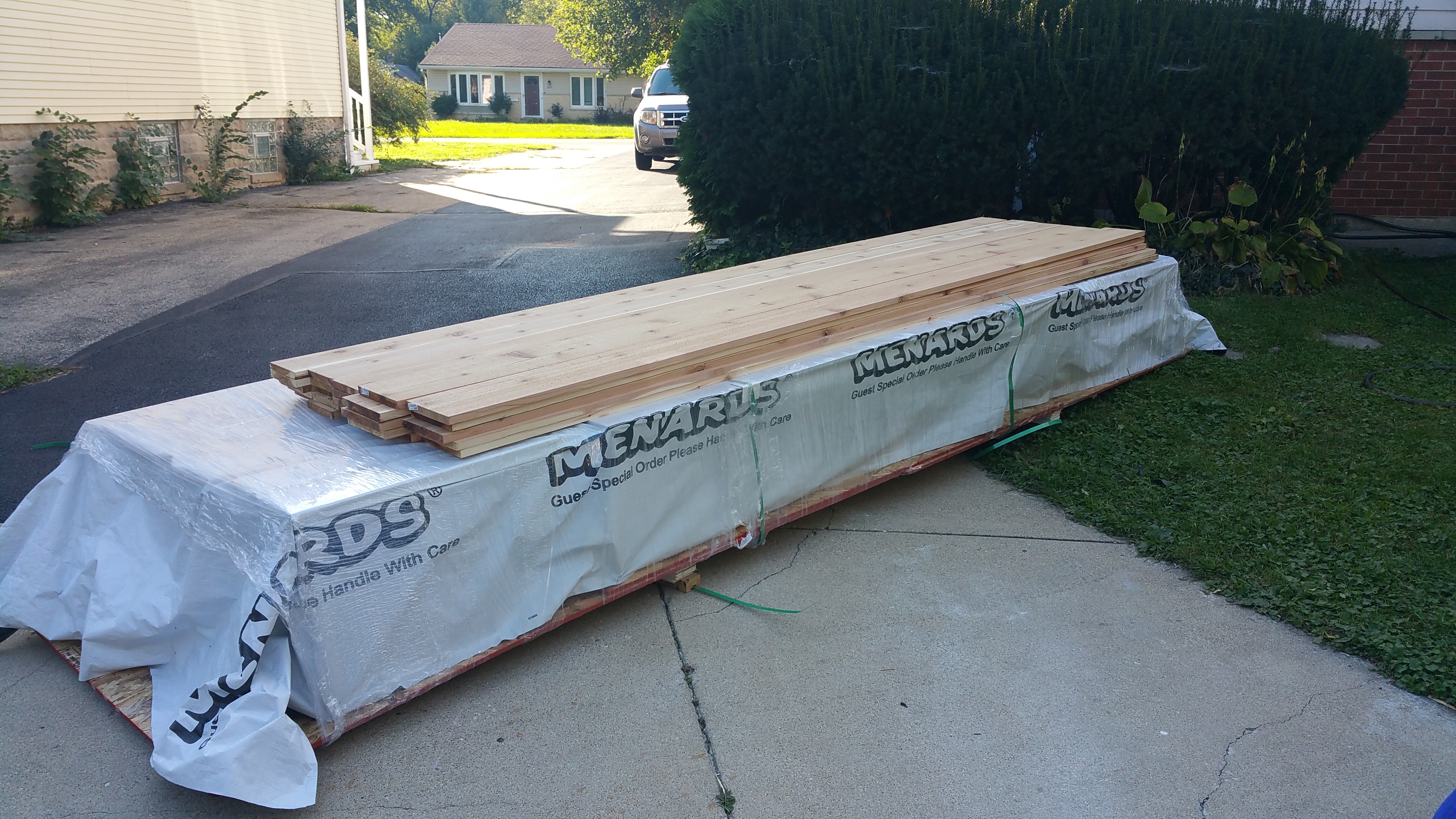
And even with the big box stores themselves, there can be significant differences in quality from one location to another. Our first couple of orders were poorly packed and just wrong. Then, after going to a second location to order, in Long Grove, this showed up:

charred-cedar-neatly-packed-pallet
A neatly packed pallet — when you’ve dealt with a messy one, this is a thing of beauty.
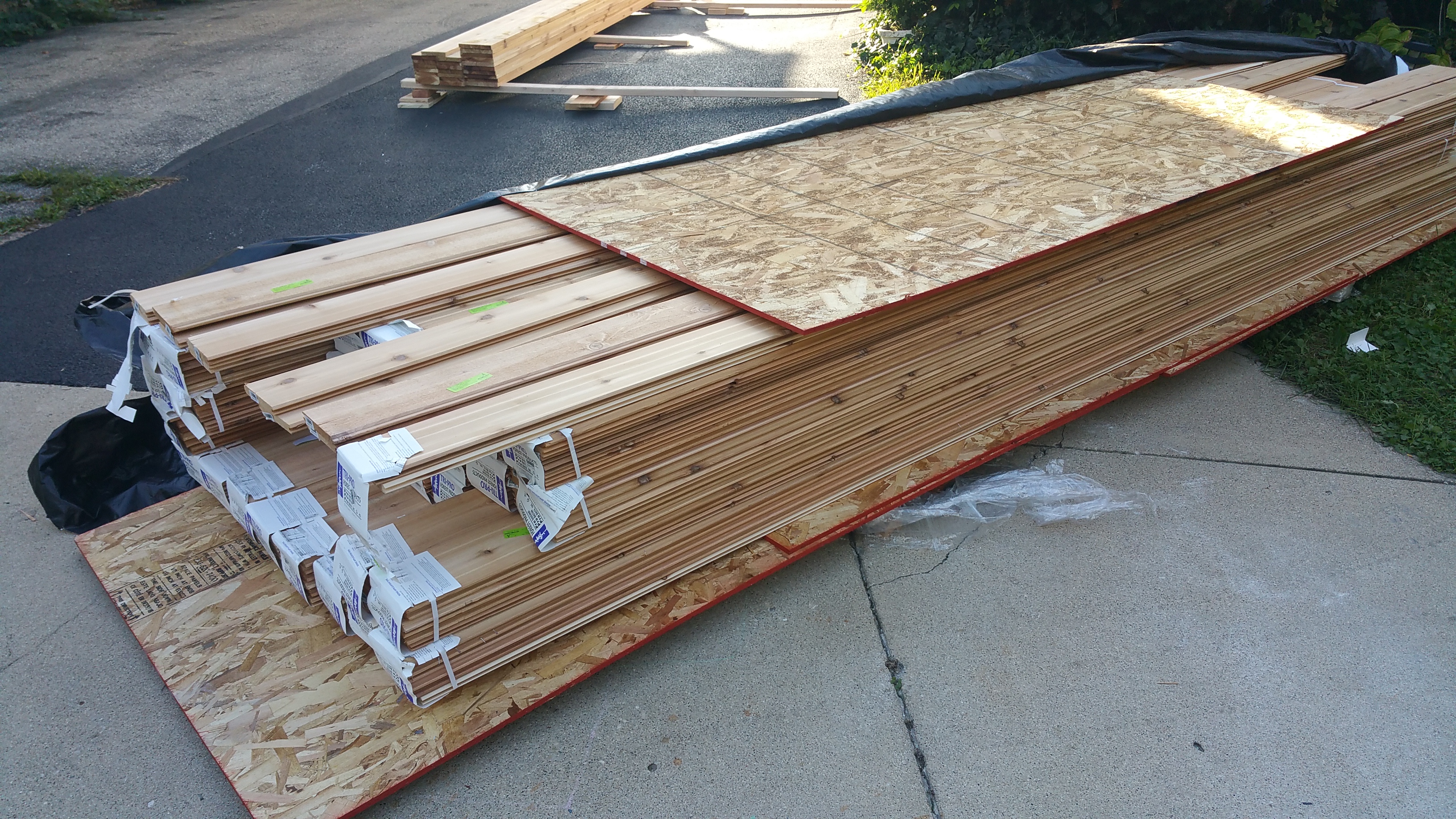
charred-cedar-neatly-packed-pallet-broken-down
Deconstructing the pallet. The plywood really makes a difference in protecting the wood.
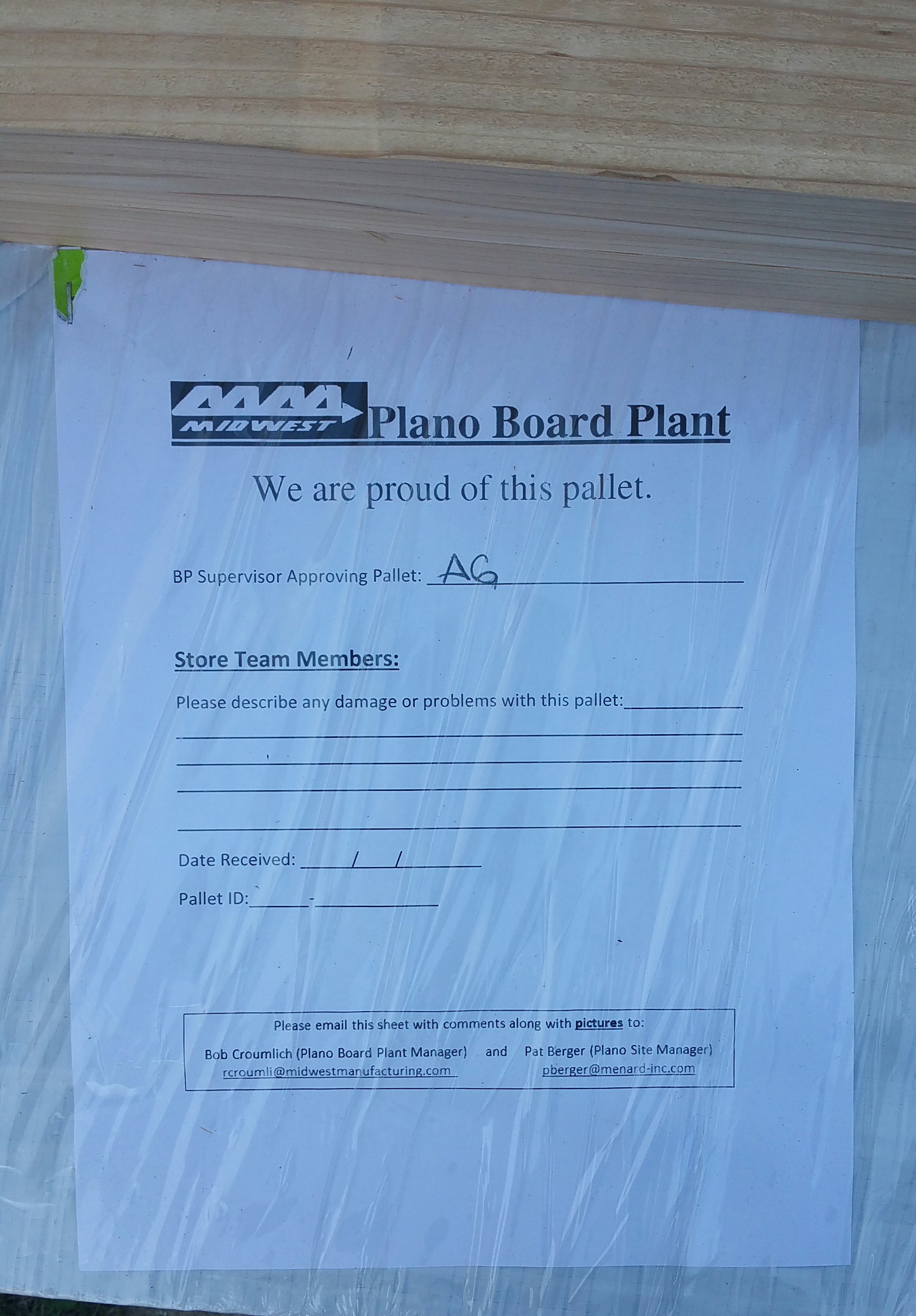
pallet-from-menards-paperwork
“We are proud of this pallet”… and it clearly shows. Thank you!

I can’t tell you whether the person (or persons) who put this specific pallet together actually enjoys their job, but what I know for sure is that they give a shit (to be perfectly blunt).

Unfortunately, this level of quality and pride in workmanship is exceedingly rare — anywhere, in any occupation — so when you see it, it can’t help but stand out and grab your attention.

charred-cedar-putting-the-weasel-to-work
We even got the Beast involved — pulling labels, tags, and staples.

Vivian Maier and the Search for Rust

0

I can still remember seeing the striking cover of Vivian Maier: Street Photographer for the first time. The image hints at the story of her life — the mystery surrounding a great talent who went unheralded while alive, but who is now universally recognized and celebrated — while remaining dramatic all on its own.

The documentary about the discovery of her cache of photos, her life, and the work, is equally compelling:

There is something oddly electric about walking the streets of a large city and capturing life as it happens in beautiful photographs. There is an intensity in the captured moment that would otherwise go unseen if not for the skilled and curious eye of a photographer like Vivian Maier. To be able to see the world through someone else’s eyes is always a gift, but especially when the outcome is such mesmerizing images.

After the initial interaction (whether positive or negative), the real test for art, it seems to me, is: Does it compel you to come back again and again? On this basis, Vivian Maier’s work is one of my personal favorites. I never find the images boring, or find myself hurrying past some images to get to others. Her photos almost force you to slow down and really take in what she’s looking at.

Portfolios: Street 1
Portfolios: Street 2
Portfolios: Street 3
Portfolios: Street 4
Portfolios: Street 5
Portfolios: Color

Since my daughter was already showing an interest in taking photos (i.e. taking advantage of a moment’s distraction to snatch our smartphones and go directly to camera mode), we decided to go on an adventure into Chicago to take some pictures. Using Vivian Maier as our inspiration, we headed into the city with cameras ready. Instead of people watching, we went looking for a particular subject matter, having narrowed our focus down to rust.

The challenge would be to find areas of rust that we thought could make compelling photographs (the real challenge was editing down the hundreds of — mostly forgettable — photos we ended up taking):

2016-06-14-00-35-03
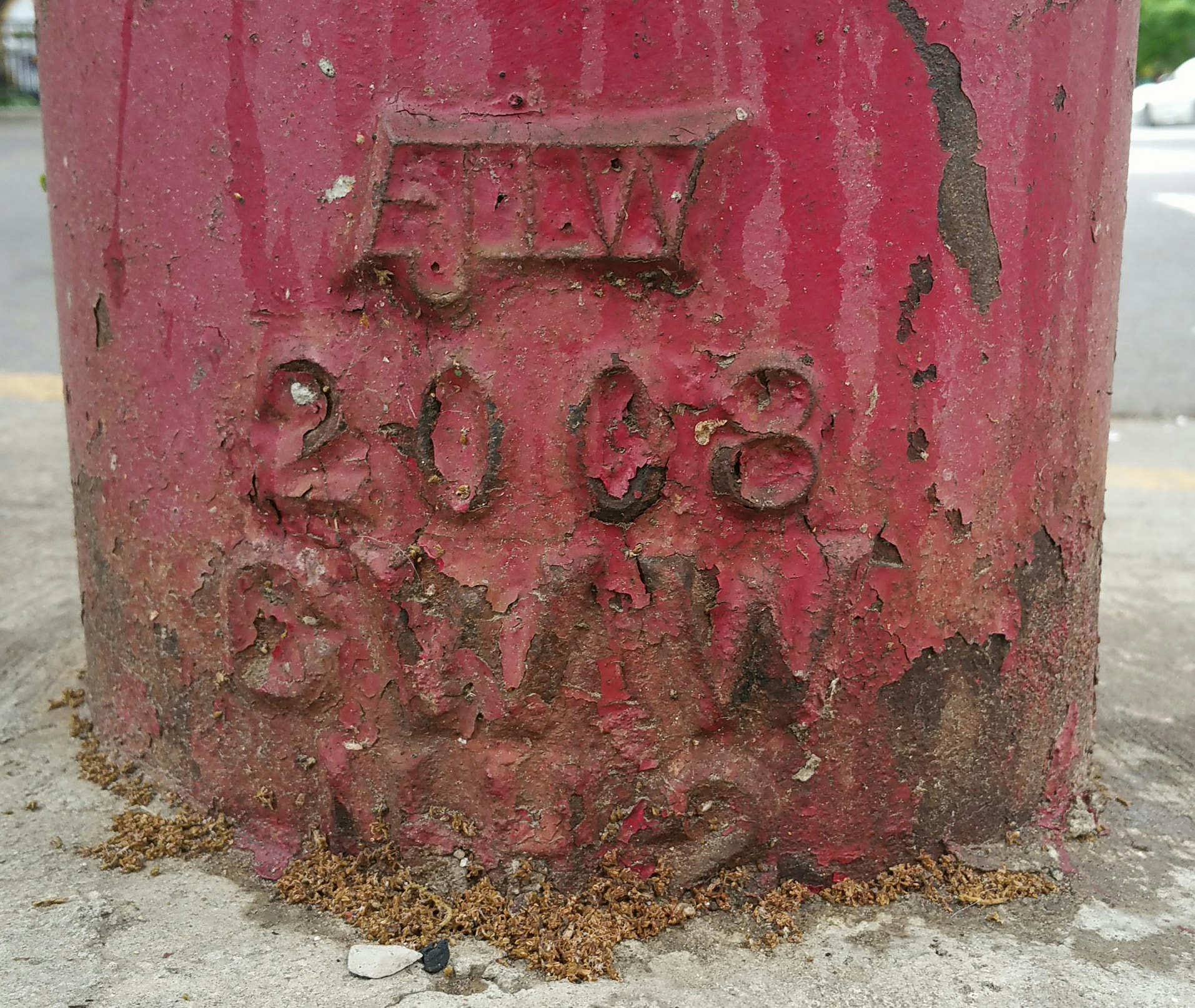
fire-hydrant
rusted-bolt-chipping-paint
electric-cover
elevated-tracks
park-here
switch

After spending the better part of a day in the city looking for rust, one side-effect was we saw intriguing areas of rust everywhere we went for days afterward. For instance, the last photo above was taken at a farm near us. Even now, if we’re out walking, my daughter still points to interesting examples of rust. It’s amazing how well the human brain can focus if you tell it where to look.

Part of the ulterior motive behind our day of photography was to start thinking about rust as a design element for our new house. Since we will have an Urban Rustic theme, we knew what the basic elements were going to be:

Wood

Concrete

Metal

For metal, I knew it would include exposed lag bolts, washers and nuts, along with some industrial/farm tools, in addition to a couple of areas dedicated to rust. Incorporating rust in a dramatic, yet limited, way would prove more challenging and time consuming than I first imagined (more on this later).

#rustisbeautiful
photo-bomber
Our little photo bomber.

Wall Assembly

2

Or: Dude, what’s in your walls?

When choosing what to put in our walls, we knew we wanted to try and balance high R-values (well above the current building code) with a limited environmental impact.

Here are three articles that address the issue:

Best Wall Choices
Without Foam
Twinkies

After evaluating various materials, including sheep wool,

goodshepherdwool.com

blackmountaininsulationusa.com

we decided to use many of the following elements employed by Hammer & Hand:

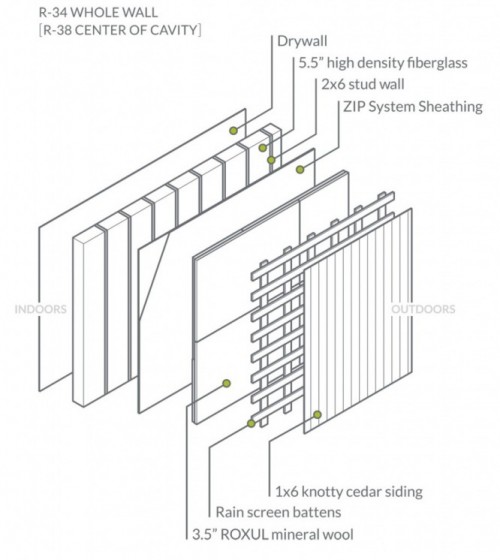
madrona-wall-assembly-914x1024-e1459377577722
Hammer & Hand wall assembly for their ‘Madrona House’.

In terms of materials, there are any number of options for putting a wall assembly together. For instance, we really wanted to use the sheep wool, but cost and worries (unfounded or not) about availability, led us eventually to Roxul (the Hammer & Hand videos below proved especially helpful in this regard).

After seeing the wall assemblies Hammer & Hand has been using, and how they’ve evolved over time, we felt the Madrona House set-up represented a good balance between cost-environmental impact-availability-ease of installation. We will also be following their lead by using the Prosoco R-Guard series of products to help with air-sealing our building envelope.

Nevertheless, we did make a couple of changes to the Madrona House set-up. For example, we’re using 4″ of Roxul Comfortboard 80 on the exterior side of the Zip sheathing (based on our colder climate zone), and we will be using Roxul R23 batts in the stud bays, along with the Intello vapor retarder, stapled and taped to cover the stud bays. Otherwise, we will be sticking pretty close to the Hammer & Hand Madrona House wall assembly.

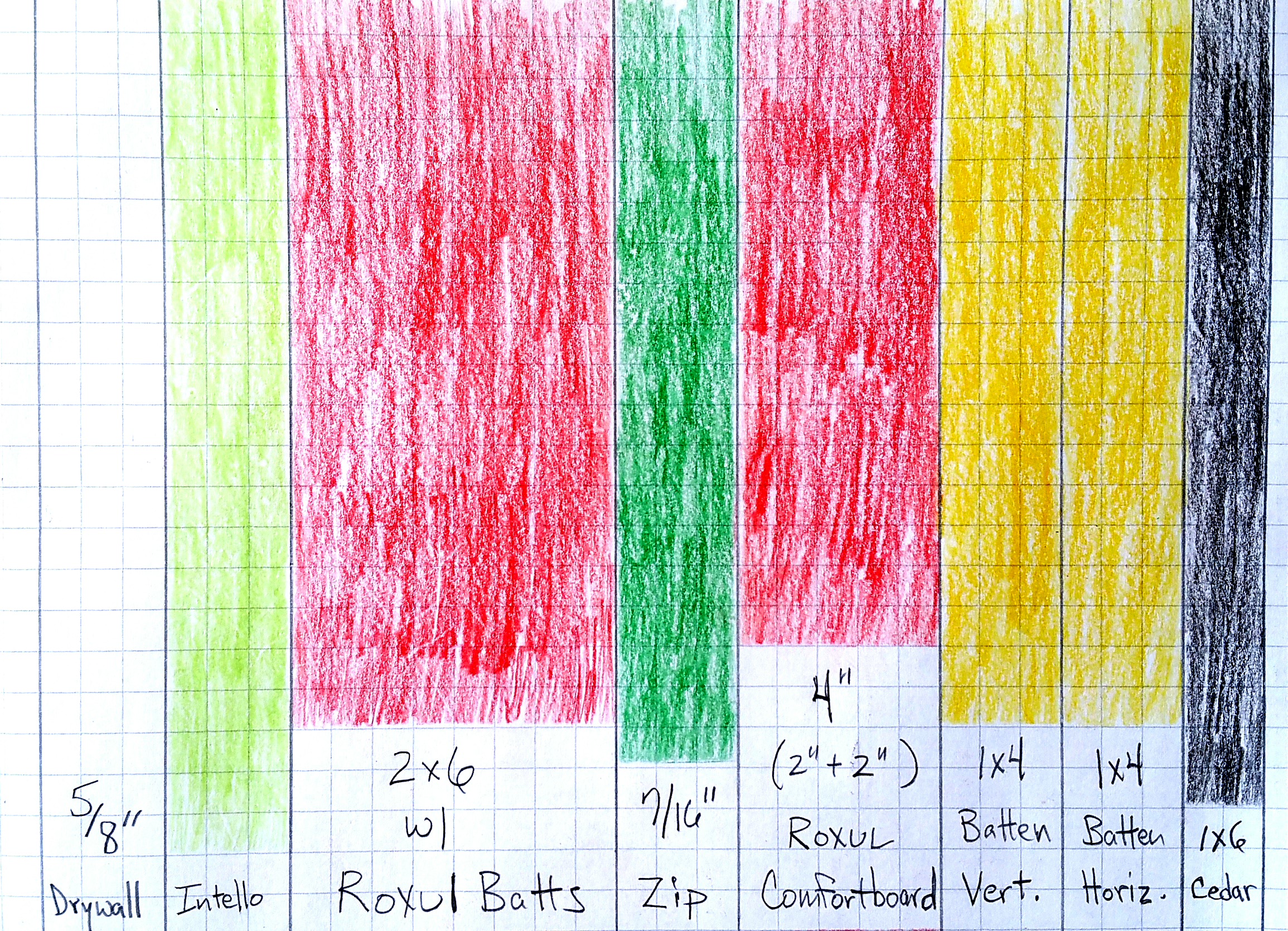
So from drywall to exterior siding (interior – exterior), this will be our wall assembly:

  • 5/8″ Drywall
  • Intello Plus vapor retarder (475 High Performance Building Supply)
  • Roxul R23 Batts in 2×6 stud bays (24″ o.c.) (roxul.com)
  • Zip board (for structural sheathing and WRB; seams covered w/ Joint and Seam Filler)
  • 4″ of Roxul Comfortboard 80 (two layers: 2″ + 2″)
  • 2-Layers of 1×4 furring strips (aka battens or strapping) as a nailing base for the cedar siding
  • 1×6 T&G Cedar (charred and oiled with a few boards left natural as an accent — most of it oriented vertically, hence the need for a second layer of furring strips).
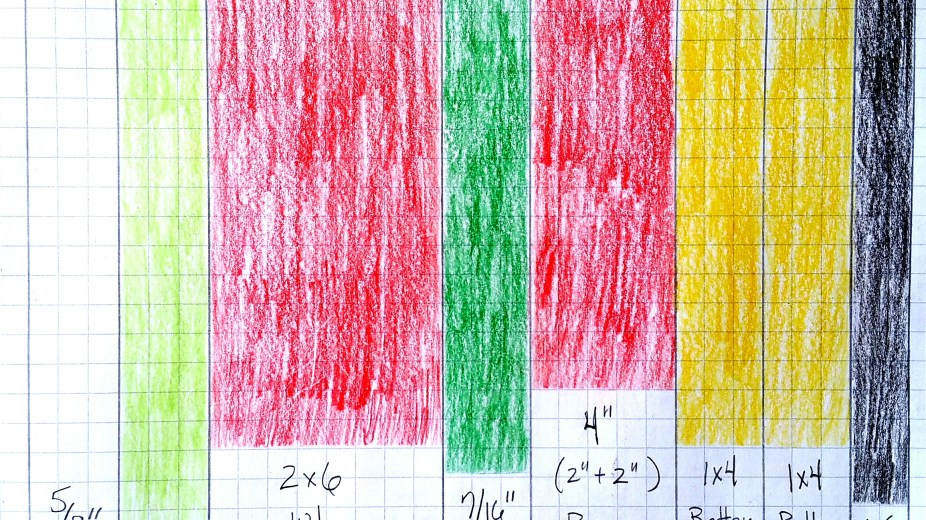
wall-assembly-color-coded
A crude rendering of our wall assembly using my daughter’s colored pencils.

A collection of helpful videos explaining the various elements we’re going to use, and why they’re effective:

Without the information available from sources like Building Science Corporation (they have a lot of interesting research documents) and design-builders like Hammer & Hand (not to mention Green Building Advisor and similar sites and forums that allow consumers to Q&A with expert builders and designers in “green” architecture), trying to build structures to such exacting standards (e.g. Passive House – Pretty Good House – Net Zero) would be exceedingly difficult, if not impossible, for those without previous, direct experience in this type of building program. I can’t express how thankful I am that so many individuals and businesses like these are willing to share their years of experience and knowledge with newbies like myself.

Here are the Hammer & Hand videos that initially sparked my interest in using Roxul rather than foam:

Instead of using tape for exterior seams, we are going to use the R-Guard series of products from Prosoco:

For various interior seams and connections we anticipate using the Tescon Vana tape, or an appropriate gunned sealant.

GBA (Green Building Advisor): Building Green (Starter Q&A)

GBA: Article on minimum thickness of exterior foam by climate zone

GBA Question: Foam vs. Roxul

GBA: 10 Rules of Roof Design

GBA: “Greenest”

GBA: Passive House Design (5-part video series) Requires membership after Part I, but well worth it.

BSC (Building Science Corporation): Perfect Wall (pdf)

BSC: Hygrothermal Analysis of Exterior Rockwool Insulation (pdf)

BSC: Moisture Management for High R-Value Walls (pdf)

BSC: Cladding Attachment Over Thick Exterior Insulating Sheathing (pdf)

GBA: Mineral Wool Over Exterior Sheathing

Passivhaus Trust (UK): how-to-build-a-passivhaus-rules-of-thumb (pdf)

Also worth considering:

GBA: The Pretty Good House

GBA: Passive House Certification: Looking Under the Hood

Architect vs. Client

0

Can they both be right?

During the design phase of our build, a clash of ideas occurred over a relatively small detail in the plans. I thought revealing it here might prove helpful to other homeowners about to embark on the design phase of their own build or renovation.

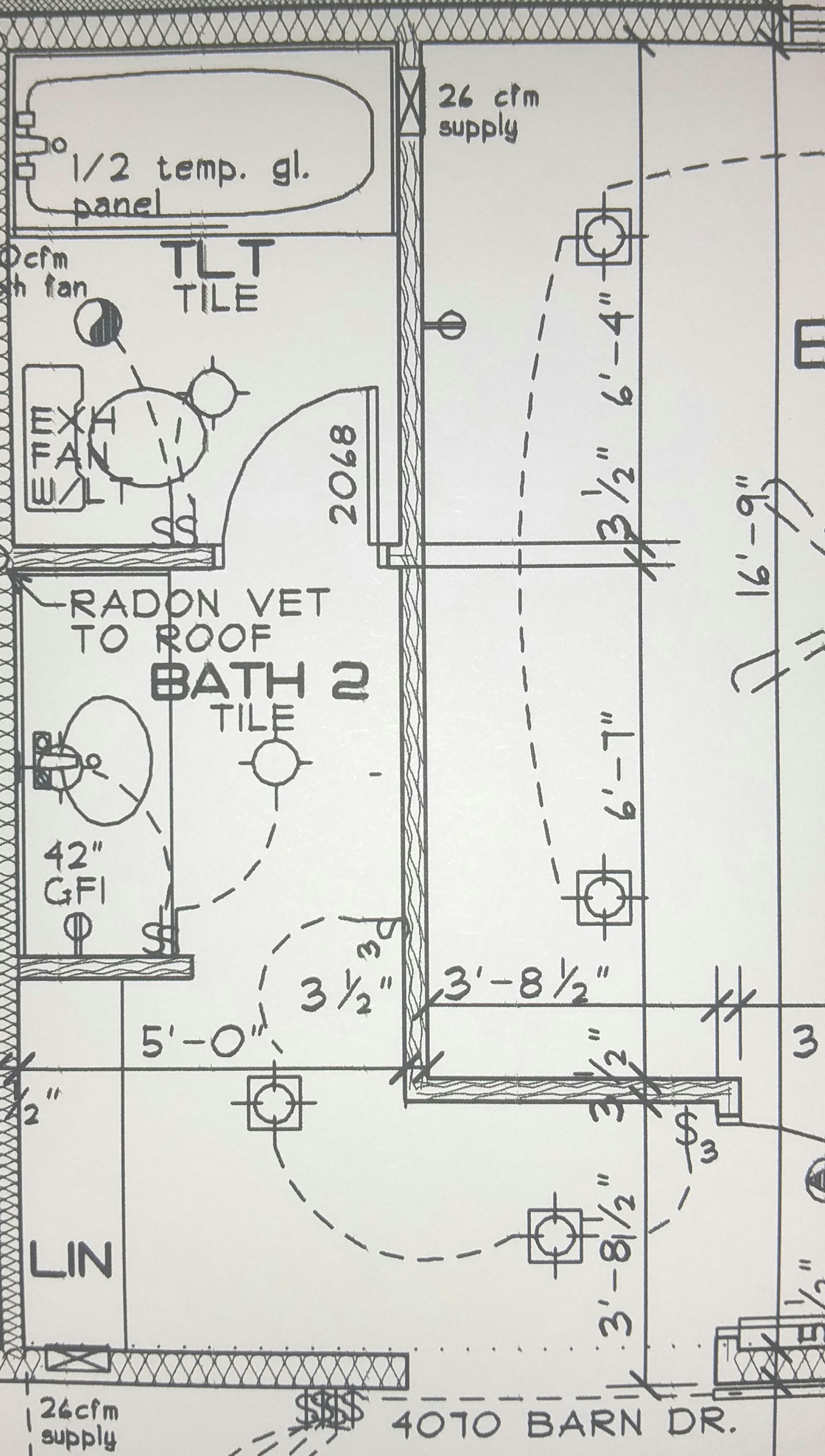
Our overall floor plan is divided down its long, East-West axis, separating the public (kitchen and family room) from the private (bedrooms and bathrooms). This is straightforward, and nothing that hasn’t been done countless times before by other architects and builders. Sounds simple enough, but debate arose over how to transition from the public space to the second bedroom and bathroom, which are both just off the kitchen.

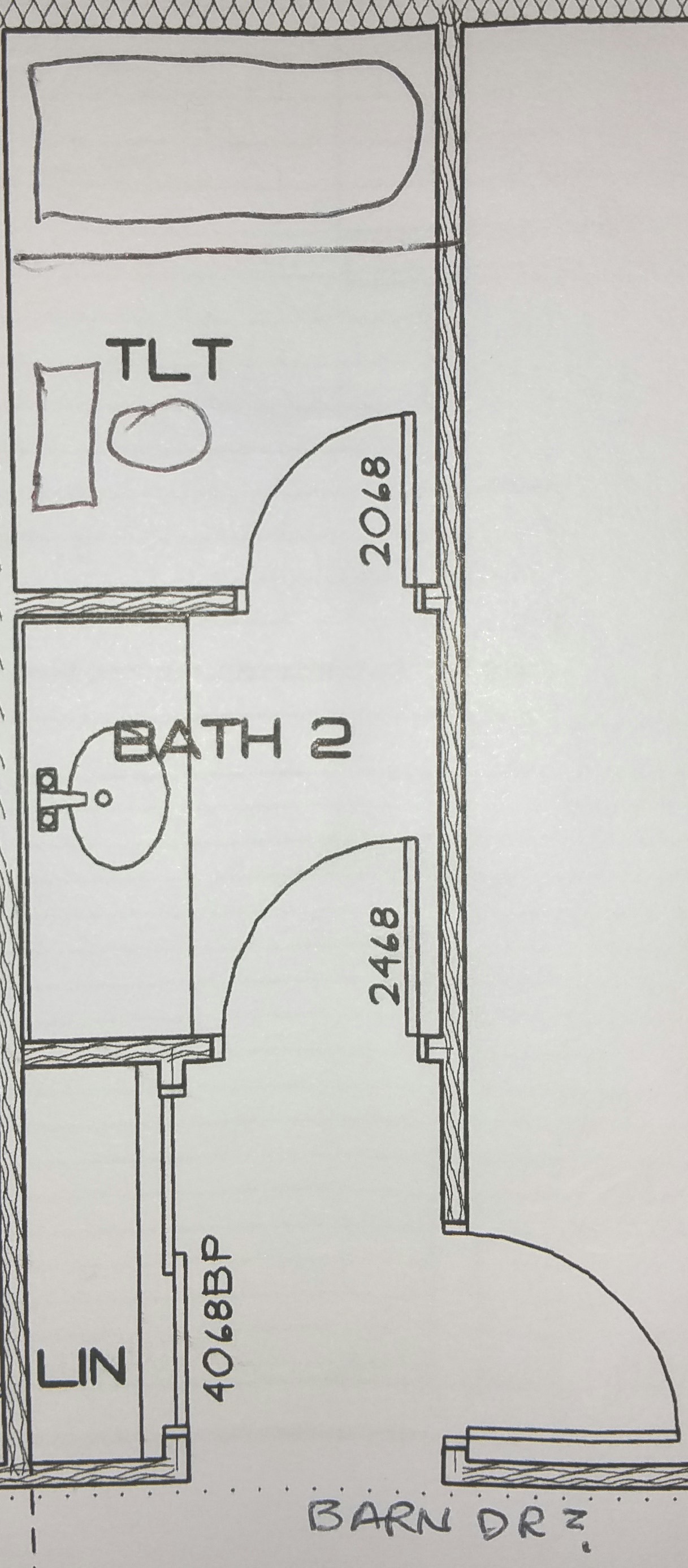
This is what our architect initially proposed:

2016-08-17 21.58.01

Our architect was clearly going for maximum efficiency in terms of space planning. In addition to a straight, open line from kitchen to bathroom, this design put the doorway to the second bedroom just around the corner, mostly out of sight. The architect believed, and rightly so, that this was the most efficient use of the limited space in this area.

Nevertheless, in my own head, I always assumed that there would be a “jog” (we worked hard to eliminate as many hallways as possible, but I suppose there’s no denying that’s what we’ve ended up with here).

This is what I was picturing:

bathroom - bedroom version 2

As a result, I argued for the second design, believing the jog/hallway offered a level of privacy to those using the bathroom lacking in the original drawing. This is a polite, civilized way of saying it. A friend put it more bluntly: “Why do I wanna make eye contact with somebody who’s just taken a dump?”.

Crass, to be sure, but his comment does get to the heart of the matter: If you’re standing in the kitchen as someone exits the bathroom, won’t this be an awkward situation for everyone? And how uncomfortable will it be for the person in the bathroom if they have the “bubble guts” when they know people are congregated in the kitchen?

Why not, as depicted in the second version, move the wall between kitchen and bathroom a little to the right, thereby eliminating any direct sight lines from the kitchen into the bathroom? Doesn’t this layout afford someone in the bathroom a much higher level of privacy and, therefore, comfort?

If the client (in this situation, or one like it) can acknowledge that the second layout is a less than ideal efficient use of the space, should the architect (in this situation, or one like it) acknowledge that the trade-off — between efficiency and privacy — is worth it? Or should efficient space planning be understood as an absolute and be applied accordingly?

It would be interesting to know what decision other people would make in this situation. In addition, if clients (or architects for that matter) have struggled with similar situations regarding a balance between space planning efficiency and other needs or wants — and how they resolved the problem.

In our case, we’ve opted for privacy, but we don’t pretend our choice is perfect. This raises the question: Can architect and client both be right (even if it’s for different reasons)?

What do you think?

Places Journal (Client and Architect)  

Life of an Architect  

Reasons to Employ an Architect  

Coffee with an Architect

Postscript: 

There were also selfish design reasons for the jog/hallway — e.g., artwork that will be featured on the hallway wall (seen as you exit the kitchen and head for the bedroom or bathroom), in addition to artwork that can be viewed as you exit the bathroom sink area (on the new wall between the kitchen and the bathroom). I also thought that by not being able to see directly, or easily, into the bathroom and the bedroom from the kitchen that it might add a little ‘drama’ to the floor plan, if only for first-time visitors — ‘Hmmm, wonder what’s back there?’ At any rate, I think I’ll always enjoy this effect (along with the added privacy).

“How did I get here?…”

0

So Why Build an Eco-friendly “Green” Home Anyway?

In the summer my wife and I teach a class together, called Excel 2, which is one small component of a larger, overall Excel Program (my wife is a high school Social Studies teacher).

Typically, Excel students come from first-generation immigrant families. They are college-bound students who have exhibited great potential, but who are in need of some encouragement, particularly in regards to taking Advanced Placement (AP) courses (huffington post). For most of our students, they will be the first ones in their family to attend college, so it is understandably an intimidating prospect in any number of ways.

The course itself is three weeks in the summer session, its focus on developing reading and writing skills by utilizing non-fiction reading assignments. We emphasize the importance of correct spelling, proper grammar usage, and attention to detail by requiring multiple revisions to several thesis paragraphs, which are themselves based mostly on college-level reading assignments.

You can imagine how well this goes over with incoming high school sophomores and juniors — especially in summer. We’ve tried to overcome this dilemma (how to motivate young high school students to tackle a course based on rigor when many of their friends are out enjoying summer break) by delving into topics they are intimately familiar with, but hopefully in ways they have not yet confronted.

IMG_9702
Some of our Excel students with my wife, Anita: (front row) Aubrey and Imani, (back row) Eduardo, Anita, Cecelia, and Karen. 

As a whole, 50% of the students attending Palatine High School qualify for free and reduced lunch. Not surprisingly, then, the Excel students face some unique, if not daunting challenges, both in and out of the classroom. In addition to the normal stresses associated with being a teenager, many of them deal with balancing school work with long work hours at low-paying jobs (helping their families make ends meet), social pressures to stray down the wrong path (in any number of ways), and even (most heart-breaking of all) confronting what researchers term being food insecure — in plain English, not always knowing when or where they will get their next meal.

We present the class to the students as an opportunity to test themselves, to really see where they are, currently, in terms of a whole host of skills. The main goal of the Excel 2 program, therefore, is to really challenge their abilities, not just in terms of reading and writing skills, but also soft skills such as interpersonal communication, the importance of body language, time management, and self-discipline.

Essentially, we try to give them a college-level course experience, hoping it better prepares them for the eventual reality. In other words, we’d rather they struggle in high school with us than have it happen when away from home for the first time, off on their own, at college  (atlantic)  (newsweek)  (washington post).

Here’s an example of our ever-changing syllabus:  Excel 2 – 2015

As you can see from the reading assignments, we encourage our students to start asking questions about everyday things they may be taking for granted. We hope this sharpens critical thinking skills, but we also hope it encourages them to be more active participants in their lives, rather than just sleepwalking through their days as passive consumers.

Consequently, when it came time for us to find a new place to live, we saw it as a good opportunity to practice what we preach:

  • What exactly do you want from a new house?
  • If you’re going to buy a house (and you’re lucky enough to even contemplate doing so), what should it look like? A condo? A townhouse? Or a single-family residence?
  • In which neighborhood are you going to buy?
  • How many square feet do you want (or need)? How many bedrooms? Do you want (or need) a formal living room or dining room? Do you want (or need) a basement?
  • What architectural style appeals to you?
  • How are you going to furnish the interior?
  • Should you care about indoor air quality (IAQ)? And if you do, how do you protect it or improve it?
  • What do you want in your walls and attic for insulation? How much do you need?
  • How much will utilities cost? Are there cost-effective ways to reduce those costs?
  • Are renewables — solar, wind, or geothermal — worth considering? How long is the payback period?
  • Do you want your house to be environmentally friendly — and what does that mean anyway?

Instead of moving into the typical, leaky, not very environmentally friendly suburban condo, townhome, or house (we were leaving behind the latter), we thought it would be more interesting to see just how “green” we could make our next house.

Because we wanted a yard to do plenty of landscaping and gardening, we narrowed the choices down to a single-family house. And, instead of tackling the challenges that come with a retrofit, we decided to try building new.

Much like hearing Jonathan Ive talk about an Apple keyboard, we appreciated the detail required to meet the certified Passive House standard. At the time (summer 2014), this seemed like the way to go.

After the experience we had with our original builder (2015), and then subsequently trying to learn as much as possible about the Passive House standard, in addition to discovering the Pretty Good House concept along the way, our house plans have evolved into a kind of 3-headed hybrid: Passive House science + Pretty Good House + Net Zero (Zero Net Energy: ZNE).

The goal of all three: dramatically reduce the energy consumption of our house as much as possible (especially our dependence on the energy grid). We also want to do a significant amount of planting and growing in our yard, mostly xeric plants that require little additional watering, in order to combine house and yard into an eco-friendly system of sorts.

Our last home (approx. 2800 sq. ft.) was a fairly typical suburban tract house. It had builder-grade windows and doors (most of which had to be replaced after just a few years), very little insulation in the walls (the switch for the back porch light would actually ice up when temperatures fell below 20° F), and it had a great deal of under-utilized space (e.g. a two-story foyer, a formal living room and dining room, and a fourth bedroom, all of which saw little use).

With our new home (just over 1500 sq. ft. of living space), we’re trying to turn all of this on its head so we end up with something we really want and will enjoy. To paraphrase Kevin McCloud: ‘maybe it’s better to have a little bit of something special than a lot of something mediocre’.

An oft-quoted statistic (1)­ suggests a significant amount of our greenhouse gas emissions can be attributed to our structures (typically the figure is in the 40-50% range) — including residential, commercial, industrial, and governmental — so maybe change really does begin at home (SA) (greenbelt movement).

(1) According to a recent Fine Homebuilding article, “Better Than Average”, by Brian Pontolilo: “It’s not clear how much our homes contribute to greenhouse-gas emissions and to climate change. The most recent data available from the Department of Energy is from 2009-2010. Outdated as it is, this data indicates that residential buildings contribute around 20% of total U.S. greenhouse-gas emissions. This includes fossil fuels used on-site (e.g. natural gas for cooking and heating) as well as electricity.” (September, 2016 issue, p. 64)

The title of this blog entry was lifted from a lyric in this Talking Heads song:

Rock ‘n’ Roll Theme

0

I want to try a rock ‘n’ roll theme running through the house (my wife isn’t all that excited about this idea — wait ’til she hears about the monster theme…).

The challenge will be avoiding something that’s overbearing while still having some visual impact moving from room to room.

It should be a fun challenge.

I’d like to incorporate some of the following musicians and bands:

The Julie Ruin
The Rolling Stones
Björk
Prince & Tom Petty
The Afghan Whigs
The Pixies
Valerie June
PJ Harvey
The Doors
Sleater-Kinney
The Kills
The Who
The Pretenders
The Clash
The I Don’t Cares
Best Coast
Van Halen
Mark Lanegan
Yeah Yeah Yeahs
AC/DC
Art of Noise

Ok, that last one was mostly a joke. I remember when the video first came out and hating it, but then eventually being mesmerized by it — like a dog that’s so ugly it’s cute. If you made it to the end of the video without turning it off, good luck keeping the tune out of your head now. You’re welcome.

In our last house, we used one bedroom as an office. We did a “British” theme that included a mural of the Union Jack…

IMG_0948.JPG
IMG_0909.JPG

… so The Who may not make the cut this time (that mural took three days and a lot of blue painter’s tape — not to mention a whole lot of cussing).

I would like to do a mural in the new house, but still working on what it will be.

Starting Over…

0

Urban Rustic Design Plan

To achieve an Urban Rustic look (think Modern Rustic, only less ornate), we wanted to blend elements seen in farmhouses and those associated with big city design (more factory than penthouse), especially those prominent in the early 20th century. Although mostly informal, we also wanted the look of our house to incorporate a few modern ‘bling’ items along the way, too.

For more info on the dichotomy between rural areas and big cities, and how the suburbs fit in, go here: Building in the Suburbs

Here are the main design elements for both the exterior and the interiors:

Wood (Charred Cedar)

Some really helpful videos that gave me the confidence to try this:

charred cedar samples on driveway
Some charred cedar boards I did last summer: The first two on the left have an “alligator” finish; the three on the right have been “brushed”, allowing more of the red in the wood to show through after much of the char has been removed.
charred cedar sample board with natural
A sample board showing the charred cedar in combination with “natural” oiled cedar. Still working on the exact layout and combination of the charred and “natural” boards. We will want to try something more adventurous than the basic layout you see here.

The charring is surprisingly easy to do with a little practice. If, however, you’re not up for it, but you’d still like to use it on your own house, here are some companies that will do it for you:

deltamillworks.com  (featured in the Risinger video above)

charredwood.com

resawntimberco.com  (they have a lot of cool options — even flooring!)

realmilkpaint.com

realmilkpaint.com

I use their Tung Oil and Citrus Solvent products to finish the cedar, and it works great on concrete or stone, especially when going for an “aged” effect. We’re also going to use it for finishing our wood floors — produces a fairly durable, easy to touch-up, slightly amber matte finish. It is also very easy to work with.

Concrete

buddyrhodes.com
buddyrhodes.com

I really like their Craftsman mix — great for decorative pieces, easy to work with, and it produces really great results (and it’s easy to add glass or pigment to the mix as well). Their Bone Paste slurry mix is also fun to use, and great for creating dramatic highlights when filling voids.

homemade-modern.com (they have interesting projects, with easy to follow instructions)

Concrete is usually thought of as oppressive and ugly, but there’s actually a lot of interesting ways to use it that bring out its potential as a decorative element.

Below is a concrete piece using Buddy Rhodes with real coffee beans embedded in the concrete (the beans were on the bottom of the form before pouring the concrete over them). I used the Dark Tung oil product from realmilkpaint.com to give it an added “aged” effect:

coffee bean concrete mold

Metal

ALIVE rust blog photo
I’ve learned how to prematurely rust bare steel, so some key spots will have this.
charred bench leg idea
There will also be metal hardware involved.
charred bench side view of legs
Unfinished charred bench from last summer.
towel bar idea
We will be using gas pipe for shelving and storage elements.

We’re going for an Urban Rustic look and feel, so there will be some factory/farm tools, with a variety of similar objects around as well — either partly reconditioned, like below, or re-contextualized in some fun way:

rusty red wheel